
Sep
19
19
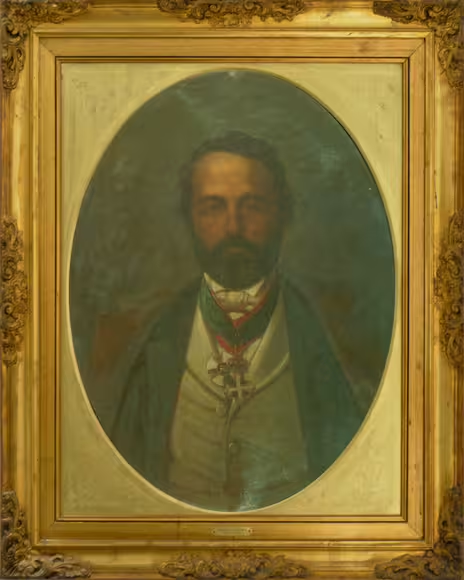
On September 19, 1852, Italian astronomer Annibale de Gasparis was observing the night sky from the Astronomical Observatory of Capodimonte in Naples when he detected a tiny point of light that did not belong among the fixed stars.
Using a relatively small equatorial telescope housed in the observatory's northern dome, de Gasparis had discovered a new world.
The object would eventually be designated (20) Massalia, the twentieth numbered asteroid.
For de Gasparis, it was already his sixth successful asteroid discovery.
But the story soon became more complicated.
Only one night later, a young French astronomer named Jean Chacornac independently detected the same object from Marseille. His discovery was announced before news of de Gasparis's earlier observation reached the wider astronomical community.
What followed was a small international dispute over priority, an unusual name for the new asteroid and another chapter in the extraordinary 19th-century search for the countless small worlds orbiting between Mars and Jupiter.
The Search for New Planets
At the beginning of the 19th century, astronomers knew only a handful of planets.
Mercury, Venus, Earth, Mars, Jupiter and Saturn had been known since antiquity, while William Herschel's discovery of Uranus in 1781 had demonstrated that additional planets might still be waiting to be found.
Then, on January 1, 1801, Giuseppe Piazzi discovered a small object orbiting between Mars and Jupiter.
He named it Ceres.
Other objects soon appeared in the same region: Pallas in 1802, Juno in 1804 and Vesta in 1807.
Initially these bodies were generally treated as planets, although their extremely small apparent size made them unlike the larger worlds known to astronomers.
Herschel proposed a new term for them: asteroids, meaning objects with a star-like appearance.
A Long Silence
After Vesta was discovered in 1807, however, the search appeared to go quiet.
For nearly four decades no additional asteroid was found.
Then, in 1845, German amateur astronomer Karl Ludwig Hencke discovered Astraea.
The discovery demonstrated that the four known small planets were not alone.
A new wave of searches began across Europe.
Improved star charts, better telescopes and patient observers made it possible to identify objects that appeared almost exactly like faint stars but slowly changed position from one night to another.
One of the most successful astronomers in this new search worked from a hill overlooking Naples.
Annibale de Gasparis
Annibale de Gasparis had been born in 1819 in Bugnara in the Kingdom of the Two Sicilies.
He originally moved to Naples to study engineering, but his interests increasingly turned toward mathematics and astronomy.
In 1840, he became a student astronomer at the Astronomical Observatory of Capodimonte.
De Gasparis developed particular expertise in celestial mechanics and calculating planetary orbits.
But he was also an extraordinarily patient observational astronomer.
Night after night, he examined regions of the sky filled with faint stars, looking for a point of light that did not remain where the star charts said it should.
The Observatory Above Naples
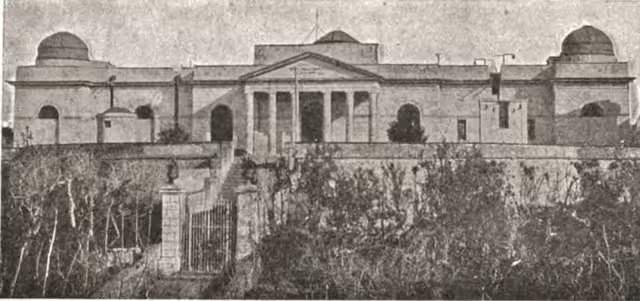
The Astronomical Observatory of Capodimonte occupied an elevated position above Naples.
Its location provided astronomers with broad views of the sky while keeping them above some of the smoke and activity of the city below.
The observatory had been created during the early 19th century and became one of Italy's important centers of positional astronomy.
Astronomers there measured the locations and movements of stars, planets, comets and other celestial objects.
For the search for asteroids, extremely accurate star positions were essential.
An asteroid at the telescope might look like nothing more than an ordinary faint star.
Its identity became apparent only when its position was compared with maps or observations made at another time.
A Small but Remarkable Telescope
De Gasparis made his asteroid discoveries using an equatorial refracting telescope built by Reichenbach and Utzschneider in Munich in 1814.
By modern astronomical standards, the telescope was small.
Its objective lens measured only about 8.3 centimeters in diameter.
Yet the instrument was precisely constructed and mounted so that astronomers could follow celestial objects as Earth rotated beneath the sky.
The telescope also contained graduated circles and a micrometer that allowed extremely precise measurements of an object's position.
It had already been used to measure thousands of stars before de Gasparis began his searches.
Under his eye, the instrument became one of the most successful asteroid-hunting telescopes of the 19th century.
The First Discovery
De Gasparis discovered his first asteroid on April 12, 1849.
It became known as 10 Hygiea.
The discovery immediately established him as an important figure in European astronomy.
But Hygiea was only the beginning.
On May 11, 1850, he discovered 11 Parthenope.
On November 2 of the same year came 13 Egeria.
Then he found 15 Eunomia in July 1851.
The discoveries came with extraordinary frequency.
International Recognition
By 1851, de Gasparis's success had already attracted international attention.
The Royal Astronomical Society in London awarded him its prestigious Gold Medal for his asteroid discoveries.
European astronomers increasingly regarded Naples as one of the most successful centers for the search for minor planets.
The sky over the city was jokingly described as if it had become a favored garden in which new asteroids continually appeared.
De Gasparis continued observing.
On March 17, 1852, he discovered another asteroid, 16 Psyche.
Only six months later, another tiny moving point of light entered his telescope.
September 19, 1852
On the night of September 19, 1852, de Gasparis was observing from the northern dome of the Capodimonte Observatory.
Among the faint stars, he detected an object whose position suggested that it was not a star at all.
Further observations showed that it was moving against the background sky.
De Gasparis had discovered another asteroid.
It would become the twentieth numbered minor planet in the Solar System.
But before news of his observation could circulate fully among European astronomers, the same object appeared in another telescope hundreds of kilometers away.
An Independent Discovery in Marseille
On the following night, September 20, French astronomer Jean Chacornac observed the asteroid independently from the Marseille Observatory.
Chacornac was working with astronomer and observatory director Benjamin Valz.
They quickly communicated their discovery to the astronomical community.
Their announcement circulated before confirmation of de Gasparis's observation from Naples.
For a time, the identity of the true first discoverer therefore became confused.
But de Gasparis had recorded the object in Naples on September 19, one night before Chacornac's confirmed Marseille observation.
The discovery of the asteroid is consequently credited to Annibale de Gasparis.
A Dispute Over Priority
Astronomical discoveries in the 19th century could produce surprisingly intense disputes.
There was no instant electronic communication between observatories.
Discoveries were communicated through letters, telegrams, scientific academies and astronomical journals.
Someone who discovered an object first could therefore find that another observer had announced it sooner.
The Massalia case created tension between Naples and Marseille.
Benjamin Valz publicly defended the French claim, while de Gasparis maintained that his observation had occurred first.
Rather than escalating the controversy indefinitely, de Gasparis eventually accepted a compromise over something that was extremely important to 19th-century astronomers: the object's name.
Why Massalia?
The asteroid became known as Massalia.
The name comes from the ancient Greek name for Marseille, the city from which Jean Chacornac had independently observed it.
This was unusual.
Early asteroids were normally given names drawn from classical mythology, such as Ceres, Pallas, Juno, Vesta, Hygiea and Psyche.
Massalia instead commemorated a real city.
De Gasparis had considered another name for the object: Themis, after the Greek goddess associated with divine law and justice.
He ultimately accepted the French proposal of Massalia.
The name he had hoped to use would not be wasted.
Themis Finally Appears
Only a few months later, de Gasparis returned to the telescope.
On April 5, 1853, he discovered yet another asteroid.
This one became 24 Themis.
So both names survived in astronomical history.
Massalia remained attached to the object discovered in September 1852, while Themis became the name of de Gasparis's next successful discovery.
The Twentieth Asteroid
The number attached to Massalia tells its own story.
(20) Massalia means that it was the twentieth object in the sequence of numbered minor planets.
Only half a century earlier, astronomers had believed that the region between Mars and Jupiter might contain a single missing planet.
By 1852, twenty small worlds had already been identified.
And the pace of discovery was accelerating rapidly.
It was becoming obvious that astronomers were not dealing with a handful of unusual planets.
They were discovering an enormous population of smaller objects.
A World Between Mars and Jupiter
Massalia orbits within the main asteroid belt between Mars and Jupiter.
It travels around the Sun once approximately every 3.7 years.
Modern observations classify it as an S-type asteroid, meaning that its surface is dominated by rocky, silicate-rich material.
Its diameter is estimated at roughly 135 to 145 kilometers.
To de Gasparis, none of these physical details could be known directly.
Through his telescope, Massalia remained only a tiny point of light.
His achievement was recognizing that the point moved and then measuring its position accurately enough for astronomers to determine its orbit.
The Massalia Family
Modern astronomy has revealed that Massalia is not alone even within the asteroid belt.
It is the largest member of a group known as the Massalia family.
Asteroid families consist of objects with similar orbital properties that are generally interpreted as fragments connected with ancient collisions.
At some point in the distant history of the Solar System, a major impact involving Massalia or its parent material produced fragments that continued orbiting the Sun on related paths.
The tiny moving point discovered from Naples is therefore connected with an entire population of smaller asteroids.
Nine Asteroids from One Telescope
Massalia was not the end of de Gasparis's remarkable observing career.
After Themis in 1853, he later discovered 63 Ausonia in 1861 and 83 Beatrix in 1865.
In total, he received credit for discovering nine asteroids.
All were discovered visually using the Reichenbach and Utzschneider equatorial telescope at Capodimonte.
The sequence made de Gasparis one of the most successful asteroid hunters of the 19th century.
From Observer to Observatory Director
De Gasparis's career eventually extended far beyond the discovery of new objects.
He taught astronomy, geodesy and mathematical geography at the University of Naples and continued research in celestial mechanics.
In 1864, he became director of the Astronomical Observatory of Capodimonte.
He remained closely associated with the institution for much of the rest of his professional life.
His scientific reputation also led to his appointment as a senator after the creation of the Kingdom of Italy.
Yet the discoveries made from the small northern dome remained the achievements most closely associated with his name.
The Telescope Survives
The instrument used by de Gasparis survives today as part of the historic scientific collection of the Capodimonte Observatory.
Built in Munich in 1814, it had already served generations of astronomers before becoming de Gasparis's asteroid-hunting instrument.
Its modest size is particularly striking when compared with modern astronomical telescopes whose mirrors can measure many meters across.
De Gasparis needed no digital camera, automated asteroid survey or computer algorithm.
He relied on optics, star charts, precise measurements and extraordinary patience.
The Northern Dome
The northern dome of the Capodimonte Observatory remains closely associated with de Gasparis.
In 2019, on the bicentenary of his birth, the observatory formally dedicated the dome to him.
It was a fitting tribute.
From that location, using a telescope whose objective lens was little more than eight centimeters wide, de Gasparis had repeatedly expanded humanity's map of the Solar System.
From Twenty Asteroids to Millions
The contrast with modern astronomy is extraordinary.
When Massalia was discovered, only twenty numbered asteroids were known.
Today astronomers know that the Solar System contains an enormous population of minor planets.
Automated telescopes photograph huge areas of the sky repeatedly, while computers compare images and identify objects that have moved.
The task that once required an astronomer to spend long nights carefully comparing points of light can now be performed on an industrial scale.
Yet the underlying principle remains essentially the same.
A distant object reveals itself because it changes position against the stars.
A Tiny Point With a Long History
Massalia remains far too small and distant to appear as anything impressive through an ordinary telescope.
But its scientific significance reaches far beyond its appearance.
It belongs to the generation of discoveries that transformed astronomers' understanding of the region between Mars and Jupiter.
Instead of an empty gap or a place containing only a few unusual bodies, the asteroid belt emerged as a vast population of remnants from the history of the Solar System.
Every new discovery in the middle of the 19th century helped reveal that reality.
September 19, 1852
On September 19, 1852, Annibale de Gasparis looked through a small telescope in the northern dome of the Capodimonte Observatory and noticed another faint point of light among countless stars.
It was not spectacular.
There was no visible rocky surface, no dramatic tail like a comet and no disk that could be clearly resolved.
There was simply a light that should not have been where it was.
One night later, Jean Chacornac independently found the same object in Marseille, beginning an unusual story of competing discovery claims and eventually giving the asteroid its name.
The object became (20) Massalia.
For de Gasparis, it was another success in a remarkable series that would eventually include nine asteroid discoveries.
For astronomy, it was another piece of evidence that the space between Mars and Jupiter was filled not by a single missing planet but by an entire population of small worlds waiting to be found.
Other Events on This Day
Credits: 1st photo by Maurogargano, licensed under CC BY-SA 4.0, via Wikimedia Commons.; 2nd photo by Giuseppe Naccari. Public Domain, via Wikimedia Commons.


