
Sep
15
15
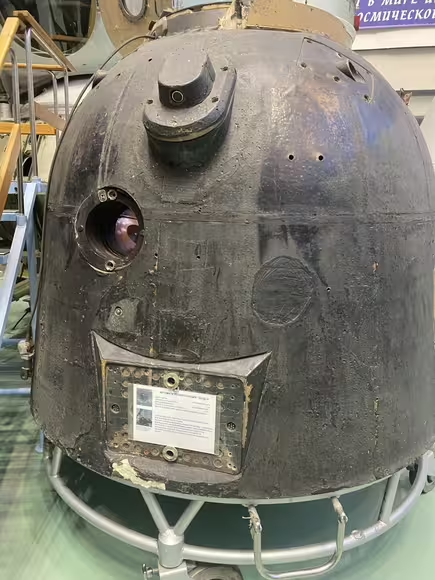
On September 15, 1968, the Soviet Union launched Zond 5 from the Baikonur Cosmodrome on a mission that would make spaceflight history.
The uncrewed spacecraft traveled around the far side of the Moon and returned safely to Earth, becoming the first spacecraft to complete a successful circumlunar flight and return to Earth.
Zond 5 also carried an unusual biological payload, including two steppe tortoises, insects, plants, seeds and microorganisms. When the capsule returned, the tortoises became the first living creatures from Earth to travel around the Moon and survive the journey home.
The mission was a major achievement for the Soviet space program and a dramatic reminder that the race to send humans around the Moon was still very much alive.
The Race to the Moon
By 1968, the Soviet Union and the United States had been competing in space for more than a decade.
The Soviet Union had achieved many of the earliest milestones. It launched the first artificial satellite, Sputnik 1, in 1957 and sent Yuri Gagarin into orbit as the first human in space in 1961.
The United States, however, had committed itself to an even more ambitious objective: landing astronauts on the Moon before the end of the 1960s.
Behind the scenes, the Soviet Union was also developing plans for human lunar missions.
One of those projects involved sending cosmonauts around the Moon and safely returning them to Earth.
The Secret L1 Program
Zond 5 belonged to a Soviet lunar program built around a spacecraft known as the 7K-L1.
The design was closely related to the Soyuz spacecraft but modified for a voyage around the Moon.
Rather than entering lunar orbit or landing on the surface, the spacecraft would follow a trajectory that carried it around the Moon before gravity redirected it back toward Earth.
The ultimate objective was to perform such a journey with cosmonauts aboard.
Before risking human lives, however, Soviet engineers needed to prove that the spacecraft could navigate to the Moon, survive the voyage and withstand the extremely demanding return through Earth's atmosphere.
Earlier Attempts Had Failed
Reaching the Moon and returning safely was far from simple.
The Soviet L1 program suffered a series of launch failures and technical problems before Zond 5.
In March 1968, Zond 4 traveled approximately as far from Earth as the Moon but was deliberately sent away from the Moon itself.
Its return did not go according to plan. A guidance problem caused the spacecraft to approach Earth on the wrong trajectory, and it was destroyed rather than risk an uncontrolled landing.
For the next attempt, Soviet engineers hoped to demonstrate the complete Earth-Moon-Earth journey.
Launch From Baikonur
Zond 5 was launched aboard a powerful Proton-K rocket with a Block D upper stage from the Baikonur Cosmodrome in Soviet Kazakhstan.
After entering a temporary parking orbit around Earth, the upper stage fired again and accelerated the spacecraft toward the Moon.
Unlike a spacecraft remaining in Earth orbit, Zond 5 needed enough velocity to escape far beyond the region where previous crewed missions had traveled.
It was beginning a journey of hundreds of thousands of kilometers into deep space.
Passengers Without Cosmonauts
Zond 5 carried no human crew.
But it was not empty.
Inside the spacecraft were two steppe tortoises, along with fruit flies, beetles, plants, seeds, algae, bacteria and other biological specimens.
The experiments were intended to help scientists understand how living organisms would respond to conditions encountered beyond Earth's protective magnetic environment.
Radiation was an especially important concern for future human lunar missions.
The animals therefore became biological pioneers on a journey that Soviet planners hoped cosmonauts would soon repeat.
Trouble on the Way to the Moon
The flight did not proceed perfectly.
One of Zond 5's main star sensors, which helped the spacecraft determine its orientation in space, malfunctioned.
The problem made navigation and course corrections considerably more difficult.
Controllers on Earth were nevertheless able to use other sensors, including references to the Sun and Earth, to orient the spacecraft and perform the necessary corrections.
The mission continued toward the Moon.
Around the Far Side of the Moon
On September 18, 1968, Zond 5 reached the Moon.
The spacecraft passed approximately 1,950 kilometers above the lunar far side.
For a time, the Moon stood between Zond 5 and Earth as the spacecraft followed its curved trajectory around the lunar world.
It did not fire an engine to enter lunar orbit. Instead, its trajectory carried it around the Moon and naturally placed it on a course back toward Earth.
This distinction is important: Zond 5 was a circumlunar spacecraft, not a lunar orbiter.
Photographing a Distant Earth
During its journey, Zond 5 also photographed Earth from deep space.
The spacecraft took images of our planet from a distance of roughly 90,000 kilometers.
Such photographs belonged to a new era in human history.
Only a few years earlier, no machine had traveled far enough into space to show Earth as a distant world suspended against the darkness.
By 1968, robotic spacecraft were beginning to change humanity's visual perspective of its own planet.
The Dangerous Journey Home
Traveling around the Moon was only part of the challenge.
Zond 5 still had to survive its return to Earth.
A spacecraft coming back from lunar distance approaches Earth's atmosphere much faster than one returning from low Earth orbit.
Zond 5 entered the atmosphere at approximately 11 kilometers per second.
Its heat shield had to protect the capsule from the tremendous temperatures generated as the atmosphere slowed it down.
The spacecraft was designed to perform a controlled reentry that would reduce the forces on a future human crew and guide the capsule toward Soviet territory.
Once again, however, the guidance system caused problems.
A Ballistic Reentry
Another failure in the spacecraft's orientation system prevented Zond 5 from performing its planned guided reentry.
Instead, the capsule followed a more direct ballistic reentry.
This meant greater deceleration forces and prevented the spacecraft from reaching its intended landing area on Soviet territory.
Nevertheless, the heat shield worked and the capsule survived its return from lunar distance.
Its parachutes deployed during the final stage of descent.
Splashdown in the Indian Ocean
On September 21, 1968, Zond 5 splashed down safely in the Indian Ocean.
The landing was far from where Soviet planners had originally hoped to recover the spacecraft, but Soviet recovery ships had been positioned in the region as a precaution.
The capsule was located and recovered from the ocean.
For the first time, a spacecraft that had traveled around the Moon had successfully returned to Earth and been recovered.
The complete Earth-Moon-Earth journey had been demonstrated.
The Tortoises Survived
When the biological payload was eventually returned to Soviet scientists, they examined the animals carefully.
The two tortoises had survived their extraordinary journey.
They had lost some body weight but were otherwise found to be in relatively good condition.
Their survival was scientifically important because the animals had traveled beyond Earth's magnetic field, passed around the Moon and endured the demanding return through Earth's atmosphere.
They had become the first living creatures to travel around the Moon and return safely to Earth.
A Spacecraft Designed for People
The success of Zond 5 was particularly significant because the spacecraft was closely related to a vehicle intended eventually to carry cosmonauts.
The mission demonstrated many of the essential elements required for a human circumlunar flight.
A spacecraft could be launched toward the Moon, navigated around it, redirected toward Earth, protected during high-speed atmospheric reentry and recovered afterward.
But the technical problems encountered during the flight also revealed that the system was not yet reliable enough for a human crew.
A malfunctioning star sensor was inconvenient on an automated mission. With cosmonauts aboard, the consequences could have been far more serious.
Washington Was Watching
The United States closely followed Soviet lunar activity.
American intelligence knew that the Soviet Union was developing spacecraft capable of carrying cosmonauts around the Moon.
Zond 5's successful journey therefore attracted considerable attention.
NASA was already considering an ambitious change to the Apollo program: sending Apollo 8 around the Moon before attempting a lunar landing.
The Soviet circumlunar program added to the sense that the race was approaching a decisive moment.
Apollo 8
Only three months after Zond 5, the United States launched Apollo 8 on December 21, 1968.
Aboard were astronauts Frank Borman, Jim Lovell and William Anders.
Unlike Zond 5, Apollo 8 did not simply fly around the Moon and return. It entered lunar orbit and completed ten revolutions around the Moon before beginning its journey home.
The three astronauts became the first humans to travel beyond low Earth orbit, reach the Moon and see its far side with their own eyes.
Humanity had followed the route first demonstrated successfully by an uncrewed Soviet spacecraft only months earlier.
The Soviet Lunar Program Continues
Zond 5 was followed by additional circumlunar spacecraft.
Zond 6 flew around the Moon in November 1968, but its return ended badly after the capsule depressurized and crashed during descent.
Zond 7 completed a more successful mission in 1969, and Zond 8 followed in 1970.
But the Soviet Union never sent cosmonauts around the Moon aboard an L1 spacecraft.
As the United States moved toward the Apollo 11 lunar landing in 1969, Soviet plans for a crewed circumlunar mission gradually lost their political purpose.
A Forgotten Lunar First
Zond 5 is less famous today than Apollo 8 or Apollo 11.
No astronauts stood inside its capsule and no television broadcast showed people looking down at the lunar surface.
Yet its achievement was historic.
It was the first spacecraft to successfully complete a journey from Earth, around the Moon and back to Earth.
It demonstrated that a spacecraft could survive a high-speed return from lunar distance and successfully bring its biological passengers home.
And it proved that the Soviet Union was much closer to sending people around the Moon than many outside observers had realized.
September 15, 1968
When Zond 5 departed Baikonur in September 1968, no human being had yet traveled to the Moon.
Six days later, its capsule was floating in the Indian Ocean after completing a journey no spacecraft had successfully accomplished before.
Inside were two surviving tortoises and other biological specimens that had traveled hundreds of thousands of kilometers through deep space.
The mission represented an important bridge between robotic exploration and human lunar flight.
Just three months later, Apollo 8 would carry three astronauts around the Moon. Less than a year after Zond 5, humans would walk on its surface.
But before any person made the journey, Zond 5 had already shown that a spacecraft could travel around the Moon and find its way home.
Other Events on This Day
- Agatha Christie, the Queen of Crime, Is Born
- Jean Renoir, One of Cinema's Greatest Directors, Is Born
Credits: 1st photo by Ndorogov, licensed under CC BY 4.0, via Wikimedia Commons.


