
Sep
15
15
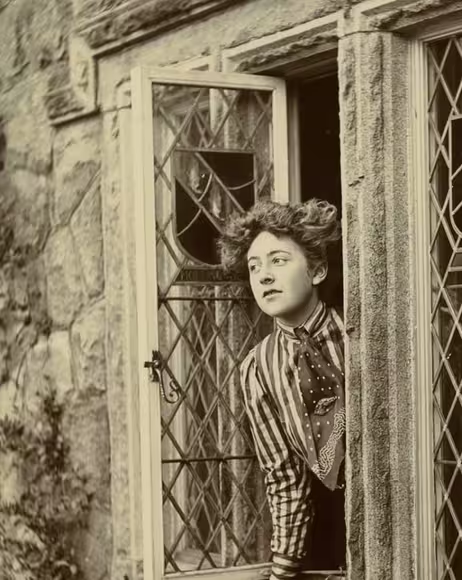
On September 15, 1890, Agatha Christie, the English writer who would become one of the most successful authors in literary history, was born in Torquay, Devon.
Over a career spanning more than half a century, Christie created some of detective fiction's most famous characters, including Hercule Poirot and Miss Jane Marple, wrote dozens of mystery novels and short stories, and became an extraordinarily successful playwright.
Her stories have been read by generations of people around the world, translated into numerous languages and repeatedly adapted for film, television, radio and the stage.
Her ability to construct intricate puzzles, hide clues in plain sight and misdirect readers earned her an enduring reputation as the Queen of Crime.
A Childhood in Devon
Agatha Mary Clarissa Miller was born into a comfortable family at Ashfield, a large Victorian house in the seaside town of Torquay.
Her father, Frederick Miller, was American, while her mother, Clara, came from a family with British and Irish connections. Agatha was the youngest of three children and grew up largely surrounded by adults because her brother and sister were around a decade older.
Unlike many children of her social background, Agatha received much of her early education at home.
She later remembered her childhood as a happy period filled with imaginary characters, stories and games. Her ability to invent people and situations long before she became a professional writer would eventually become one of the defining features of her work.
Her father died in 1901, when Agatha was eleven, leaving the family in more difficult financial circumstances, but her mother managed to keep Ashfield and it remained deeply important to Christie for many years.
War Changes Her Life
In 1912, Agatha met Archibald Christie, a young military officer and aviator.
The couple married on Christmas Eve in 1914, only months after the beginning of the First World War. Archie served in France with the Royal Flying Corps, while Agatha contributed to the war effort at home.
She initially worked as a volunteer nurse in a Red Cross hospital in Torquay.
In 1915, she transferred to the hospital dispensary and began training in pharmacy. She completed examinations with the Worshipful Society of Apothecaries in 1917 and gained detailed practical knowledge of medicines, chemicals and poisons.
That experience would prove extraordinarily useful to a future crime novelist.
Learning About Poison
Poison became one of Christie's favorite methods of fictional murder.
Because she understood how pharmaceutical substances worked, she could describe poisoning with an unusual degree of accuracy. Her books would eventually feature substances including strychnine, arsenic, cyanide and digitalis.
Her medical knowledge was not simply decorative detail. In many of her mysteries, the symptoms produced by a particular poison form an important part of the solution.
Christie's first detective novel emerged directly from this wartime experience.
Hercule Poirot Is Born
During the First World War, Christie's sister Madge challenged her to write a detective novel.
Agatha accepted.
Looking for an original detective, she remembered the Belgian refugees who had arrived in Torquay after Germany invaded Belgium in 1914.
She imagined a retired Belgian police officer: small, impeccably dressed, enormously proud of his moustache and convinced that logic and his little grey cells could solve almost any crime.
His name was Hercule Poirot.
The resulting novel was The Mysterious Affair at Styles. Christie finished the manuscript during the war, but several publishers rejected it before John Lane of The Bodley Head finally accepted it.
The novel was published in 1920.
Neither Christie nor her publisher could have known that Poirot would become one of the most recognizable fictional detectives in the world.
The Beginning of a Remarkable Career
Christie continued writing mysteries throughout the 1920s.
She also created Tommy and Tuppence Beresford, a younger and more adventurous detective partnership who first appeared in The Secret Adversary.
Her reputation grew steadily, but in 1926 she published the book that established her as a major figure in crime fiction: The Murder of Roger Ackroyd.
The novel became famous for its innovative structure and astonishing solution.
Christie demonstrated that the rules of a detective story could be manipulated without abandoning the principle that readers should be given enough information to attempt to solve the mystery themselves.
The book remains one of the most discussed detective novels ever written.
Christie's Own Mystery
The year 1926 was also one of the most difficult periods of Christie's personal life.
Her mother died, and her marriage to Archie Christie was collapsing after he began a relationship with another woman.
On the evening of December 3, 1926, Christie left her home. Her abandoned car was discovered the following morning near a quarry in Surrey.
A massive police search followed.
For eleven days, newspapers across Britain speculated about what had happened to the increasingly famous mystery writer.
She was eventually recognized at a hotel in Harrogate, where she had registered under another name.
Christie appeared to have suffered memory loss and could not provide a clear account of her disappearance. Many theories have been proposed since, but the precise circumstances remain uncertain.
Appropriately for the woman who became synonymous with mysteries, one of the strangest episodes of her life was never completely explained.
The Arrival of Miss Marple
While Poirot was already famous, Christie was developing another very different kind of detective.
In 1927, readers were introduced to Miss Jane Marple in the short story The Tuesday Night Club.
Miss Marple appeared to be an ordinary elderly woman living in the fictional English village of St Mary Mead. She knitted, gardened, listened carefully and was frequently underestimated.
Yet beneath her quiet exterior was a formidable understanding of human nature.
Miss Marple's strength was not forensic science or formal police training. She solved crimes because decades of observing people had taught her that similar personalities, motives and weaknesses appeared again and again.
Her first full-length novel, The Murder at the Vicarage, was published in 1930.
Together, Poirot and Miss Marple would become two of the most famous detectives ever created.
A New Life and a Journey East
Christie's marriage to Archie ended in divorce in 1928.
Soon afterward she decided to fulfill a long-held ambition and travel aboard the Orient Express toward the Middle East.
The journey transformed both her personal life and her writing.
While visiting the archaeological excavations at the ancient city of Ur in 1930, she met a young British archaeologist named Max Mallowan.
The two quickly became close and married on September 11, 1930.
The marriage lasted until Christie's death.
Murder in the Middle East
Life with Max Mallowan gave Christie opportunities to travel extensively through Iraq and Syria.
She accompanied archaeological expeditions and became a useful member of the excavation teams.
She helped clean, document, photograph and catalogue archaeological objects while continuing to write in the mornings.
The landscapes, hotels, trains and people she encountered during these journeys provided inspiration for some of her most famous books.
Murder on the Orient Express, Death on the Nile, Murder in Mesopotamia and Appointment with Death all drew on places and experiences connected with her travels.
Her archaeological life also inspired the memoir Come, Tell Me How You Live.
And Then There Were None
In 1939, Christie published one of her greatest successes, And Then There Were None.
The story brings a group of strangers to an isolated island, where they discover that someone is systematically killing them one by one.
Unlike many of Christie's mysteries, neither Poirot nor Miss Marple arrives to restore order.
The increasingly claustrophobic story became one of the most famous mystery novels ever published and demonstrated Christie's talent for suspense as well as puzzle construction.
Writing Through Another World War
When the Second World War began, Christie once again used her pharmaceutical experience.
She worked in hospital dispensaries, first in Torquay and later at University College Hospital in London.
Meanwhile, she continued writing at an extraordinary pace.
During the war years she produced or published major works including Evil Under the Sun, The Body in the Library, Five Little Pigs and The Moving Finger.
She also secretly wrote the final cases of both of her most famous detectives.
The last Poirot novel, Curtain, and the final Miss Marple story, Sleeping Murder, were placed in safekeeping so they could be published near or after the end of her life.
Mary Westmacott
Detective fiction was not Christie's only literary interest.
Beginning with Giant's Bread, she published a series of novels under the pseudonym Mary Westmacott.
These books were not murder mysteries. They explored relationships, emotional conflict, identity and personal disappointment in a more conventional dramatic form.
The pseudonym allowed Christie to write without readers approaching every page expecting a corpse and a detective.
She ultimately published six novels as Mary Westmacott.
From Novelist to Playwright
Christie also became one of the most successful playwrights of the 20th century.
She frequently adapted her own stories for the stage and learned that theatre required a different kind of storytelling from novels.
In 1947, the BBC asked her to write a short radio play for the 80th birthday of Queen Mary.
The result was Three Blind Mice.
Christie later expanded the story into a full-length stage mystery and changed its title to The Mousetrap.
The World's Longest-Running Play
The Mousetrap opened in London's West End on November 25, 1952.
Christie initially expected it to run for only a few months.
Instead, it became a theatrical phenomenon.
The production continued for decades, moving from the Ambassadors Theatre to St Martin's Theatre in 1974. Apart from an interruption during the COVID-19 pandemic, it has remained on the London stage.
It became the longest-running play in the world.
Audiences are traditionally asked not to reveal the identity of the murderer after leaving the theatre, preserving a secret that generations of theatregoers have shared.
A Master of Misdirection
Christie's extraordinary popularity did not depend on violence or graphic descriptions.
Her great strength was misdirection.
A casual remark could turn out to be essential. An apparently important clue might point in the wrong direction. A character dismissed as harmless could prove crucial to the entire plot.
Christie understood that readers naturally make assumptions about age, class, personality and behavior.
She repeatedly used those assumptions against them.
Her mysteries invited readers to become detectives themselves, while carefully controlling what they noticed and what they ignored.
Famous Crimes and Famous Detectives
Among Christie's best-known works are The Murder of Roger Ackroyd, Murder on the Orient Express, Death on the Nile, The ABC Murders, Five Little Pigs, A Murder Is Announced and And Then There Were None.
Her characters also extended far beyond Poirot and Marple.
Tommy and Tuppence, Harley Quin, Parker Pyne and mystery novelist Ariadne Oliver all appeared repeatedly in her stories.
Yet Poirot and Miss Marple remained the two figures most closely associated with her name.
Dame Agatha Christie
By the later decades of her life, Christie had become a British cultural institution.
Her books were selling around the world, theatrical productions continued to attract audiences and adaptations brought her characters to cinema and television.
In 1971, she was appointed a Dame Commander of the Order of the British Empire for her contribution to literature.
Her second husband had previously been knighted for his archaeological work, making the couple Sir Max and Dame Agatha Mallowan.
The Final Poirot Mystery
In 1975, Curtain, the final Hercule Poirot novel Christie had written decades earlier, was finally published.
The story brought the Belgian detective back to Styles, the country house where readers had first encountered him more than half a century earlier.
Poirot's final appearance was treated as a major cultural event.
The fictional detective was even given an obituary in The New York Times, an extraordinary tribute to a character who had existed only on the printed page.
The Death of the Queen of Crime
Agatha Christie died peacefully on January 12, 1976, at the age of 85.
She was buried in the churchyard of St Mary's Church in Cholsey, Oxfordshire, near the home where she had lived with Max Mallowan.
London's West End theatres dimmed their lights in tribute.
Later that year, Sleeping Murder, the last Miss Marple novel, was published.
Two Billion Books and Counting
Christie's popularity did not disappear with her death.
Her novels have continued to sell in enormous numbers, and Guinness World Records recognizes her as the best-selling fiction writer of all time, with estimated worldwide sales measured in billions of copies.
Her stories remain in print, while Poirot and Miss Marple continue to appear in new television and film adaptations.
The Mousetrap continues to introduce theatre audiences to her particular form of mystery more than seven decades after its first performance.
Few writers have created fictional worlds with such extraordinary longevity.
September 15, 1890
When Agatha Christie was born on September 15, 1890, detective fiction was still a relatively young literary genre.
Arthur Conan Doyle's Sherlock Holmes had appeared only a few years earlier, and many of the conventions readers now associate with the classic murder mystery had not yet been established.
Christie would help define them.
She transformed country houses, luxury trains, archaeological sites, quiet villages and elegant hotels into stages for carefully constructed crimes.
She created detectives recognizable around the world and proved that a murder mystery could be both an intellectual puzzle and enormously popular entertainment.
More than a century after her birth, readers still open an Agatha Christie novel for the same reason generations before them did: to discover whether they can solve the mystery before she reveals the answer.
Other Events on This Day
- Jean Renoir, One of Cinema's Greatest Directors, Is Born
- Zond 5 Begins the First Successful Circumlunar Mission
Credits: 1st photo: Photographer unknown. Public Domain, via The Christie Archive Trust / Wikimedia Commons.


