
Sep
14
14
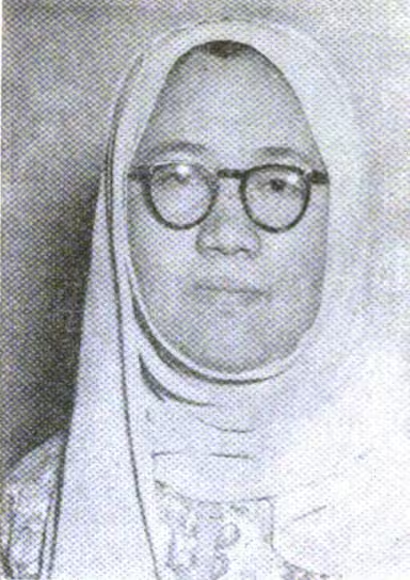
On September 14, 1910, Rasuna Said, one of Indonesia's most prominent female independence activists and advocates for women's education and political participation, was born in Panyinggahan near Maninjau in West Sumatra, then part of the Dutch East Indies.
Known later as Hajjah Rangkayo Rasuna Said, she became a teacher, political organizer, journalist and powerful public speaker who openly challenged Dutch colonial rule.
Her speeches were considered so dangerous by the colonial authorities that in 1932 she was arrested and imprisoned for speaking against the government.
Decades later, independent Indonesia would remember her as one of its National Heroes.
Growing Up in West Sumatra
Rasuna Said was born into a respected Minangkabau family in West Sumatra. Her father, Haji Muhammad Said, was a businessman who had also been involved in the political movement of the region.
Education played an important role in Rasuna's childhood.
Unlike many girls of her generation, she received extensive schooling, particularly in Islamic education. She studied at institutions in the Padang Panjang area, where religious teaching was increasingly being combined with discussions about social reform, nationalism and the future of the Indonesian people.
The intellectual environment of West Sumatra would have a profound influence on her life.
Education for Women
Rasuna became convinced that education was essential to improving the position of women in society.
As a young woman she became associated with Diniyah Putri, an important school for girls established in Padang Panjang by the pioneering educator Rahmah El Yunusiyyah.
Rasuna worked there as a teacher, but her ambitions extended beyond conventional classroom education.
She believed that young women should understand politics and the society in which they lived, not simply acquire domestic or religious knowledge.
This position eventually brought her into conflict with the school's desire to remain outside direct political activity.
Rasuna increasingly concluded that improving women's lives required not only education but also political action.
Entering Politics
Still in her youth, Rasuna became involved in organizations opposed to Dutch colonial rule.
She served as a secretary in Sarikat Rakyat and later became increasingly active in Persatuan Muslim Indonesia, commonly known as PERMI.
PERMI combined Islamic reform, nationalism and opposition to colonialism. It also offered women unusually significant opportunities to participate in political organization.
Rasuna became one of its most prominent female leaders.
She organized women, supported educational programs and argued that Indonesian women should take an active role in the political struggle rather than remain observers.
A Powerful Public Speaker
Rasuna Said became famous above all for her ability as an orator.
Speaking before large audiences, she attacked colonial policies and accused Dutch rule of keeping Indonesians poor, politically powerless and dependent.
Her speeches were direct, emotional and unusually fearless for a period in which public criticism of colonial authorities could lead to arrest.
Her reputation earned her the nickname Singa Minangkabau, or the Lioness of Minangkabau.
The colonial authorities began watching her activities closely.
Arrested for a Speech
In 1932, Rasuna delivered a political speech openly criticizing Dutch colonial rule.
Authorities arrested her under the colonial concept known as spreekdelict, essentially a criminal offense based on the content of a public speech.
She became the first woman recorded as being prosecuted under this colonial speaking law.
Her arrest attracted considerable attention because a young Indonesian woman had publicly challenged one of the world's major colonial powers and refused to retreat from her political beliefs.
Rasuna was sentenced to approximately 15 months in prison and was incarcerated at Bulu Prison in Semarang.
Rather than ending her political career, the imprisonment strengthened her reputation within the nationalist movement.
Words as a Weapon
After leaving prison, Rasuna continued to campaign for independence.
As Dutch pressure weakened political organizations such as PERMI, she increasingly turned to journalism and publishing.
She became involved with the magazine Raya and later moved to Medan, where she led the women's magazine Menara Putri.
Through journalism, Rasuna could continue discussing nationalism, education and the position of women even when direct political organizing became increasingly difficult.
For Rasuna, speaking and writing were closely connected forms of resistance.
Women and the Independence Movement
Rasuna's activism challenged two systems of power at the same time.
She opposed Dutch colonialism, but she also challenged assumptions that political leadership and public life belonged primarily to men.
She believed women needed education and opportunities to participate in the political future of their country.
Her own career demonstrated that principle. She did not simply argue that women should participate in politics; she became a political leader herself.
Her work formed part of a broader tradition of Indonesian women who connected the struggle for national independence with questions of education, social reform and women's public role.
War and Japanese Occupation
The political landscape changed dramatically after Japanese forces occupied the Dutch East Indies during the Second World War.
Rasuna remained politically active during the occupation and participated in organizations that brought together Indonesian activists under the difficult conditions of Japanese rule.
Although such organizations operated within a system controlled by the occupation authorities, Indonesian nationalists also used them to develop networks, organizational experience and political influence that would later become important during the independence struggle.
Indonesia Declares Independence
On August 17, 1945, Sukarno and Mohammad Hatta proclaimed the independence of Indonesia.
For activists such as Rasuna Said, who had spent years confronting colonial authorities, independence opened a completely new phase of political life.
She became involved in the institutions of the emerging republic and represented Sumatra in national politics.
Rasuna served in the Central Indonesian National Committee, known as the KNIP, which functioned as an early representative body during the revolutionary period.
She later became a member of Indonesia's Provisional People's Representative Council.
From Revolutionary to Stateswoman
Rasuna's political career continued after Indonesia secured international recognition of its independence.
In 1957, she became a member of the National Council, and in 1959 President Sukarno appointed her to the Supreme Advisory Council of the Republic of Indonesia.
She remained a member of the council for the rest of her life.
The transformation was remarkable.
The woman once imprisoned by colonial authorities for giving a political speech had become a senior figure within the government of an independent Indonesia.
A Different Kind of National Hero
Many stories of national liberation focus on soldiers and battlefield commanders.
Rasuna Said's struggle was different.
Her principal weapons were education, organization, journalism and public speaking.
She demonstrated how political ideas could challenge colonial power and how women's participation could strengthen a national movement.
Her life also showed that the struggle for independence was not fought only on battlefields. It took place in schools, newspapers, meeting halls and public speeches.
Death and Recognition
Rasuna Said died in Jakarta on November 2, 1965, at the age of 55.
She was buried at the Kalibata Heroes Cemetery in Jakarta, where many important figures in Indonesia's national history are interred.
On December 13, 1974, the Indonesian government posthumously awarded her the title of National Hero of Indonesia in recognition of her contribution to the independence movement.
She was among a relatively small number of women to receive the country's highest form of national historical recognition.
A Name Seen Across Jakarta
Rasuna Said's name remains highly visible in modern Indonesia.
One of Jakarta's major roads, Jalan H. R. Rasuna Said, bears her name. The avenue runs through the capital's important Kuningan business and diplomatic district.
Millions of people therefore encounter her name in everyday life, even though the story behind it reaches back to the struggle against colonial rule.
September 14, 1910
When Rasuna Said was born on September 14, 1910, Indonesia did not yet exist as an independent country.
Much of the archipelago was controlled by the Netherlands, political opposition was restricted and women's participation in formal politics remained extremely limited.
Rasuna would spend much of her life challenging those conditions.
She became a teacher who believed education should lead to political awareness, a journalist who used the written word to promote change, an orator imprisoned for criticizing colonial rule and eventually a stateswoman serving an independent Indonesia.
Her legacy represents the connection between two struggles that shaped modern Indonesian history: the struggle for national independence and the struggle for women to have a voice in the country's public life.
Other Events on This Day
- Joe Kittinger Begins the First Solo Balloon Crossing of the Atlantic
- Puerto Rican Poet and Activist Lola Rodríguez de Tió Is Born
Credits: 1st photo by: Ministry of Information of Indonesia. Public Domain, via Wikimedia Commons.


