
Sep
14
14
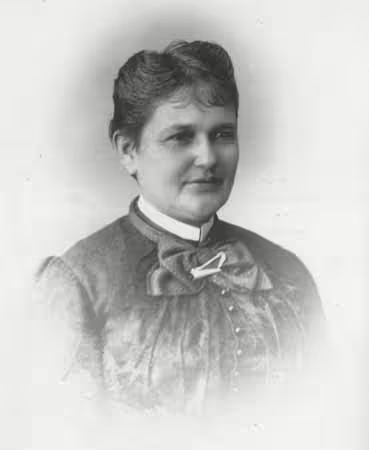
On September 14, 1843, Lola Rodríguez de Tió, one of Puerto Rico's most influential 19th-century poets and political activists, was born in San Germán.
Over the course of her life, she became a passionate advocate for Puerto Rican independence, the abolition of slavery and a greater public and educational role for women.
Her political writing repeatedly brought her into conflict with Spanish colonial authorities and forced her into exile. Yet exile only expanded the reach of her activism, connecting her with independence movements in Puerto Rico, Cuba and New York.
She is perhaps best remembered for writing the revolutionary lyrics to La Borinqueña, a song that became one of the most powerful musical symbols of Puerto Rican identity.
Growing Up in Colonial Puerto Rico
Lola was born Dolores Rodríguez de Astudillo y Ponce de León in San Germán, one of Puerto Rico's oldest towns.
At the time, Puerto Rico had been under Spanish rule for centuries. Political power remained concentrated in colonial institutions, slavery still existed on the island and opportunities for women in public and political life were severely limited.
Lola grew up in an educated family and continued much of her learning at home, where she was exposed to literature, politics and intellectual discussion.
Her interest in poetry developed early, but literature would never be separate from politics in her life. For Rodríguez de Tió, words became a means of expressing ideas about freedom, national identity and social change.
A Partnership in Literature and Politics
In 1863, she married Bonocio Tió Segarra, a journalist, writer and political activist who shared many of her views.
Their marriage became an intellectual as well as personal partnership. Their home attracted writers, political thinkers and people interested in reform and greater political freedom for Puerto Rico.
Lola wrote poetry and contributed to newspapers and literary publications, while increasingly participating in the political debates surrounding the island's future.
At a time when women were generally expected to remain outside formal politics, her willingness to speak and publish on public affairs was itself significant.
Against Slavery
One of the great political questions facing 19th-century Puerto Rico was slavery.
Thousands of enslaved people continued to labor on plantations and in other parts of the colonial economy. Puerto Rican abolitionists increasingly demanded an end to the institution, and Rodríguez de Tió supported their cause.
Slavery was finally abolished in Puerto Rico in 1873, although the process did not immediately provide complete freedom or equality for formerly enslaved people.
For Lola, the struggle against slavery formed part of a broader belief that political and social systems denying human freedom had to be challenged.
Women and Society
Rodríguez de Tió also questioned the restrictions placed on women.
Her writings emphasized the importance of women's education and participation in society. In an 1875 essay, La influencia de la mujer en la civilización, she discussed women's contribution to civilization and challenged assumptions that their role should be confined to the private sphere.
Later generations would recognize her as an important pioneer in the history of Puerto Rican feminism, although the political language of her own time differed considerably from that used by women's movements in the 20th and 21st centuries.
Her life itself made a powerful argument: a woman could be a respected poet, newspaper contributor, political organizer and public intellectual.
The Grito de Lares
In 1868, Puerto Rican revolutionaries attempted to overthrow Spanish colonial rule in an uprising known as the Grito de Lares.
The revolt was quickly defeated, but it became an enduring symbol of the Puerto Rican independence movement.
Inspired by the movement for independence, Rodríguez de Tió wrote new patriotic lyrics for the melody known as La Borinqueña.
Her version was not a gentle patriotic song. It was a revolutionary call encouraging Puerto Ricans to awaken, resist colonial domination and fight for freedom.
The lyrics became closely associated with the independence movement and made Rodríguez de Tió's poetry inseparable from Puerto Rican political history.
The Revolutionary La Borinqueña
La Borinqueña has a complicated history.
The melody existed before Rodríguez de Tió wrote her words, but her 1868 revolutionary version transformed it into an openly political anthem.
The name comes from Borinquen, an Indigenous Taíno-derived name for Puerto Rico that became deeply connected with Puerto Rican identity.
Rodríguez de Tió's revolutionary lyrics were ultimately considered too confrontational to serve as the official words of the anthem.
A different text written by Manuel Fernández Juncos was later adopted for the official version of La Borinqueña.
Nevertheless, Lola's revolutionary version remains historically important and continues to symbolize Puerto Rican resistance and the independence movement.
Poetry and Political Reputation
Rodríguez de Tió's reputation was not based only on political verse.
She became an important literary figure whose poetry was admired beyond Puerto Rico.
Her first major collection, Mis cantares, appeared in 1876. Other works followed, including Mi ofrenda, Claros y nieblas and Mi libro de Cuba.
Her writing combined personal emotion, patriotism and political conviction, giving her an increasingly prominent place in the literary culture of the Spanish-speaking Caribbean.
But literary recognition did not make her political opinions safer.
Forced Into Exile
The Spanish colonial authorities regarded separatist activism with deep suspicion.
In 1877, Rodríguez de Tió and her family were forced to leave Puerto Rico because of their political activities. They went to Venezuela, where they encountered other prominent Caribbean intellectuals and independence advocates.
The family later returned to Puerto Rico, but Lola and Bonocio continued criticizing colonial rule.
They also established the satirical newspaper La Almojábana, using journalism as another means of challenging political authority.
In the late 1880s they were forced into exile again.
Puerto Rico and Cuba: Two Connected Struggles
Rodríguez de Tió believed that the struggles of Puerto Rico and Cuba against Spanish colonial rule were inseparable.
After leaving Puerto Rico, she spent important periods of her life in Havana. Her home became a meeting place for writers, political activists and Puerto Rican exiles.
She expressed the relationship between the two islands repeatedly in her poetry, presenting Cuba and Puerto Rico as partners in a shared struggle for freedom.
This idea of Antillean solidarity was also promoted by other major Caribbean intellectuals and revolutionaries of the period.
Her collection Mi libro de Cuba, published in the 1890s, reflected the deep connection she had developed with the island.
New York and José Martí
Political pressure eventually forced Rodríguez de Tió to leave Cuba as well.
She spent periods in New York City, which had become an important center for Cuban and Puerto Rican independence activists living in exile.
There she worked alongside members of the revolutionary movement associated with figures such as José Martí, the Cuban poet and independence leader.
Rodríguez de Tió participated not only through poetry but through political organizations and women's groups that raised money and collected supplies for those fighting Spanish rule in Cuba.
Women in these organizations organized fundraising, medicine and clothing for independence forces, demonstrating that revolutionary movements depended on networks extending far beyond the battlefield.
A Woman in Revolutionary Politics
Rodríguez de Tió's political career is particularly notable because of the world in which she operated.
Formal political institutions were overwhelmingly controlled by men, and women lacked many of the rights and opportunities later generations would consider fundamental.
Yet Lola moved through political and literary circles across Puerto Rico, Venezuela, Cuba and the United States.
She wrote for newspapers, participated in political organizations, helped revolutionary networks and used poetry to express ideas that colonial authorities considered dangerous.
Her activism demonstrated that women were not merely observers of the independence movements of the Caribbean. They were writers, organizers, fundraisers and political thinkers in their own right.
The End of Spanish Rule
The political world Rodríguez de Tió had known for most of her life changed dramatically in 1898.
The Spanish-American War brought Spanish colonial rule in Puerto Rico and Cuba to an end. Puerto Rico came under the control of the United States, while Cuba entered a complicated transition toward formal independence.
For Puerto Rican independence advocates, the end of Spanish rule did not produce the sovereign republic they had hoped to create.
Rodríguez de Tió continued to identify strongly with Puerto Rican freedom while maintaining her deep ties to Cuba.
Returning to Havana
In 1899, Rodríguez de Tió returned to Havana, where she would spend most of the remainder of her life.
She became involved in Cuban cultural and educational life and worked as an inspector of public schools.
In 1910, she helped establish the Cuban Academy of Arts and Letters, another indication of the remarkable literary standing she had achieved.
Her life had taken her from colonial Puerto Rico through repeated exile and revolutionary politics to a position of considerable cultural respect in Cuba.
A Poet Between Two Islands
Although she lived for many years outside Puerto Rico, Rodríguez de Tió never abandoned the island as the central subject of her political imagination.
At the same time, Cuba became a second homeland.
Her writings helped create an enduring image of Puerto Rico and Cuba as closely connected Caribbean societies whose histories and aspirations could not easily be separated.
This combination of Puerto Rican identity and broader Caribbean solidarity became one of the defining elements of her legacy.
A Lasting Literary Legacy
Lola Rodríguez de Tió died in Havana on November 10, 1924, at the age of 81.
By then she had spent more than half a century writing poetry, contributing to newspapers and participating in political movements.
She had lived through the abolition of slavery in Puerto Rico, the Grito de Lares, the Cuban wars for independence, the Spanish-American War and the end of Spain's centuries-old empire in the Caribbean.
Her own life had been repeatedly reshaped by those events.
Today she is remembered as an important figure in both Puerto Rican literature and Caribbean political history.
More Than the Author of a Song
The revolutionary version of La Borinqueña remains the most famous connection between Rodríguez de Tió and Puerto Rican history, but her legacy reaches considerably further.
She used literature to argue for political freedom, supported the abolition of slavery and challenged limitations placed on women's education and participation in public life.
She also demonstrated how political movements could survive across borders. When colonial governments forced her into exile, she continued her work from Venezuela, Cuba and New York.
Exile did not silence her. It transformed her into an increasingly international voice.
September 14, 1843
When Lola Rodríguez de Tió was born on September 14, 1843, slavery still existed in Puerto Rico, the island remained firmly under Spanish colonial rule and women possessed little formal political power.
During her lifetime, she challenged all three realities.
She became a poet whose verses crossed national borders, an abolitionist who supported the struggle against slavery, an advocate for women's education and public participation, and a political activist repeatedly punished for demanding greater freedom for her homeland.
Her story is a reminder that poetry can be more than art. In the hands of Lola Rodríguez de Tió, words became a form of political resistance.
Other Events on This Day
- Indonesian Independence Activist and Women's Rights Advocate Rasuna Said Is Born
- Joe Kittinger Begins the First Solo Balloon Crossing of the Atlantic
Credits: 1st photo: Public Domain, via Library of Congress / Wikimedia Commons.


