
Sep
11
11
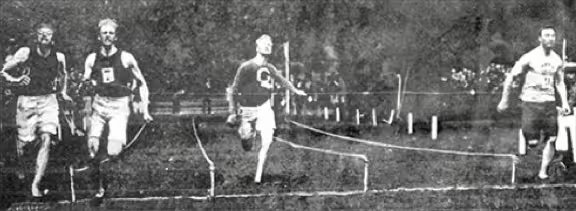
On September 11, 1876, Australian athlete Stanley Rupert "Stan" Rowley was born in Young, New South Wales. One of Australia's finest sprinters at the end of the 19th century, Rowley would go on to achieve an extraordinary distinction at the 1900 Olympic Games in Paris, where he was credited with four medals in events ranging from the 60-metre sprint to an unlikely 5,000-metre team race.
His Olympic story remains one of the most unusual in the early history of the Games. A specialist sprinter, Rowley won three individual bronze medals before becoming part of a victorious team in a distance event for which he was hardly suited.
A Talented Young Athlete
Stan Rowley was born to William Rowley and Tempest Jane Rowley. Both of his parents died when he was still a child, and he and his siblings were subsequently raised by an aunt in Croydon, near Sydney.
He attended Sydney Boys' High School, where his athletic ability was already apparent. Rowley was talented in several sports and also had musical interests, playing the violin and possessing a fine tenor voice. Running, however, became the field in which he truly distinguished himself.
He began competing seriously during the 1890s and quickly established himself as one of the fastest runners in Australasia. His specialties were the short sprints, particularly the 100 yards and 220 yards.
One of Australasia's Fastest Men
Rowley won the 100-yard and 220-yard events at the Australasian Championships in both 1897 and 1899. At Brisbane in 1899, he equalled the Australian record of 9.9 seconds for 100 yards and established an Australasian record in the 220 yards.
By the turn of the century, Rowley had become one of the leading sprinters in the region. His achievements earned him the opportunity to travel to Europe and compete against some of the world's best athletes.
The 1900 Olympic Games in Paris
Rowley travelled to Europe in 1900 and competed at the Olympic Games in Paris. The event was very different from the highly organized international spectacle that the Olympic Games would later become. Competitions were spread over several months as part of the Paris Exposition, and many of the traditions now associated with the Olympics had not yet been established.
In Paris, Rowley demonstrated remarkable consistency. He finished third in each of the three individual sprint events he entered: the 60 metres, 100 metres and 200 metres.
He is therefore credited with three Olympic bronze medals for Australia, an exceptional achievement for an athlete competing at only one Olympic Games.
An Unexpected Olympic Gold
The strangest episode of Rowley's Olympic career came not in a sprint, but in the 5,000-metre team race.
A British team needed a fifth competitor in order to take part in the event. Rowley agreed to join them despite being a sprinter with no special experience in long-distance racing. The other members of the team were strong enough that they expected to win even if Rowley finished well behind the field.
The difference between Rowley's usual races and the 5,000 metres was enormous. Instead of racing for only a few seconds, he suddenly faced more than twelve laps of the track.
Rowley soon fell far behind and eventually began walking. By the time the other runners had completed the race, he was still well short of the finish. Officials ultimately allowed his participation to end without requiring him to complete the remaining distance.
Despite his last-place position, the performances of his teammates gave the team enough points to win the competition. Rowley was therefore credited as a member of the gold-medal-winning team.
Four Olympic Medals
Rowley's results in Paris gave him one of the most remarkable records among Australia's earliest Olympians: three bronze medals in individual sprint events and a gold in the 5,000-metre team race.
The medal system of the 1900 Games was not yet the familiar gold, silver and bronze system used today. Winners and placed competitors often received prizes instead of medals. Rowley's Olympic achievements were later classified according to the modern medal system.
His performance is especially impressive because he competed in only one Olympic Games. For more than half a century, no Australian male sprinter would again win an Olympic medal in the men's sprint events.
Life After Competition
After returning to Sydney in October 1900, Rowley largely retired from competitive sprinting, although he briefly returned to racing several years later.
He remained involved in athletics beyond his years as a competitor. From 1908, he served for many years as honorary treasurer of the Amateur Athletic Union of Australasia, helping support the administration of the sport in which he had achieved international success.
Rowley married Bessie Scott in 1903 and later worked in the stock and business sector. He died at his home in Manly, New South Wales, on April 1, 1924, aged 47.
A Pioneer of Australian Olympic Sport
Today, Stan Rowley is remembered as one of the pioneering figures of Australian athletics and one of the country's earliest Olympic medalists.
His three sprint medals demonstrated that athletes from Australia could compete successfully against the world's fastest runners. Yet it is his unexpected participation in the 5,000-metre team race that has given his Olympic story its uniquely memorable character.
Born on September 11, 1876, Rowley went from the running tracks of New South Wales to the Olympic stage in Paris, leaving behind an unusual record that still occupies a distinctive place in Australian sporting history.
Other Events on This Day
- BART Begins Passenger Service in the San Francisco Bay Area
- Henry Hudson Reaches Manhattan and Enters New York Bay
Credits: 1st photo: Photographer unknown. Public Domain, via Wikimedia Commons.


