
Sep
11
11
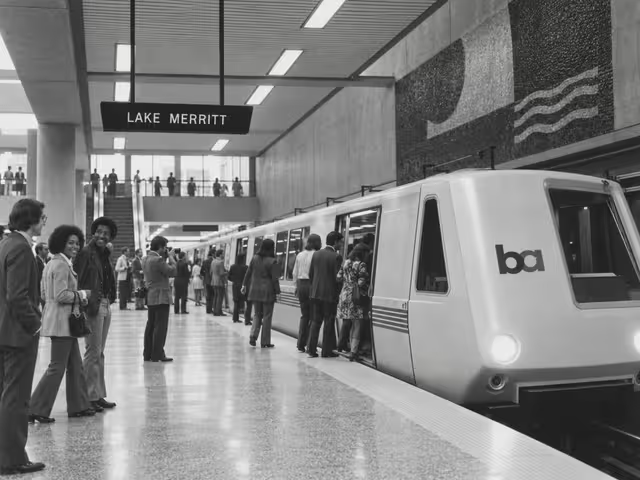
On September 11, 1972, the Bay Area Rapid Transit system, better known as BART, began carrying paying passengers for the first time. The opening marked the beginning of a new era of public transportation in the San Francisco Bay Area and the culmination of years of planning, engineering and construction.
The first trains operated along a 28-mile route between Fremont and MacArthur stations in the East Bay. Twelve stations opened to passengers that day, while other parts of the ambitious regional network were still under construction or awaiting the start of service.
A New Transportation System for the Bay Area
The idea behind BART had developed during the years following World War II, when the San Francisco Bay Area was experiencing rapid population growth and increasing dependence on automobiles.
Regional planners feared that expanding highways alone would not be enough to handle the area's future transportation needs. Their solution was a high-speed electric railway capable of connecting San Francisco with communities across the East Bay and surrounding suburbs.
In 1957, the California legislature created the San Francisco Bay Area Rapid Transit District. Five counties were originally involved, although Marin and San Mateo counties later withdrew from the project.
The remaining counties of Alameda, Contra Costa and San Francisco continued with the plan. In November 1962, voters approved a $792 million bond issue to help finance construction of the new rapid transit system.
Building BART
Construction officially began on June 19, 1964, when President Lyndon B. Johnson participated in a groundbreaking ceremony in Contra Costa County.
The project was enormous. Engineers had to construct elevated tracks, surface lines and extensive underground tunnels while developing an entirely new generation of electric trains and automated control systems.
One of the most ambitious parts of the project was the Transbay Tube, an underwater railway tunnel designed to carry trains beneath San Francisco Bay between Oakland and San Francisco.
Although the tube itself was largely completed before BART's first passenger service began, trains would not carry passengers through it until 1974.
September 11, 1972
After years of construction and testing, BART was finally ready to welcome the public on Monday, September 11, 1972.
The first section stretched from Fremont to MacArthur Station in Oakland. Twelve stations were in operation, and 18 two- and three-car trains were available to carry passengers along the new route.
More than 15,000 people rode BART on its opening day. Many passengers were not simply commuting to work but had come specifically to experience the futuristic new railway for themselves.
Opening-day celebrations were held at stations along the route, with ribbon-cutting ceremonies, local officials and crowds gathering to watch the first trains enter service.
BART's First Paying Passenger
Among the people making history that morning was Gertrude Guild of Oakland, who became BART's first paying passenger when she entered the system at Lake Merritt Station.
Passengers encountered a transit system that looked strikingly modern for the early 1970s. BART had been designed not simply as another railway, but as a technological showcase intended to compete with the speed, comfort and convenience of the automobile.
Fares on opening day ranged from 30 cents to $1.25, depending on the distance traveled. Initial service operated on weekdays from 6 a.m. until 8 p.m.
A System Still Taking Shape
The opening on September 11 was only the first stage of the BART network.
Service expanded rapidly. The Richmond line opened in January 1973, followed by the Concord line in May. Later that year, trains began operating on the San Francisco section between Montgomery Street and Daly City.
At first, however, passengers could not ride directly between San Francisco and the East Bay. The two sides of the system remained separated while final preparations continued inside the Transbay Tube.
That changed on September 16, 1974, when passenger trains finally began running through the underwater tube. For the first time, BART provided direct rail service beneath San Francisco Bay, linking Oakland and the East Bay with downtown San Francisco.
A Technological Vision of the Future
When it opened, BART represented an unusually ambitious approach to urban transportation in the United States. Its electric trains, automatic train-control technology, modern stations and long stretches of grade-separated track reflected the optimism of an era fascinated by technology and futuristic design.
The trains were designed to travel at speeds far beyond those of traditional city subway systems, allowing BART to serve both dense urban centers and distant suburban communities.
The original system ultimately cost approximately $1.6 billion, making it one of the largest locally funded public works projects of its era.
Changing Transportation Around San Francisco Bay
Over the decades that followed, BART became an essential part of transportation in Northern California. The network continued to expand beyond its original routes, eventually reaching new communities and major destinations including San Francisco International Airport.
BART has also played an important role during extraordinary events. Following the 1989 Loma Prieta earthquake, damage forced the temporary closure of the San Francisco-Oakland Bay Bridge, making BART's underwater rail connection especially important for travel across the bay.
The trains, stations and technology have changed considerably since the first passengers climbed aboard in 1972, but the fundamental idea behind the system remains the same: connecting communities around the Bay Area through rapid regional rail transportation.
September 11, 1972
The start of passenger service on September 11, 1972, was therefore much more than the opening of a new railway line. It was the first operational step in one of the most ambitious transportation projects in American history.
From just 12 stations and a 28-mile route in the East Bay, BART would grow into a transportation network recognized around the world and become one of the defining pieces of infrastructure of the San Francisco Bay Area.
Other Events on This Day
- Australian Sprinter and Olympic Champion Stan Rowley Is Born
- Henry Hudson Reaches Manhattan and Enters New York Bay


