
Oct
25
25
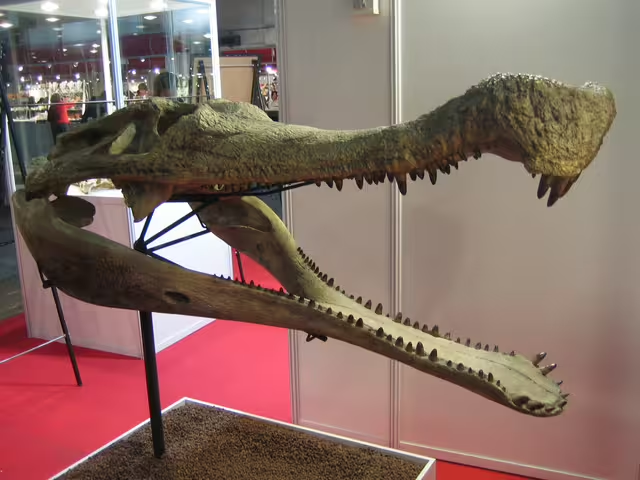
On October 25, 2001, scientists published new research on Sarcosuchus imperator, an enormous prehistoric relative of crocodiles. Fossils recovered in Niger helped researchers reconstruct an animal that lived approximately 110 million years ago, when rivers crossed land now occupied by the Sahara Desert.
New Evidence for an Already Known Giant
Sarcosuchus had been described decades earlier from more limited remains. Fieldwork in 1997 and 2000 provided a much richer collection, including skulls from adults and younger animals, together with bones from other parts of the body.
A team led by palaeontologist Paul Sereno, working with colleagues including Hans Larsson, Christian Sidor and Boubé Gado, used these discoveries to investigate the animal’s anatomy, growth and place in crocodile evolution. Their findings appeared online in Science on October 25, before the printed paper followed in November.
How Large Was Sarcosuchus?
The researchers estimated that the largest individuals could have reached 11–12 metres in length and weighed around eight tonnes. These figures were reconstructions based on fossil evidence and comparisons with living animals, rather than measurements of a complete giant skeleton.
Its elongated jaws carried robust teeth. Their shape suggested a diet that included large fish and potentially dinosaurs, making Sarcosuchus a formidable predator within its ancient river environment.
A River World Beneath the Desert
The fossils offered more than a glimpse of an exceptionally large reptile. They also revealed how different this part of Africa had been during the Cretaceous Period. The dry landscapes of modern Niger preserved evidence of waterways inhabited by several kinds of crocodile relatives.
The 2001 study transformed a previously incomplete picture of Sarcosuchus into a detailed scientific reconstruction. Its significance lay in showing how newly recovered bones could illuminate an animal’s size, development and surroundings — bringing an ancient ecosystem into clearer view.
Other Events on This Day
- Dirk Hartog Lands off Western Australia and Leaves a Message on a Pewter Plate
- Pablo Picasso Is Born, an Artist Who Transformed Modern Art
Credits: 1st photo: Eduard Solà Vázquez (Esv), via Wikimedia Commons. Licensed under CC BY-SA 3.0. Sources: Sereno et al., Science — The Giant Crocodyliform Sarcosuchus from the Cretaceous of Africa; Yale University — Researchers Discover 40-Foot Crocodile Fossil; University of Chicago Magazine — Research on Sarcosuchus; University of Chicago — Sarcosuchus imperator


