
Oct
25
25
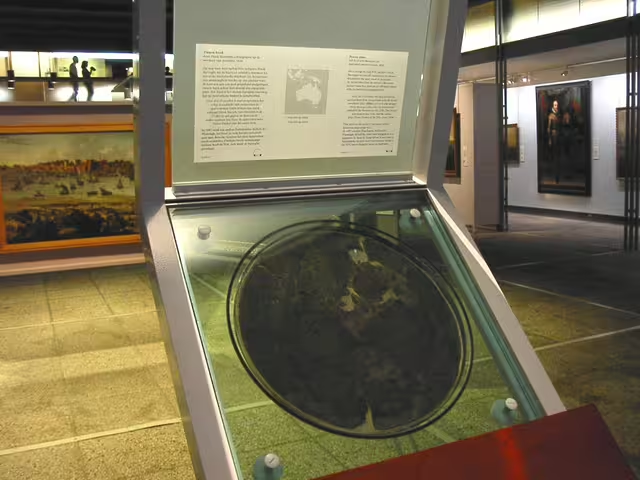
On October 25, 1616, Dutch captain Dirk Hartog reached an island off the western coast of Australia aboard the Eendracht. His visit became the first documented European landing in what is now Western Australia. Before leaving, his crew placed an inscribed pewter plate on a wooden post — a simple record that would survive for centuries.
An Unexpected Landfall
Hartog was sailing for the Dutch East India Company, bound for trading ports in the East Indies, now Indonesia. After rounding the Cape of Good Hope, he followed a route that used strong westerly winds across the southern Indian Ocean.
Determining how far east a ship had travelled was difficult with the navigation methods available at the time. Hartog sailed farther east than intended and encountered Australia’s western coastline. He landed on the island now known as Dirk Hartog Island, near the entrance to Shark Bay.
A Message Left for Future Visitors
To document the visit, the crew flattened a pewter dish and scratched an inscription into its surface. It recorded the arrival date, the ship’s name, senior members of the expedition and their intention to continue towards Bantam in Java.
The plate was fixed to a post at the island’s northern end, now called Cape Inscription. Hartog departed on October 27, leaving behind a durable message in a place far from the European ports where his voyage had begun.
The Plate’s Remarkable Journey
In 1697, another Dutch captain, Willem de Vlamingh, found Hartog’s weathered plate. Recognising its significance, he replaced it with a new plate that repeated the original inscription and added details of his own expedition.
Hartog’s original eventually reached the Netherlands and is preserved in the Rijksmuseum in Amsterdam. It remains the oldest surviving physical record of a European landing in Australia.
More than four centuries later, this ordinary shipboard object provides a direct connection to the voyage: a written announcement of arrival that outlasted both the vessel and its crew.
Other Events on This Day
- New Fossils Reveal the Extraordinary Size of Sarcosuchus, Africa’s Prehistoric Giant
- Pablo Picasso Is Born, an Artist Who Transformed Modern Art
Credits: 1st photo: Adam Carr, via Wikimedia Commons. Public domain. Object: Dirk Hartog’s plate, 1616, Rijksmuseum, Amsterdam. Sources: National Museum of Australia — Dirk Hartog Lands off Western Australia; Western Australian Museum — Hartog Was Here; Rijksmuseum — Dirck Hartogh Dish; Australian Government — Dirk Hartog Landing Site 1616: Cape Inscription Area


