
Oct
16
16
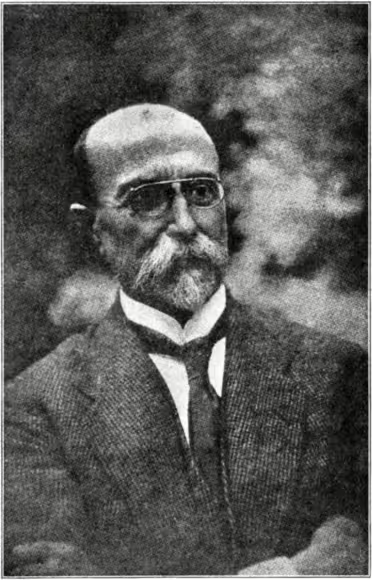
On October 16, 1918, Tomáš Garrigue Masaryk submitted the first draft of a declaration of Czechoslovak independence to U.S. Secretary of State Robert Lansing. Written in Washington during the final weeks of the First World War, the document outlined a future beyond Habsburg rule. Its final version, issued two days later, became known as the Washington Declaration.
A Diplomatic Step Toward Independence
With Austria-Hungary seeking peace, the future of its peoples had become an urgent international question. Masaryk wanted the Czech and Slovak demand for independence to be clearly understood in Washington.
His accompanying letter explained why the declaration was being prepared and addressed the timing of its publication. He even offered to delay its release if the American government preferred it to appear after President Woodrow Wilson’s response to Austria-Hungary. The letter reveals the careful diplomacy behind the public proclamation.
From Draft to Declaration
Masaryk had completed an initial Czech draft on October 14. His secretary, Jaroslav Císař, translated it into English, and this version was submitted to Lansing on October 16.
Further revisions followed with assistance from Masaryk’s American collaborators. On October 18, the final English text was delivered to the State Department and the White House and released to the press. Although the declaration named Paris as its place of issue, it had been prepared in Washington.
A Vision of a Democratic Republic
The declaration went beyond demanding separation from Austria-Hungary. It described the principles on which the proposed state would be built: a republican government, universal suffrage, religious liberty, freedom of speech and the press, and equal standing for women and men.
It also promised safeguards for minorities and the separation of church and state. References to American democratic traditions helped explain these aspirations to an international audience.
A Document of Founding Ideals
The Washington Declaration expressed both a claim to national independence and a programme for public life. Its importance lies in that combination: it explained why a new state should exist and what values it should uphold.
The submission of October 16 marked an important stage in bringing that vision before the American government.
Other Events on This Day
- Belzoni Begins the Excavation That Reveals the Magnificent Tomb of Seti I
- Hamilton Discovers Quaternions and Carves a Mathematical Breakthrough into a Dublin Bridge
Credits: 1st photo: Unknown photographer, 1918, via Wikimedia Commons. Public domain. Sources: U.S. Department of State — Masaryk to the Secretary of State, October 16, 1918; U.S. Department of State — Declaration of Czechoslovak Independence, October 18, 1918; Ministry of Foreign Affairs of the Czech Republic — Washington Declaration


