
Oct
17
17
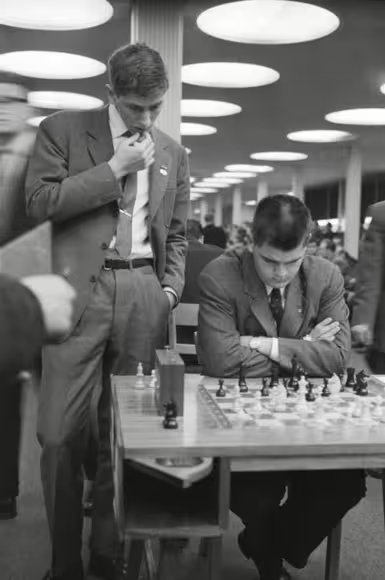
On October 17, 1956, a thirteen-year-old American chess player produced a performance that would be remembered for generations. Playing against the experienced Donald Byrne in New York, Bobby Fischer combined daring sacrifices with precise calculation to win the encounter later celebrated as the “Game of the Century.”
A Young Talent Faces an Established Opponent
The game took place during the Third Rosenwald Trophy tournament at New York’s Marshall Chess Club. Byrne played White, while Fischer commanded the black pieces.
Fischer was already a promising young player, but this encounter revealed an exceptional depth of understanding. Rather than relying on an opponent’s simple mistake, he built an attack through active pieces, tactical threats and pressure against Byrne’s exposed king.
The Queen Sacrifice That Made History
The most famous moment came on Fischer’s seventeenth move. With his queen under attack, he played 17...Be6, moving a bishop instead of saving his most powerful piece.
Byrne captured the queen, but Fischer had calculated a powerful continuation. A sequence of checks and captures allowed his remaining pieces to work together, winning substantial material and maintaining the initiative.
The sacrifice was a striking demonstration that a queen’s value depends on the position around it. Coordinated rooks, bishops and knights could achieve more than a powerful piece left without effective support.
A Victory Given an Unforgettable Name
The recorded game ends with 41...Rc2 checkmate, completing Fischer’s attack against the white king.
International Master and chess writer Hans Kmoch annotated the encounter for the December 1956 issue of Chess Review, calling it the “Game of the Century.” His praise highlighted the extraordinary achievement of a thirteen-year-old competing against a formidable opponent. The memorable title became inseparable from the game.
An Early Glimpse of Greatness
Fischer’s progress soon brought further milestones. He won the 1957–58 U.S. Championship at fourteen and became a grandmaster at fifteen.
Yet the victory over Byrne retained its special appeal. It offers a vivid lesson in calculation, king safety and the coordination of pieces—and captures the moment when a young player’s imagination produced a lasting work of chess art.
Other Events on This Day
- The International Union of Railways Is Founded in Paris to Connect Railway Systems Across Borders
- Willie Park Sr. Wins the First Open Championship at Prestwick, Scotland
Credits: 1st photo: Bundesarchiv, Bild 183-76052-0053 / Ulrich Kohls / CC BY-SA 3.0 DE, via Wikimedia Commons. Border cropped. Sources: Chess.com — Game of the Century: Byrne vs Fischer (1956); Edward Winter — The Byrne v Fischer “Game of the Century”; World Chess Hall of Fame — Bobby Fischer Exhibition Materials


