
Oct
10
10
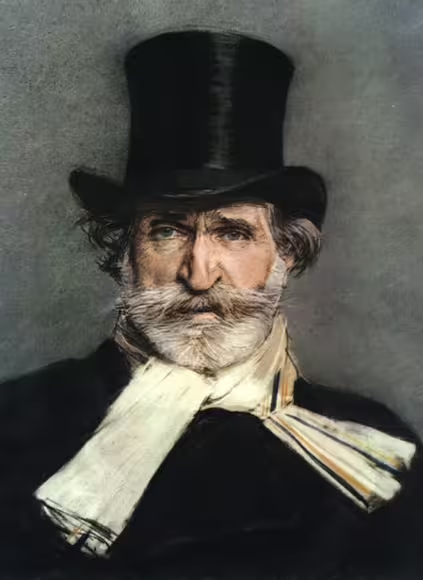
October 10 marks the traditional birthday of Giuseppe Verdi, the Italian composer whose music gave unforgettable expression to love, jealousy, hope, and loss. Born in 1813 in Le Roncole, near Busseto, he became one of the defining figures of nineteenth-century opera. Although his exact birth date is sometimes given as October 9, his anniversary is widely celebrated on October 10.
From a Village Childhood to La Scala
Verdi showed musical ability as a child, learning the organ and developing his skills with the support of local teachers and patrons. His education eventually took him to Milan, where he began building a career in the demanding world of opera.
His first performed opera, Oberto, reached the stage of La Scala in 1839. The decisive breakthrough came in 1842 with Nabucco. Its success established Verdi as a major new voice, while the chorus Va, pensiero became one of his most enduring creations.
Masterpieces of Human Drama
The early 1850s brought an extraordinary succession of works: Rigoletto in 1851, followed by Il trovatore and La traviata in 1853. These operas placed intense human relationships at the centre of the theatrical experience.
Verdi’s gift extended beyond memorable melodies. He understood how music could reveal a character’s vulnerability, deepen a confrontation, or turn a private confession into the emotional heart of a scene. His protagonists could be flawed, frightened, or trapped by circumstances, yet their feelings remained immediately recognisable.
Aida and the Final Operas
In 1871, Aida premiered in Cairo, combining grand spectacle with an intimate tragedy of love and divided loyalties. Even late in life, Verdi continued to explore new dramatic possibilities.
Working with librettist Arrigo Boito, he returned to Shakespeare for Otello in 1887 and the comic opera Falstaff in 1893. His final opera revealed a composer still capable of surprise, wit, and remarkable invention.
A Legacy Beyond the Stage
Verdi also supported the creation of a home for retired musicians in Milan, now known as Casa Verdi. He died in the city on January 27, 1901.
His lasting achievement lies in the connection between voice and drama: music that makes a character’s joy or suffering feel close enough to share, even across languages and generations.
Other Events on This Day
- Harold Pinter Is Born, the Playwright Who Made Silence Speak on Stage
- Woodrow Wilson Triggers the Blast That Brings the Panama Canal Closer to Joining Two Oceans
Credits: 1st photo: Giovanni Boldini, 1886 / Galleria Nazionale d’Arte Moderna e Contemporanea, Rome, via Wikimedia Commons. Public domain. Sources: Metropolitan Opera — Giuseppe Verdi Timeline; English National Opera — Giuseppe Verdi; Teatro alla Scala — History; Casa Verdi — Giuseppe Verdi’s Biography


