
Oct
10
10
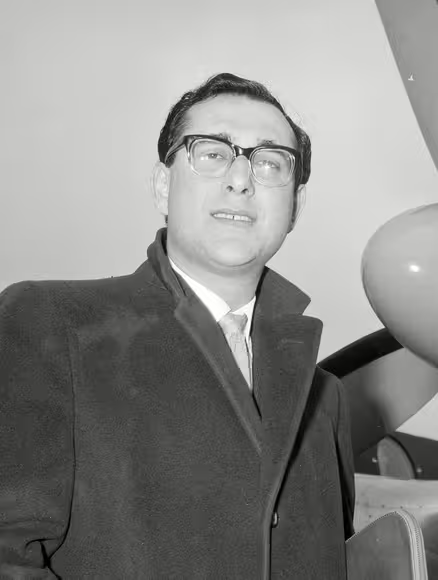
On October 10, 1930, Harold Pinter was born in Hackney, London. A playwright, poet, screenwriter, actor, and director, he became one of the most distinctive voices in modern British theatre. His work revealed how an ordinary conversation could conceal fear, rivalry, or an unspoken struggle for control.
From Acting to Writing
Pinter’s interest in theatre developed at school, where he performed Shakespeare. He later trained as an actor and worked with touring companies, sometimes appearing under the professional name David Baron. He also began publishing poetry in 1950.
His first play, The Room, was performed in Bristol in 1957. It introduced a dramatic world that would become recognisably his: a seemingly familiar setting disturbed by uncertainty and the arrival of an outsider.
A New Voice in British Theatre
Success did not come immediately. The Birthday Party, first performed in 1958, initially met with a largely hostile critical response. Yet the play eventually became one of his best-known works.
A major breakthrough followed with the first production of The Caretaker in 1960. Later plays, including The Homecoming, No Man’s Land, and Betrayal, further established his reputation. Rather than explaining every motive, Pinter invited audiences to listen closely and question what his characters chose to reveal.
The Power of a Pause
Pinter’s dialogue often sounds deceptively ordinary. Characters repeat themselves, avoid questions, or discuss everyday matters while something more troubling develops beneath the surface. Dark humour can suddenly give way to menace.
His famous pauses are part of this dramatic language. A silence may suggest hesitation, concealment, or a shift in power. The distinctive atmosphere of his work gave rise to the adjective “Pinteresque”, a sign of how deeply his writing influenced the language of theatre.
From the Stage to the Nobel Prize
Pinter also wrote screenplays, including those for The Servant, The Go-Between, and The French Lieutenant’s Woman. His career crossed the boundaries between stage, cinema, radio, and poetry.
In 2005, he received the Nobel Prize in Literature. He died in London on December 24, 2008, leaving work that challenges audiences to consider both what people say and what remains unspoken.
Other Events on This Day
- The Birth of Giuseppe Verdi, the Composer Behind Some of Opera’s Greatest Masterpieces
- Woodrow Wilson Triggers the Blast That Brings the Panama Canal Closer to Joining Two Oceans
Credits: 1st photo: Jack de Nijs / Anefo, 1962. Nationaal Archief, via Wikimedia Commons. CC0 1.0. Cropped. Sources: NobelPrize.org — Harold Pinter: Facts; NobelPrize.org — Harold Pinter: Bio-bibliography; Official London Theatre — Harold Pinter: Playwright, Actor, Director


