
Oct
9
9
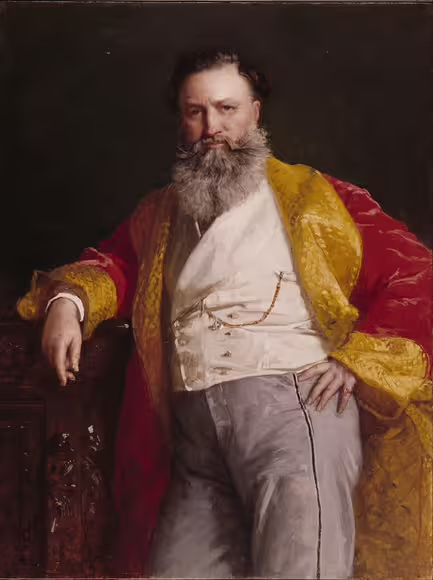
On October 9, 1855, American inventor and entrepreneur Isaac Merritt Singer received two United States patents for improvements to sewing machines. Numbered 13,661 and 13,662, they addressed practical challenges in handling thread, moving fabric, and forming seams. These patents were part of the continuing development of a machine that would transform clothing production and everyday sewing.
Building on an Existing Invention
Singer did not invent the sewing machine from scratch. His work belonged to a wider history of experiments and improvements by numerous inventors. He had already received an important sewing-machine patent on August 12, 1851, several years before the patents issued that October.
The challenge was not simply to make a needle move. A useful machine had to coordinate the needle, thread, and fabric repeatedly, producing consistent stitches while remaining practical to operate.
Better Control of Thread and Fabric
Patent No. 13,661 described a spring guide intended to control the thread carried by the shuttle beneath the fabric. Loose thread could interfere with the needle or create uneven stitches. Singer’s proposed arrangement aimed to keep it properly positioned during sewing.
The same patent described continuous fabric movement combined with a needle that could move with the material while passing through it. Singer identified irregular stitch spacing as a particular problem when sewing heavy items, including sails and harness components.
New Possibilities for Seams
Patent No. 13,662 addressed additional methods for sewing with two needles, guiding folded fabric, and connecting rows of stitches. It also described a mechanism for laying thread across the fabric’s surface for ornamental work.
These were improvements to the sewing process itself. The patent documents concern how stitches were formed and materials handled, rather than the invention of a sewing-machine motor.
Progress Through Practical Improvements
The significance of October 9, 1855, lies in this process of refinement. Sewing machines developed through many separate advances, each addressing obstacles that could limit their usefulness.
Singer’s patents offer a close view of that work: controlling a loose thread, guiding a folded edge, or making stitch spacing more consistent. Behind the wider transformation of sewing stood detailed mechanical problems—and inventors determined to solve them.
Other Events on This Day
- Nick Holonyak Demonstrates the Visible LED and Opens a New Chapter in Lighting
- The Treaty of Bern Establishes the Postal Union That Connected Nations
Credits: 1st photo: Edward Harrison May, 1869 / National Portrait Gallery, Smithsonian Institution, via Wikimedia Commons. Public domain. Sources: U.S. Patent No. 13,661 — Improvement in Sewing-Machines; U.S. Patent No. 13,662 — Improvement in Sewing-Machines; Smithsonian Institution — Isaac Singer’s 1851 Sewing Machine Patent Model


