
Oct
9
9
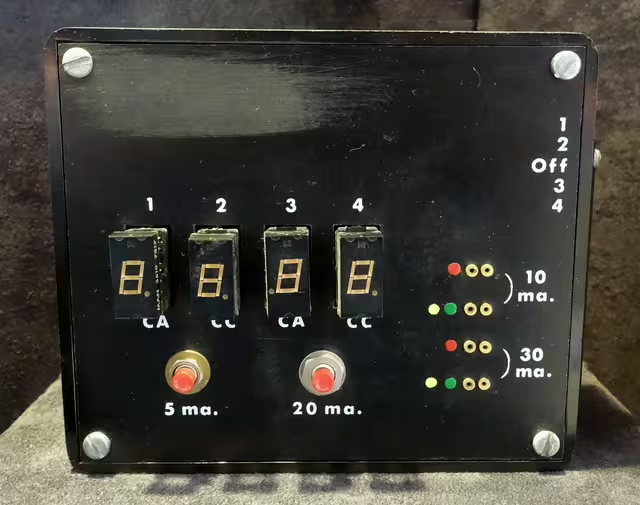
On October 9, 1962, American engineer Nick Holonyak Jr. demonstrated the first practical light-emitting diode to produce visible light. Working at General Electric’s Advanced Semiconductor Laboratory in Syracuse, New York, he created a device that emitted a red glow. It was an important step toward the indicators, displays, and energy-efficient lighting that would later become familiar around the world.
Making Semiconductor Light Visible
Holonyak’s achievement grew out of research into semiconductor devices and lasers. Other researchers were working with infrared radiation, which the human eye cannot see. Holonyak pursued a material that could produce light in the visible spectrum.
He used gallium arsenide phosphide, a semiconductor compound whose properties made red emission possible. On October 9, with colleagues watching, he demonstrated his visible-light semiconductor device. The breakthrough established a practical route toward red LEDs.
A Different Way to Produce Light
A light-emitting diode, or LED, produces light when electrical charges recombine within a semiconductor, releasing energy as photons. Unlike an incandescent bulb, it does not depend on heating a filament until it glows.
The choice of semiconductor material helps determine the colour of the emitted light. Developing suitable materials and manufacturing methods became central to expanding the technology’s possibilities.
From Red Indicators to White Lighting
Early visible LEDs were suited to small indicators rather than illuminating rooms. As researchers improved their brightness, efficiency, and range of colours, LEDs found increasing uses in electronic equipment, numerical displays, and signs.
White LED lighting required further breakthroughs. The development of efficient blue LEDs by Isamu Akasaki, Hiroshi Amano, and Shuji Nakamura provided a crucial foundation for bright, energy-saving white light sources. Their achievement was recognised with the 2014 Nobel Prize in Physics.
A Discovery with a Long Future
Holonyak joined the University of Illinois faculty in 1963, continuing his research and helping train a new generation of engineers. His work formed part of a much larger scientific effort that steadily expanded the capabilities of semiconductor light sources.
The red light demonstrated in 1962 could not yet replace household lamps. Its significance lay in showing what was possible—and helping open a path from a laboratory experiment to a technology used throughout everyday life.
Other Events on This Day
- Isaac Singer Patents Further Improvements to the Sewing Machine
- The Treaty of Bern Establishes the Postal Union That Connected Nations
Credits: 1st photo: Daderot, via Wikimedia Commons. CC0 1.0 — Public domain. Sources: University of Illinois — Nick Holonyak Jr. and His Work on Visible LED; GE — LED Inventor Nick Holonyak Reflects on Discovery 50 Years Later; Nobel Prize in Physics 2014 — Press Release


