
Sep
6
6
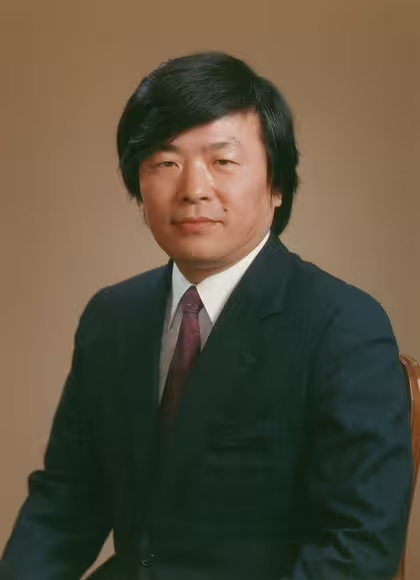
On September 6, 1939, Susumu Tonegawa was born in Nagoya, Japan. He would become one of the world's leading molecular biologists, revealing the genetic mechanism that allows the human immune system to produce an enormous variety of antibodies from a limited number of genes.
His discovery transformed modern immunology and earned him the 1987 Nobel Prize in Physiology or Medicine.
From Chemistry to Molecular Biology
Tonegawa studied chemistry at Kyoto University during a period when molecular biology was rapidly emerging as a new scientific field.
Fascinated by the possibility of understanding life through genes and molecules, he eventually moved to the United States and earned his doctorate at the University of California, San Diego.
His career would soon lead him toward one of the biggest unanswered questions in immunology.
A Remarkable Mystery of the Immune System
The human immune system can recognize an extraordinary variety of viruses, bacteria, toxins, and other foreign substances.
It does this partly by producing antibodies — proteins whose shapes allow them to recognize specific molecular targets.
But scientists faced a major puzzle.
How could the body produce millions of different antibodies when the number of genes available to encode them was far smaller?
The Answer Was Hidden in DNA
While working at the Basel Institute for Immunology in Switzerland, Tonegawa began investigating the genes responsible for producing antibodies.
His experiments showed that antibody genes are not permanently arranged in the same way in every cell.
Instead, developing immune cells can rearrange sections of their own DNA.
This allows a relatively limited collection of genetic building blocks to generate an enormous variety of antibodies.
A Genetic Construction Kit
The process can be imagined as a biological construction kit.
Different sections of antibody genes can be selected and joined together in many combinations.
Each combination can produce an immune cell capable of recognizing a different target.
Scientists now know this process as an essential part of V(D)J recombination.
Millions of Defences From a Limited Number of Genes
Tonegawa's discovery solved a fundamental problem in biology.
The immune system did not require a separate inherited gene for every possible antibody.
Instead, immune cells could create diversity by rearranging genetic information during their development.
This explained how the body could prepare itself to recognize threats it had never encountered before.
The Nobel Prize
In 1987, Tonegawa received the Nobel Prize in Physiology or Medicine for discovering the genetic principle behind the generation of antibody diversity.
He received the prize as the sole laureate that year.
The achievement also made him the first Japanese scientist to receive the Nobel Prize in Physiology or Medicine.
Changing Scientific Fields
For many scientists, a Nobel Prize-winning discovery might have defined an entire career.
Tonegawa did something unusual.
After helping transform immunology, he shifted much of his research toward neuroscience.
He wanted to understand another great biological mystery: how the brain creates and stores memories.
Searching for Memory in the Brain
At the Massachusetts Institute of Technology, Tonegawa and his colleagues used molecular genetics and neuroscience to investigate the circuits involved in learning and memory.
His laboratory became especially known for research into engrams — physical traces of memories stored within particular populations of neurons.
The work helped provide experimental evidence that specific groups of brain cells can participate in storing and recalling particular memories.
From Immune Memory to Brain Memory
There is an intriguing symmetry to Tonegawa's career.
His early work helped explain how the immune system creates an enormous repertoire of molecular defences.
His later work investigated how networks of neurons allow experiences to become memories.
In both fields, he searched for biological mechanisms hidden beneath abilities that seem almost effortless to us.
A Scientific Career Across Continents
Tonegawa's research career took him from Japan to the United States, Switzerland, and back to major international collaborations involving both the United States and Japan.
He spent more than four decades at MIT and became the founding director of its Center for Learning and Memory, which later developed into the Picower Institute for Learning and Memory.
He also played a major role in neuroscience research at Japan's RIKEN Brain Science Institute.
A Legacy in Two Fields
Few scientists make fundamental contributions to two very different areas of biology.
Tonegawa helped reshape both immunology and neuroscience.
His antibody research became part of the foundation for understanding how adaptive immunity works, while his later experiments contributed to modern ideas about how memories are represented in the brain.
A Life Devoted to Fundamental Questions
Susumu Tonegawa died on July 11, 2026, at the age of 86.
By then, his work had influenced generations of researchers studying everything from antibodies and immune cells to neurons and memory.
Born on September 6, 1939, Tonegawa spent his career asking some of biology's most difficult questions — and finding answers that changed the way scientists understand both the body's defences and the human brain.
Other Events on This Day
- Columbus Leaves His Last Port Before Crossing the Atlantic
- John Dalton Gives Atoms Their First Modern Symbols
Credits: 1st photo by User9131986 — CC BY-SA 4.0 / Wikimedia Commons.


