
5
An 18-Year-Old Cassius Clay Wins Olympic Gold in Rome
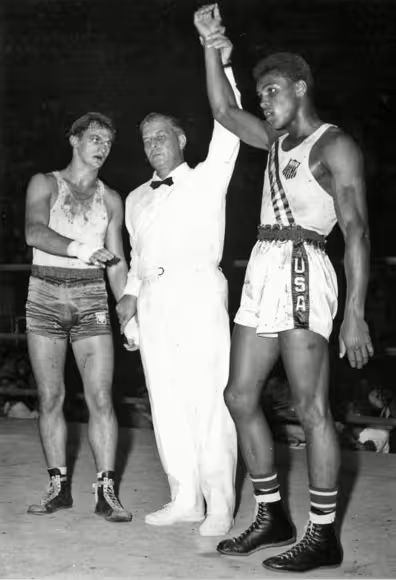
On September 5, 1960, 18-year-old Cassius Clay — later known as Muhammad Ali — won the light-heavyweight boxing gold medal at the Olympic Games in Rome. The victory marked the first major international triumph of a young fighter who would go on to become one of the most famous athletes in history.
At the time, he was still an amateur boxer from Louisville, Kentucky, known for his speed, confidence, and unusually fluid movement in the ring.
A Young Boxer With Big Ambitions
Cassius Marcellus Clay Jr. began boxing as a boy and quickly developed into one of the most promising amateur fighters in the United States.
By the time he qualified for the 1960 Olympics, he had already won numerous amateur titles and built a reputation for fast hands and fearless self-belief.
Rome would be his biggest stage yet.
The Olympic Light-Heavyweight Tournament
Clay competed in the light-heavyweight division, facing experienced opponents from around the world.
His style immediately stood out.
Instead of relying only on strength, he used speed, movement, timing, and quick combinations to control his fights.
Reaching the Final
Clay advanced through the tournament and earned a place in the gold-medal bout against Polish boxer Zbigniew Pietrzykowski.
Pietrzykowski was a highly experienced European champion and already an Olympic medalist.
The final therefore matched a young American talent against one of the most accomplished amateur boxers of the era.
The Gold-Medal Fight
The final took place on September 5, 1960.
Early in the bout, Pietrzykowski proved difficult to handle, but Clay gradually found his rhythm.
His speed and combinations became increasingly effective as the fight continued.
By the end, the judges awarded Clay a unanimous decision, 5–0.
An Olympic Champion at 18
With the victory, Clay became an Olympic gold medalist at just 18 years old.
The medal instantly raised his profile and gave him international recognition.
For many athletes, an Olympic title would represent the peak of a career.
For Clay, it was only the beginning.
From Amateur to Professional
Later in 1960, Clay turned professional.
His speed, reflexes, confidence, and outspoken personality soon made him one of boxing's most talked-about young fighters.
He quickly climbed the heavyweight rankings and developed a style that challenged traditional ideas about how a heavyweight boxer should move.
Becoming Heavyweight Champion
In 1964, Clay shocked the boxing world by defeating Sonny Liston to win the world heavyweight championship.
Shortly afterward, he became known as Muhammad Ali.
His career would eventually include some of the most famous fights in boxing history.
A Style That Changed Heavyweight Boxing
Ali became famous for moving with unusual speed and agility for a heavyweight.
His ability to avoid punches, control distance, and strike rapidly made him difficult to predict.
His famous phrase “float like a butterfly, sting like a bee” became closely associated with the style that first attracted international attention during his early career.
More Than a Boxer
Muhammad Ali eventually became a global cultural figure whose influence extended far beyond sport.
His personality, public statements, confidence, and willingness to take strong positions made him one of the most recognizable people of the 20th century.
But before the world knew Muhammad Ali, Olympic spectators in Rome watched a teenage Cassius Clay announce himself on the international stage.
A Career That Began With Olympic Gold
The Rome Olympics became a turning point in Clay's life.
The tournament showed that his unusual combination of speed, skill, and confidence could succeed against elite international competition.
Only a few years later, those same qualities would make him heavyweight champion of the world.
The First Great Victory of a Legend
On September 5, 1960, Cassius Clay left the Olympic boxing tournament in Rome with a gold medal around his neck.
He was still only 18 years old and had not yet fought a professional bout.
Yet the qualities that would later define Muhammad Ali were already visible: extraordinary speed, technical skill, confidence, and an unmistakable presence.
Rome was where one of sport's greatest careers first became visible to the world.
Other Events on This Day
- Freddie Mercury, the Man Who Gave Queen Its Voice, Is Born
- Peter IV of Aragon, the King Who Turned Ceremony Into Power, Is Born
Credits: 1st photo: Public Domain / Wikimedia Commons.