
6
Columbus Leaves His Last Port Before Crossing the Atlantic
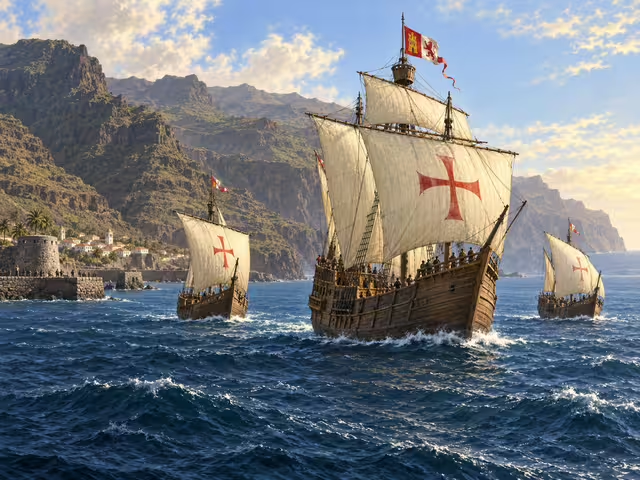
On September 6, 1492, Christopher Columbus sailed from La Gomera in the Canary Islands with three ships — Santa María, Pinta, and Niña. It was the expedition's final stop before beginning the long Atlantic crossing that would lead to the Caribbean and permanently reshape connections between Europe and the Americas.
The voyage had begun more than a month earlier in Spain, but La Gomera marked the point where the fleet truly left the familiar waters of the eastern Atlantic behind.
The Voyage Begins in Spain
Columbus departed from the port of Palos in southern Spain on August 3, 1492.
His expedition had the support of the Spanish monarchs Ferdinand II of Aragon and Isabella I of Castile.
Columbus hoped to reach Asia by sailing west across the Atlantic rather than following the established routes around Africa.
Three Ships
The expedition consisted of three vessels:
Santa María, the largest ship and Columbus's flagship, and the smaller caravels Pinta and Niña.
The relatively small fleet carried crews, provisions, navigational equipment, and everything necessary for a voyage whose duration was impossible to predict with certainty.
A Necessary Stop in the Canary Islands
Shortly after leaving Spain, the fleet stopped in the Canary Islands.
The ships required repairs and preparation before attempting the long ocean crossing.
The Pinta in particular needed work on its steering equipment, while the expedition also took the opportunity to replenish supplies.
La Gomera — the Final Port
La Gomera became the expedition's last European stopping point.
The island offered fresh water, food, and a final opportunity to prepare the ships before they sailed into the Atlantic.
On the morning of September 6, 1492, Columbus and his crews departed from La Gomera and headed west.
Into the Open Atlantic
From that point onward, there would be no more European ports.
The ships entered a vast stretch of ocean that none of the crew had previously crossed on such a voyage.
They relied on winds, currents, celestial navigation, dead reckoning, and the experience of Atlantic sailors.
The Trade Winds Carry Them West
The fleet benefited from the northeasterly trade winds, which helped carry the ships steadily westward.
These winds would later become fundamental to regular sailing routes between Europe and the Americas.
For Columbus's expedition, however, they were part of an uncertain journey into waters that European navigators had not yet crossed in this way.
Weeks Without Land
Day after day, the ships continued west.
The crews watched for birds, floating vegetation, changes in the sea, and other possible signs that land might be nearby.
As the voyage continued, uncertainty grew among the sailors, but Columbus remained convinced that land lay ahead.
Land Is Sighted
After more than five weeks since leaving La Gomera, the expedition finally sighted land on October 12, 1492.
The first landfall was an island in the Bahamas, inhabited by the Indigenous Taíno people.
Columbus believed he had reached islands near Asia.
He did not realize that the voyage had brought Europeans into sustained contact with lands that were part of the Americas.
A Voyage With Enormous Consequences
The 1492 crossing became one of the most consequential voyages in world history.
It opened the way for continuing contact between Europe and the Americas and was followed by exploration, migration, trade, conquest, colonization, and profound cultural and biological exchange.
Those developments also brought devastating consequences for many Indigenous societies through warfare, exploitation, forced labour, and diseases introduced from the Old World.
The Beginning of the Columbian Exchange
The connections created after the voyages of Columbus contributed to what historians call the Columbian Exchange.
Plants, animals, foods, diseases, technologies, and people began moving between continents on an unprecedented scale.
Crops such as potatoes, maize, and tomatoes eventually transformed diets far beyond the Americas, while horses, wheat, and other Old World species spread westward.
La Gomera's Place in History
Today, La Gomera continues to commemorate its connection with Columbus's first voyage.
The island was not the beginning of the expedition, but it was its last port before the Atlantic crossing.
That distinction makes September 6 an important moment in the story of the voyage.
The Last Shore Before a Historic Crossing
On September 6, 1492, Santa María, Pinta, and Niña sailed away from La Gomera and turned west toward the open Atlantic.
The crews could not know exactly what awaited them beyond the horizon.
Five weeks later, their voyage would connect Europe and the Americas in a way that permanently changed the course of world history.