
Sep
7
7
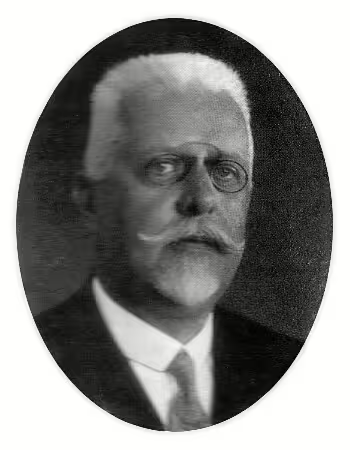
On September 7, 1923, police representatives from 20 countries met in Vienna and established the International Criminal Police Commission, the organization that would later become INTERPOL. Its purpose was simple but ambitious: help police forces cooperate across national borders against criminals who could move from one country to another.
The organization created in Vienna did not yet use the name INTERPOL, but it laid the foundations for one of the world's best-known systems of international police cooperation.
Crime Was Becoming More International
By the early 20th century, improvements in railways, shipping, passports, and international travel made it easier for people to cross borders.
That also created new challenges for law enforcement.
A suspect could commit a crime in one country and quickly disappear into another, while police forces often had no fast or standardized way to exchange information.
A Congress in Vienna
The initiative was strongly associated with Johannes Schober, the head of the Vienna police.
He helped organize an international police congress in Vienna in 1923, bringing together representatives from countries across Europe and beyond.
The delegates discussed how police organizations could communicate more efficiently and cooperate in criminal investigations.
September 7, 1923
On September 7, the delegates agreed to establish the International Criminal Police Commission, commonly known by its initials ICPC.
Its headquarters were placed in Vienna.
The organization was designed to create a permanent network for exchanging police information rather than relying only on occasional diplomatic contacts.
Sharing Information Across Borders
The new commission focused on practical problems faced by police forces.
Its members wanted faster ways to exchange information about wanted suspects, stolen documents, forged currency, criminal methods, and identification records.
International cooperation was becoming essential because criminals could increasingly operate beyond the reach of a single national police force.
Fingerprints and Identification
One of the important areas of early international police cooperation was personal identification.
Fingerprinting had become an increasingly valuable forensic tool, and the commission encouraged the exchange of identification information between countries.
This helped police determine whether a suspect arrested in one country might already be wanted somewhere else.
A Network, Not a World Police Force
INTERPOL is sometimes imagined as a global police agency with officers who can independently make arrests anywhere in the world.
That is not how the organization works.
Its role is primarily to connect national police forces, provide secure communication systems, maintain international databases, and help authorities coordinate investigations.
Actual arrests are carried out by the competent authorities of individual countries under their own laws.
From ICPC to INTERPOL
The organization created in 1923 gradually evolved over the following decades.
In 1946, “INTERPOL” began to be used as its telegraphic address, combining the words international and police.
The name became so recognizable that in 1956 the organization formally adopted the title International Criminal Police Organization-INTERPOL.
The Famous Notices
Today, INTERPOL is especially known for its international notices.
The best known is the Red Notice, which alerts police forces around the world that a person is wanted by a national authority.
A Red Notice is not itself an international arrest warrant.
Each member country decides what legal action it can take under its own laws.
A Global Police Network
What began with 20 participating countries eventually grew into a worldwide organization connecting police authorities across nearly every region of the globe.
Modern INTERPOL supports cooperation against crimes including human trafficking, cybercrime, terrorism, financial crime, organized crime, and the international trade in stolen property.
Technology has changed enormously since 1923, but the basic principle remains the same: information must move across borders as efficiently as criminals do.
International Day of Police Cooperation
The historical importance of September 7 has also been recognized by the United Nations.
In 2022, the UN designated September 7 as the International Day of Police Cooperation.
The date was chosen to commemorate the founding of the International Criminal Police Commission in Vienna.
A Century of Cooperation
On September 7, 1923, police representatives gathered in Vienna to solve a problem that was becoming increasingly international.
The organization they created provided a permanent framework for cooperation between national police forces.
More than a century later, INTERPOL continues to serve the same basic purpose: helping countries share information and work together when crime crosses borders.
Other Events on This Day
- Alberto Santos-Dumont Takes the 14-bis Into the Air
- Philidor, the Man Who Mastered Both Chess and Music, Is Born
Credits: 1st photo: Unknown photographer — Public Domain / Wikimedia Commons.


