
Sep
30
30
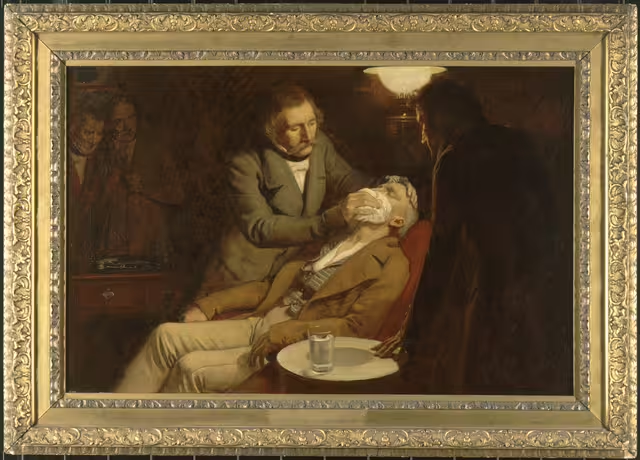
On 30 September 1846, Boston dentist William Thomas Green Morton used ether to anesthetize a patient before removing a tooth. The successful procedure became an important milestone in the development of modern anesthesia, helping bring the possibility of painless surgery to wider medical attention.
A Patient Seeking Relief
That evening, Eben H. Frost arrived at Morton’s practice suffering from severe toothache. Morton administered ether, and Frost lost consciousness before the extraction. After waking, the patient reported that he had felt no pain during the procedure.
For someone facing a dental extraction in the nineteenth century, this was a remarkable experience. The procedure demonstrated that a patient could be spared the pain normally associated with removing a tooth.
Part of a Wider Search
Morton was not the first person to investigate anesthesia or to use ether during a medical procedure. Historical accounts describe William E. Clarke administering ether for a tooth extraction performed by dentist Elijah Pope in 1842. That same year, physician Crawford Long used ether during surgery in Georgia.
Another dentist, Horace Wells, explored nitrous oxide for dental anesthesia in 1844. These earlier efforts show that the development of anesthesia involved several pioneers, rather than a single isolated discovery.
From a Dental Practice to the Operating Theatre
News of Morton’s successful extraction appeared in the Boston Daily Journal. Surgeon Henry Jacob Bigelow took an interest and observed further procedures at Morton’s practice.
On 16 October 1846, Morton administered ether at Massachusetts General Hospital while surgeon John Collins Warren operated on a patient. This successful public demonstration, held in the operating theatre later known as the Ether Dome, helped persuade the medical community of ether’s potential.
A Turning Point in Pain Relief
The importance of the September extraction lies in the events it helped set in motion. A successful dental procedure led to observation, publicity, and a hospital demonstration, after which ether anesthesia spread internationally.
Morton’s treatment of Frost therefore deserves remembrance as a crucial step toward a profound change in medicine: making relief from surgical pain an achievable part of patient care.
Other Events on This Day
Credits: 1st photo: Ernest Board / Wellcome Library, London, via Wikimedia Commons. CC BY 4.0. Source: Massachusetts General Hospital — “Keeping” Ether in Vogue; Journal of Dental Research — The Discovery of Surgical Anesthesia: Discrepancies Regarding Its Authorship; Wood Library-Museum of Anesthesiology — Ether


