
Oct
1
1
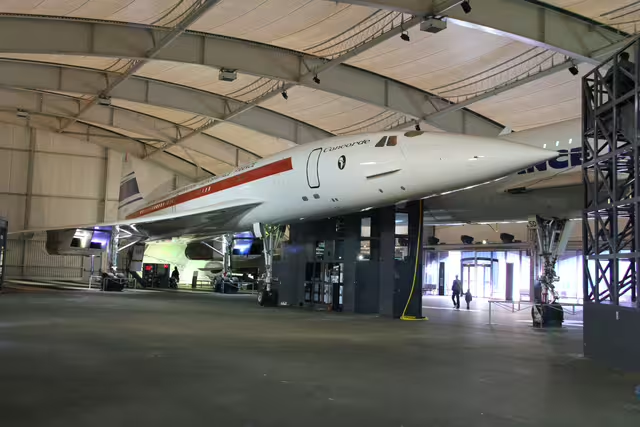
On 1 October 1969, Concorde 001 exceeded the speed of sound for the first time. The French-built prototype reached approximately Mach 1.05 and remained supersonic for nine minutes, marking an important step toward passenger travel at twice the speed of sound.
The achievement came during a programme of test flights designed to establish how the aircraft behaved across an increasingly demanding range of conditions. Concorde was still years away from carrying paying passengers, but its defining ambition had moved closer to reality.
A Shared British and French Ambition
Concorde emerged from cooperation between Britain and France, bringing together the British Aircraft Corporation and Sud Aviation. Their goal was to develop an airliner capable of sustained supersonic flight.
The first prototype, Concorde 001, made its maiden flight from Toulouse on 2 March 1969. The British prototype, Concorde 002, followed on 9 April. These early flights began cautiously, allowing engineers and crews to assess the aircraft before progressing to higher speeds.
Beyond Mach 1
Mach 1 represents the local speed of sound. Passing this threshold was a significant test of Concorde’s aerodynamic design and structural behaviour.
During the October flight, the test programme included checks for potentially dangerous vibrations. Reaching supersonic speed was therefore more than a symbolic achievement: it provided practical evidence that would guide further development.
Concorde 001 later reached Mach 2 on 4 November 1970. Each milestone formed part of the lengthy process of turning an experimental aircraft into a passenger transport.
From Test Flights to Airline Service
Concorde entered commercial service in 1976 with British Airways and Air France. Its speed eventually allowed passengers to cross the Atlantic in roughly half the time required by conventional airliners.
The prototype’s contribution also extended beyond aviation testing. In 1973, Concorde 001 carried scientists observing a solar eclipse, using its speed to prolong their view of totality.
A Milestone in Concorde’s Story
The flight of 1 October 1969 was Concorde’s first venture beyond the sound barrier. It demonstrated progress toward an extraordinary engineering goal and became a defining moment in the development of one of aviation’s most recognizable aircraft.
Other Events on This Day
Credits: 1st photo: Photo: Clemens Vasters / Wikimedia Commons, CC BY 2.0. Sources: Aerospace Bristol — Concorde 001 Breaks the Sound Barrier; Airbus — The Day Concorde Flew into the History Books; Musée de l’Air et de l’Espace — Concorde Prototype 001


