
Oct
1
1
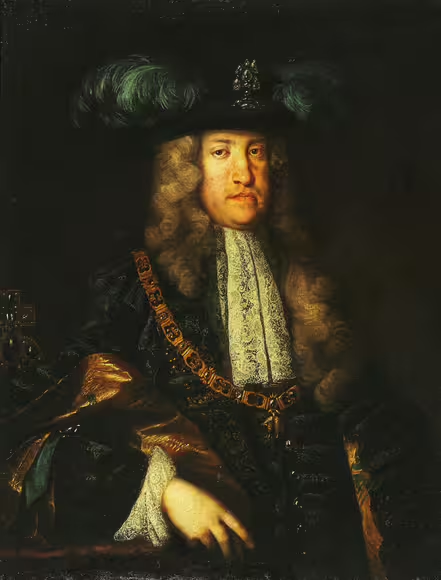
On 1 October 1685, Charles VI was born in Vienna. The future Holy Roman Emperor and King of Bohemia would become closely associated with a decision that shaped Central European history: the Pragmatic Sanction of 1713, which helped establish the legal basis for his daughter Maria Theresa’s succession.
An Unexpected Path to Power
Charles was a son of Emperor Leopold I and initially stood behind his elder brother Joseph in the succession. His early ambitions centred on the Spanish crown, which he claimed during the War of the Spanish Succession.
Joseph’s death in 1711 changed his position. Charles inherited the Habsburg monarchy and was elected Holy Roman Emperor, becoming the ruler of a collection of territories with different laws, traditions, and institutions.
Keeping the Habsburg Lands Together
Having witnessed the struggle over the Spanish inheritance, Charles wanted to prevent the Habsburg lands in Central Europe from being divided after a disputed succession.
The Pragmatic Sanction declared that these territories should remain indivisible and inseparable. It also provided for inheritance through the female line if the male line died out, giving priority to Charles’s own descendants.
When the settlement was issued in 1713, Charles was still childless. It was therefore not simply a measure written for Maria Theresa, who was born in 1717, but a broader attempt to secure the monarchy’s future.
Maria Theresa’s Inheritance
Charles spent much of his reign seeking acceptance of the settlement at home and abroad. When he died in 1740 without a surviving son, Maria Theresa succeeded him in the Habsburg hereditary lands. Her inheritance was nevertheless challenged, leading to the War of the Austrian Succession.
The imperial crown was a separate matter. The Pragmatic Sanction did not make Maria Theresa Holy Roman Empress in her own right: that office remained elective. Her husband, Francis Stephen, became emperor in 1745.
A Baroque Legacy
Charles also supported music, opera, and architecture, helping shape Vienna’s Baroque cultural landscape. Yet his most enduring legacy was the succession arrangement that opened the way for Maria Theresa’s reign and sought to preserve the unity of the Habsburg monarchy.
Other Events on This Day
Credits: 1st photo: Attributed to Martin van Meytens / Bruun Rasmussen, via Wikimedia Commons. Public domain. Sources: The World of the Habsburgs — Charles VI; The World of the Habsburgs — Charles VI and the Pragmatic Sanction; Austrian Federal Chancellery — 1713; The World of the Habsburgs — Charles VI, the Last Habsburg


