
Sep
26
26
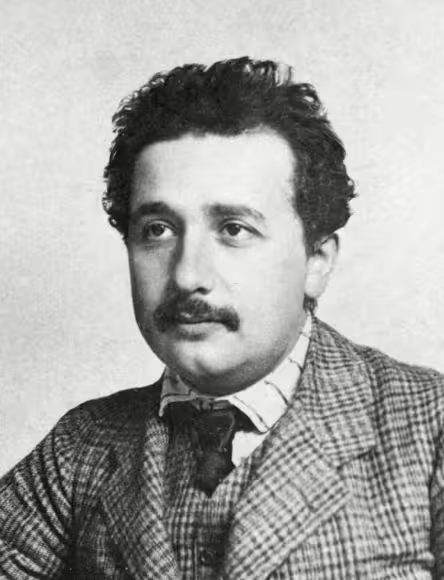
On 26 September 1905, the journal Annalen der Physik published a paper that challenged familiar ideas about space and time. Written by the 26-year-old Albert Einstein, “On the Electrodynamics of Moving Bodies” introduced the special theory of relativity.
It was the third of four celebrated papers associated with Einstein’s annus mirabilis, or “miracle year.” Together, these works opened new ways of understanding light, the motion of microscopic particles, space, time and energy.
Two Principles, Extraordinary Consequences
Einstein built his theory around two principles. First, the laws of physics are the same for all observers moving uniformly in a straight line relative to one another. Second, light in a vacuum travels at the same speed for these observers, regardless of the motion of its source.
Taking both principles seriously required a profound change in how time and distance were understood. They could no longer be treated as quantities on which every observer would necessarily agree.
Rethinking Clocks and Distances
One consequence was time dilation: a clock moving relative to an observer ticks more slowly than a clock at rest in that observer’s frame of reference. Another was length contraction: a moving object is measured as shorter along its direction of motion.
Einstein also showed that simultaneity is relative. Two events occurring at different locations could be simultaneous for one observer but occur at different times for another moving relative to the first.
These effects are extremely small at everyday speeds, which helps explain why ordinary experience gives us such a different impression of space and time.
A Remarkable Year of Discovery
The journal had received Einstein’s manuscript on 30 June 1905, almost three months before publication. A separate follow-up paper, received on 27 September and published in November, explored the relationship between mass and energy—the idea later expressed by the famous equation E = mc².
The September publication marked a turning point in physics. By reconsidering how observers measure motion, Einstein revealed that even something as familiar as the passage of time was more subtle than it appeared.
Other Events on This Day
- Britain and China Initial the Agreement on Hong Kong’s Future
- The Birth of Ivan Pavlov, Pioneer of Conditioned Reflexes
Credits: 1st photo: Attributed to Lucien Chavan / ETH-Bibliothek Zürich, Image Archive / Wikimedia Commons. Public domain. Sources: American Institute of Physics – Einstein Chronology for 1905; Library of Congress – The 1905 Papers; Albert Einstein – On the Electrodynamics of Moving Bodies


