
Sep
27
27
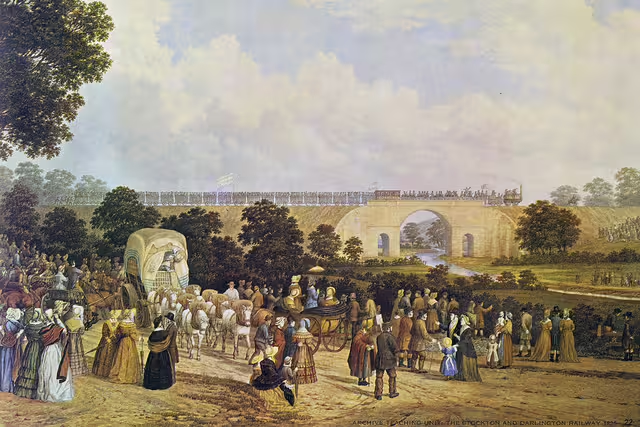
On 27 September 1825, crowds gathered in north-east England to witness a landmark in transport history. The Stockton and Darlington Railway officially opened, with George Stephenson driving the steam locomotive now known as Locomotion No. 1. Its train carried goods and passengers on a journey that demonstrated the possibilities of steam-powered public railways.
A Railway Built for Coal
The railway’s main purpose was practical: to move coal more efficiently from the mines of County Durham to markets and the River Tees at Stockton. Transport by horse-drawn carts over poor roads was expensive, and local businesspeople sought a better solution.
The route connected collieries near Witton Park with Darlington and Stockton. Supported by businessman Edward Pease and other investors, the project developed under the engineering guidance of George Stephenson, who advocated the use of steam locomotives.
Locomotion No. 1 Takes the Lead
Built by Robert Stephenson and Company in Newcastle, the locomotive became the centrepiece of the opening celebrations. With George Stephenson at the controls, it hauled a train from Shildon through Darlington towards Stockton.
The train included wagons carrying coal and other goods, as well as passengers. A specially built passenger coach named Experiment formed part of the procession, while many people travelled in open wagons. Large crowds lined the route to watch the unfamiliar machine at work.
What Made the Opening Historic?
Railways and steam locomotives both existed before 1825. The Stockton and Darlington Railway’s distinction was bringing steam locomotives onto a public railway, establishing an important example for later railway development.
The opening should not be confused with the immediate arrival of a fully modern railway service. Early operations combined different forms of traction, and the railway’s principal business remained the movement of goods. Nevertheless, the inaugural journey showed that steam power could carry people alongside heavy freight.
A Turning Point in Transport
The railway helped demonstrate the commercial potential of locomotive transport. Its development became part of a wider transformation that would connect industrial centres, expand trade and change the experience of travel.
The opening on 27 September 1825 remains a defining milestone in railway history: a public demonstration of technology that would reshape movement across Britain and far beyond.
Other Events on This Day
- Champollion Announces a Breakthrough in Deciphering Egyptian Hieroglyphs
- The Birth of Grazia Deledda, Sardinia’s Nobel-Winning Writer
Credits: 1st photo: John Dobbin / National Railway Museum, via Wikimedia Commons. Public domain. Sources: Darlington Borough Council – Stockton & Darlington Railway; Science Museum Group – Locomotion No. 1; Friends of the Stockton & Darlington Railway – History


