
Sep
13
13
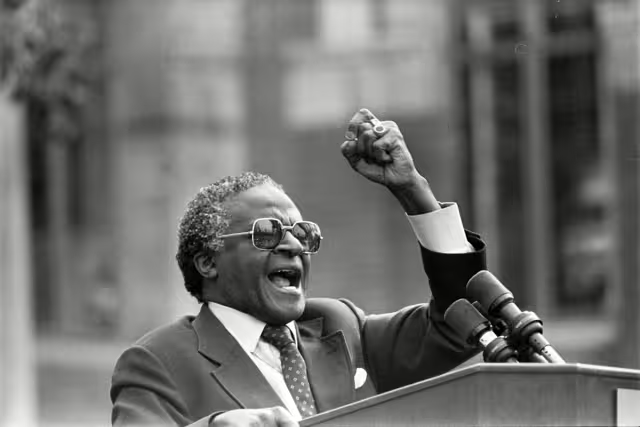
On September 13, 1989, tens of thousands of people filled the streets of Cape Town in one of the largest anti-apartheid demonstrations ever held in South Africa. Led by Archbishop Desmond Tutu and other religious, civic and political leaders, the peaceful march openly challenged a system that had restricted political protest and enforced racial segregation for decades.
South Africans from different racial and ethnic backgrounds marched together through the city center, calling for peace, political freedom and an end to apartheid. Estimates of the crowd varied, but approximately 30,000 people are commonly believed to have participated.
The demonstration became much more than a protest. The government's decision not to suppress it by force was widely seen as an important sign that South Africa was approaching a historic political turning point.
South Africa Under Apartheid
For decades, South Africa had been governed under apartheid, a system of laws that classified people according to race and determined where they could live, work, study and travel.
The country's Black majority was excluded from meaningful national political power, while opposition organizations were banned, political activists were imprisoned and public demonstrations were frequently restricted or violently dispersed.
By the 1980s, however, resistance to apartheid had intensified dramatically. Mass organizations, trade unions, churches and community groups organized protests, strikes and campaigns of civil disobedience throughout the country.
International pressure was also increasing as governments, businesses and organizations around the world imposed sanctions or demanded political reform.
Desmond Tutu and Nonviolent Resistance
Desmond Tutu, the Anglican Archbishop of Cape Town, had become one of the world's most recognizable opponents of apartheid.
He consistently argued that South Africa could not achieve lasting peace without justice and equal political rights. Although strongly opposed to apartheid, Tutu repeatedly promoted nonviolent protest, negotiation and reconciliation.
His international influence had grown considerably after he received the Nobel Peace Prize in 1984 for his campaign against racial oppression.
By 1989, churches had become particularly important spaces for political organization because many conventional political movements remained banned or severely restricted.
A Country Under a State of Emergency
The Cape Town march took place in an atmosphere of intense political repression.
South Africa had been under a nationwide State of Emergency since 1986. Authorities possessed broad powers to restrict gatherings, detain activists and suppress political organizations.
Only days before the September 13 march, security forces had used force against protesters in Cape Town.
On September 2, demonstrators attempting to march toward Parliament were dispersed with batons and a powerful water cannon containing purple dye. Hundreds of people were arrested in what became famous as the Purple Rain Protest.
Violence intensified around the whites-only parliamentary election of September 6, 1989. At least 23 people were killed in unrest and police repression in the Western Cape, according to later findings documented by South Africa's Truth and Reconciliation Commission.
A March for Peace
Against this background, religious and civic leaders organized a large March for Peace in Cape Town.
Archbishop Tutu was joined by prominent figures including Reverend Allan Boesak, Reverend Frank Chikane, Muslim leader Farid Esack and Cape Town mayor Gordon Oliver.
The participation of Mayor Oliver was particularly significant. A senior white city official was openly marching alongside some of the country's most prominent opponents of apartheid.
The planned demonstration presented the government with a difficult decision. Security officials initially indicated that the march could be stopped, as many previous demonstrations had been.
But F. W. de Klerk, who had recently replaced P. W. Botha as leader of the ruling National Party and was preparing to become State President, chose a different approach.
The authorities allowed the demonstration to proceed and the police did not attempt to break up the march.
September 13, 1989
On the morning of September 13, huge crowds gathered near St George's Cathedral in central Cape Town.
The marchers then moved through the city along Adderley Street toward Cape Town City Hall and the Grand Parade.
Participants sang freedom songs, carried political banners and openly displayed symbols that would previously have risked arrest. Some carried photographs of imprisoned anti-apartheid leader Nelson Mandela and exiled African National Congress leader Oliver Tambo.
Flags associated with the banned African National Congress could also be seen among the crowd.
Most striking was the diversity of the demonstrators. People whom apartheid had deliberately separated through laws and racial classifications were now walking side by side through one of the country's most prominent cities.
No Police Attack
For many participants, one of the most remarkable features of the march was what did not happen.
There was no mass police assault.
Unlike earlier demonstrations that had been broken up with tear gas, batons, arrests and water cannon, the September 13 procession moved peacefully through central Cape Town.
The absence of a violent confrontation demonstrated that large political gatherings did not inevitably produce disorder when security forces allowed them to proceed peacefully.
It also represented a striking departure from the government's traditional response to anti-apartheid protest.
Tutu Addresses the Crowd
When the march reached Cape Town City Hall, thousands of people filled the surrounding area.
Desmond Tutu, wearing his distinctive purple clerical robes, addressed the crowd from the City Hall balcony.
He celebrated the demonstration as a victory for justice and peace and called on South Africa's political leadership to join the movement toward a new society.
The atmosphere was both political and celebratory. The peaceful gathering provided a glimpse of a very different South Africa in which people from communities that apartheid had tried to keep apart could participate together in public political life.
A Government Beginning to Change
The march occurred during the rise of F. W. de Klerk, who was preparing to become State President later that month.
At the time, few anti-apartheid activists were certain whether his leadership would represent a genuine break with the past.
Yet the decision to allow the Cape Town march was an important signal.
For years, the apartheid government had attempted to control political opposition through bans, censorship, detention and police force. On September 13, thousands of opponents of the government openly marched through a major South African city without being attacked or subjected to mass arrest.
The political significance was difficult to ignore.
Other Cities Follow
The success of the Cape Town demonstration encouraged similar peaceful marches elsewhere in South Africa.
Large gatherings subsequently took place in cities including Johannesburg and Durban, often led by religious figures and supported by broad coalitions of civic organizations.
Restrictions that had made peaceful political protest extremely dangerous began to weaken.
The demonstrations showed both the strength of the anti-apartheid movement and the increasing difficulty the government faced in maintaining the old political order.
Nelson Mandela Was Still in Prison
At the time of the Cape Town march, Nelson Mandela had been imprisoned for more than 25 years.
The demand for his release had become one of the most powerful symbols of the international campaign against apartheid.
Marchers on September 13 openly displayed his image and called for the release of political prisoners.
Events would soon move with extraordinary speed.
In February 1990, F. W. de Klerk announced that the African National Congress and other banned political organizations would once again be legal.
On February 11, 1990, Nelson Mandela walked free after 27 years in prison.
From Protest to Negotiation
The end of apartheid did not happen because of one march, nor did political violence immediately disappear.
Years of resistance by millions of South Africans, international pressure, economic problems and changing political calculations all contributed to the collapse of the apartheid system.
Nevertheless, the Cape Town Peace March became an important symbol of the transition.
It demonstrated the enormous public demand for political change while also showing that peaceful mass action could take place without confrontation between demonstrators and the state.
Within months, negotiations that had once appeared almost impossible began moving toward reality.
A Glimpse of a Different South Africa
The images from September 13, 1989, were especially powerful because of the people visible in them.
South Africans from communities that had been separated by decades of apartheid marched together through the streets of Cape Town.
Desmond Tutu would later become closely associated with the idea of South Africa as a Rainbow Nation, a country whose diversity should be a source of shared identity rather than division.
The Cape Town march offered an early public image of that possibility.
September 13, 1989
The peaceful march through Cape Town on September 13, 1989, became one of the defining demonstrations of the final years of apartheid.
Tens of thousands of people openly demanded peace, democracy and racial equality. Government authorities, rather than ordering a violent crackdown, allowed them to march.
That change in itself carried enormous significance.
Less than five months later, the ban on the African National Congress would be lifted. Less than six months later, Nelson Mandela would be free.
The road to democracy remained difficult and often violent, but the sight of Desmond Tutu and tens of thousands of South Africans peacefully marching together through Cape Town showed that the political landscape had begun to change.
For one September day in 1989, the future of South Africa could already be seen in the streets.
Other Events on This Day
- Britain Fails to Capture Baltimore and the Star-Spangled Banner Is Born
- IBM 305 RAMAC Introduces the Era of Hard Disk Storage
Credits: 1st photo by Thomas Kelsey / Los Angeles Times, UCLA Library. Licensed under CC BY 4.0, via Wikimedia Commons.


