
Sep
10
10
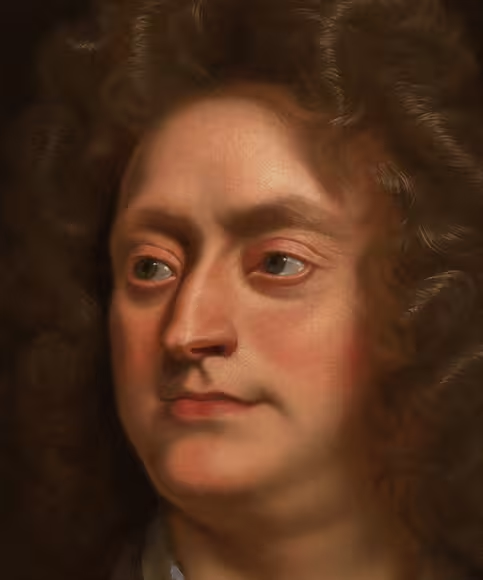
In 1659, Henry Purcell, one of the most important composers in English musical history, was born in Westminster, London. His exact date of birth is not known with complete certainty, although it is traditionally associated with 10 September 1659. During his relatively short life, Purcell created an extraordinary body of music that combined English traditions with influences from continental Europe.
A Musical Childhood
Henry Purcell was born into a musical family. His father, also named Henry Purcell, was a musician at the royal court, and the young Purcell grew up surrounded by professional music. After his father’s death, he was cared for by his uncle Thomas Purcell, who was also connected with the royal musical establishment.
As a boy, Purcell became a chorister in the Chapel Royal, where he received an excellent musical education. He studied under leading musicians of the period and showed remarkable talent from an early age. His ability as both a composer and performer soon attracted attention.
Organist of Westminster Abbey
In 1679, while still a young man, Purcell was appointed organist of Westminster Abbey, one of the most prestigious musical positions in England. He later also served as an organist of the Chapel Royal.
His work brought him into close contact with the royal court, and he composed music for important state and ceremonial occasions. Purcell wrote for the reigns of several English monarchs, including Charles II, James II, William III and Mary II.
A Master of English Baroque Music
Purcell composed in many different forms, including sacred music, songs, instrumental works, court music and compositions for the theatre. His style blended the traditions of English music with elements of the Italian and French Baroque, while retaining a distinctive character of its own.
Among his best-known works is the opera Dido and Aeneas, probably composed during the 1680s. The work tells the tragic story of Dido, Queen of Carthage, and the Trojan hero Aeneas. Its famous lament, When I Am Laid in Earth, remains one of the most celebrated pieces of Baroque vocal music.
Purcell also created elaborate works for the stage, including King Arthur, The Fairy-Queen and The Indian Queen. These productions combined spoken drama with songs, choruses, dances and instrumental music, reflecting the theatrical traditions of Restoration England.
Music for the Royal Court
One of Purcell’s most important royal patrons was Queen Mary II. He composed several works for her birthday celebrations as well as music for other court occasions.
When Queen Mary died in 1694, Purcell composed music for her funeral. His solemn Funeral Sentences for Queen Mary became some of his most powerful and memorable sacred compositions. Less than a year later, Purcell himself would also be dead.
An Early Death and Lasting Legacy
Henry Purcell died in London on 21 November 1695, at approximately 36 years of age. The precise cause of his death remains uncertain. He was buried close to the organ in Westminster Abbey, where he had worked for many years.
Despite his short life, Purcell left behind hundreds of compositions and established a reputation that has endured for centuries. His gift for expressive melody, dramatic writing and sensitive treatment of the English language made his music particularly distinctive.
Today, Henry Purcell is widely regarded as one of the greatest English composers and one of the leading figures of the Baroque era. His music continues to be performed in concert halls, churches, opera houses and theatres around the world, preserving the legacy of a composer whose remarkable career began with his birth in London in 1659.
Other Events on This Day
- Boris Tchaikovsky, Russian Composer and Pianist, Is Born
- The LHC is not the work of a single country or laboratory.
Credits: 1st photo: Public Domain, via Wikimedia Commons.


