
Oct
27
27
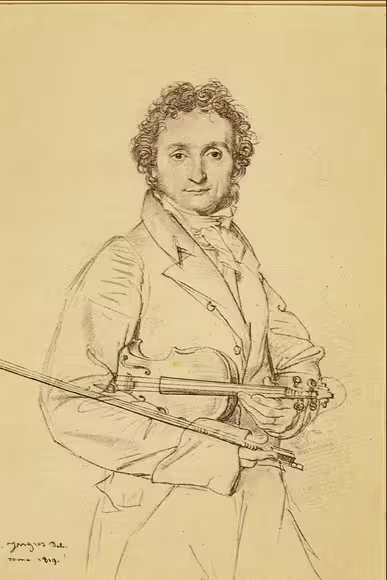
On October 27, 1782, Niccolò Paganini was born in Genoa, in present-day Italy. A violinist, guitarist and composer, he would become one of the most celebrated musicians of his age. His performances challenged audiences’ expectations of what a single violin could achieve and helped shape the image of the virtuoso as a musical celebrity.
A Childhood Devoted to Music
Paganini’s father, an amateur musician, introduced him to music and imposed a demanding practice routine. The young boy studied the mandolin before turning to the violin and guitar, developing abilities that soon attracted attention beyond his family.
By the age of eleven, he was appearing publicly as a soloist in Genoa. Further study and performances across Italy helped him develop an individual musical voice. His reputation grew through a combination of technical command, expressive playing and compositions designed to reveal the instrument’s possibilities.
Taking the Violin to New Limits
Paganini’s 24 Caprices for solo violin remain among his most important works. They challenge performers with rapid passages, wide intervals, intricate bowing and the sounding of several notes together. These demands require both extraordinary control and a clear sense of musical character.
The final piece, Caprice No. 24, became particularly influential. Its memorable theme inspired later composers, including Johannes Brahms and Sergei Rachmaninoff, to create variations of their own, carrying Paganini’s musical ideas far beyond the violin.
A European Sensation and an Enduring Legacy
In 1828, Paganini began a major international tour that continued until 1834. His appearances made him a sensation across Europe, while his remarkable playing encouraged legends that often overshadowed the years of work behind it.
Paganini died in Nice on May 27, 1840, aged 57. No recordings preserve his performances, but his compositions continue to test and inspire musicians. They remain a living connection to an artist who expanded the expressive and technical ambitions of violin playing.
Other Events on This Day
- Dick Trickle Is Born, an American Short-Track Racing Legend
- Michel Galabru Is Born, a Memorable Star of French Stage and Screen
Credits: 1st photo: Jean-Auguste-Dominique Ingres, Portrait of Niccolò Paganini, 1819. Musée du Louvre, Paris. Via Wikimedia Commons. Public domain. Sources: Premio Paganini — Niccolò Paganini; Treccani — Niccolò Paganini; Hyperion Records — Paganini: 24 Caprices


