
Oct
28
28
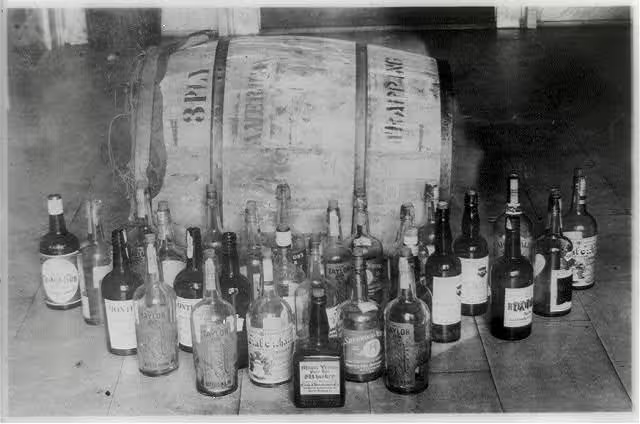
On October 28, 1919, the United States Congress completed the passage of the National Prohibition Act, better known as the Volstead Act, despite President Woodrow Wilson’s veto. The Senate voted 65 to 20 to override the president, following an earlier override in the House of Representatives. The legislation established the machinery for enforcing nationwide Prohibition.
Turning a Constitutional Amendment into Enforceable Rules
The Eighteenth Amendment, ratified in January 1919, prohibited the manufacture, sale and transportation of intoxicating liquor for beverage purposes, along with its import and export. But the amendment needed legislation to define its terms and establish enforcement procedures.
Named after Representative Andrew Volstead, who sponsored and promoted it, the new law supplied those details. Its strict definition of intoxicating beverages covered beer and wine as well as stronger spirits. It also established penalties and gave federal authorities powers to investigate violations.
Why October Was Not the Beginning of Nationwide Prohibition
Although the law was enacted on October 28, the nationwide constitutional ban took effect on January 17, 1920. Some restrictions already existed under state laws and wartime measures, so the transition was more complicated than a single nationwide closing of bars.
Wilson’s veto concerned the legislation’s inclusion of wartime prohibition provisions, which he considered no longer necessary. Congress nevertheless chose to enact the combined measure.
A Ban with Important Exceptions
The law did not simply outlaw every form of alcohol consumption. It allowed regulated uses for purposes such as medicine and religious observance. People could also retain and consume liquor legally acquired and kept in their private homes under the law’s conditions.
These distinctions mattered in everyday life and in the courts. The Volstead Act turned a broad constitutional prohibition into a detailed system of restrictions, exceptions and enforcement. Its passage marked a decisive step towards one of the most far-reaching experiments in American social regulation.
Other Events on This Day
- Metallica Is Born, Beginning a New Chapter in Heavy Metal
- The Statue of Liberty Is Unveiled in New York Harbor
Credits: 1st photo: National Photo Company Collection, Library of Congress, LC-USZ62-96026. Source. No known restrictions on publication. Sources: United States Senate — The Senate Overrides the President’s Veto of the Volstead Act; Federal Judicial Center — Prohibition in the Federal Courts: A Timeline; Constitution Annotated — Volstead Act


