
Oct
2
2
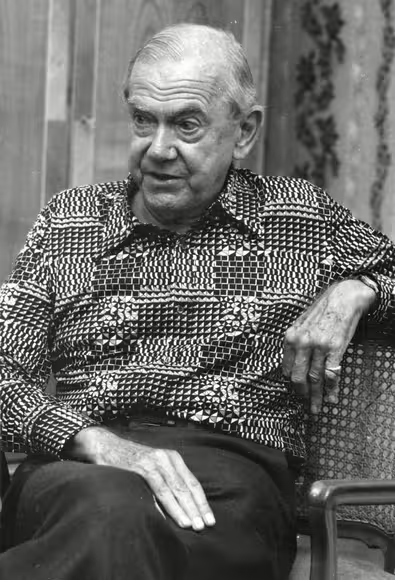
On 2 October 1904, English novelist, playwright and critic Graham Greene was born in Berkhamsted, Hertfordshire. His writing would bring together gripping stories and difficult questions about loyalty, love, faith and responsibility, earning him both a wide readership and lasting literary recognition.
From Journalism to Fiction
Greene studied history at Balliol College, Oxford, and began his working life in journalism. As a sub-editor at The Times, he developed his skills with language while pursuing his ambitions as a novelist.
His first published novel, The Man Within, appeared in 1929. Its success encouraged him to leave the newspaper and concentrate on writing, although the books that followed initially struggled. A more secure breakthrough came with Stamboul Train in 1932, a thriller set aboard a train crossing Europe.
Suspense and the Human Conscience
Greene sometimes distinguished between his more serious novels and works he called “entertainments”. Yet even his fast-moving stories often placed characters in situations where the right choice was far from obvious.
Novels such as Brighton Rock, The Power and the Glory and The Heart of the Matter explored guilt, belief and divided loyalties. His characters could be weak, compromised or deeply mistaken, while still deserving the reader’s attention and sympathy. This interest in imperfect people gave his fiction much of its emotional force.
Travel also shaped his imagination. Experiences in Africa, Asia and the Americas supplied settings and encounters that became material for his stories, giving his work an international reach.
A Writer for the Screen
Cinema was another important part of Greene’s career. He reviewed films for The Spectator and developed a style that could move quickly between scenes while building tension through precise visual details.
His best-known screenwriting achievement was The Third Man, the 1949 film directed by Carol Reed. Set in post-war Vienna, its story of friendship, deception and moral compromise brought many of Greene’s characteristic concerns to the screen.
An Enduring Literary Presence
Greene died on 3 April 1991 in Vevey, Switzerland. His books continue to invite readers into compelling stories while asking uncomfortable questions about human behaviour. That combination of narrative excitement and moral uncertainty remains central to his appeal.
Other Events on This Day
Credits: 1st photo: FORTEPAN / Magyar Hírek folyóirat, via Wikimedia Commons. CC BY-SA 3.0. Sources: Graham Greene Birthplace Trust — Biography; English Heritage — Graham Greene; Boston College, Burns Library — Graham Greene Papers; Turner Classic Movies — Graham Greene Profile


