
Oct
12
12
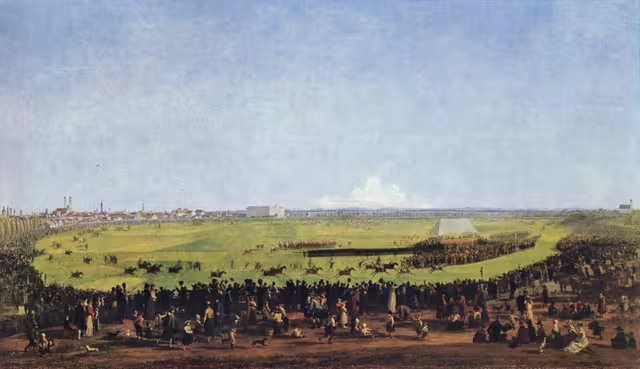
On October 12, 1810, Crown Prince Ludwig of Bavaria, the future King Ludwig I, married Princess Therese of Saxe-Hildburghausen. Their wedding sparked celebrations in Munich that would leave a lasting mark on Bavarian culture. What began as festivities honouring a royal marriage became the foundation of Oktoberfest, one of the world’s best-known festivals.
A Wedding Shared with Munich
The marriage was celebrated beyond the royal court, with public festivities bringing the occasion into the city. Bavaria had become a kingdom only four years earlier, and the wedding offered an opportunity for a grand celebration involving the royal family and the people of Munich.
The festivities continued over several days. Their most influential event took place on October 17, when a horse race was held on open ground outside the city gates.
The Race That Started a Tradition
Large crowds gathered to watch the race honouring the newly married couple. The meadow was named after the bride and became known as the Theresienwiese, or Therese’s Meadow. Its familiar nickname, Wiesn, would also become a local name for Oktoberfest itself.
The distinction between the two dates matters: October 12 marks the wedding that inspired the celebrations, while October 17 marks the horse race associated with the first Oktoberfest.
From Royal Celebration to Annual Festival
The race proved popular enough to be repeated the following year. In 1811, an agricultural festival joined the programme, promoting Bavarian farming alongside the entertainment. A celebration created for one particular marriage was developing a life of its own.
Further attractions gradually appeared. A carousel and swings were introduced in 1818, and Munich’s municipal authorities took responsibility for the festival in 1819. Despite interruptions, the event became an established part of the city’s calendar.
How Beer Became Part of the Identity
The first celebrations looked very different from the Oktoberfest familiar today. Horse racing was central to the early event, while the enormous beer halls developed much later. During the nineteenth century, refreshments, fairground attractions and hospitality became increasingly important.
By the late 1890s, large beer halls and tents were transforming the festival grounds. Yet beneath the changing attractions remained a connection to the marriage of Ludwig and Therese—a royal wedding whose legacy became a shared Bavarian tradition.
Other Events on This Day
- Columbus Reaches Guanahani, Marking a Turning Point in Atlantic History
- Voskhod 1 Carries the First Three-Person Crew into Space
Credits: 1st photo: Wilhelm von Kobell, 1811. Münchner Stadtmuseum. Reproduction: The Yorck Project, via Wikimedia Commons. Public domain. Sources: Oktoberfest.de — The History of Oktoberfest; City of Munich — A Foray Through the History of the Wiesn; Deutschlandmuseum — The First Oktoberfest


