
Sep
25
25
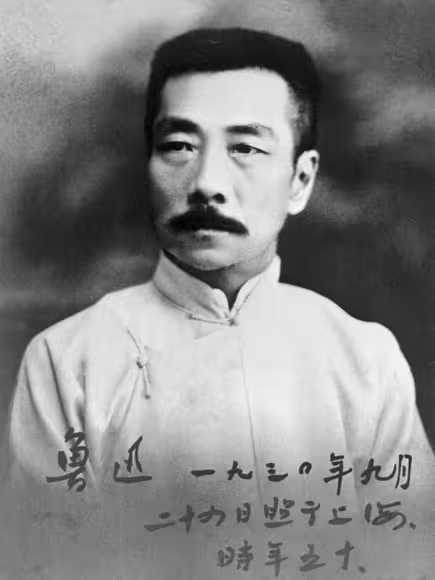
On 25 September 1881, the writer known as Lu Xun was born in Shaoxing, in China’s Zhejiang province. Celebrated for his short stories, essays and translations, he became one of the most influential voices in modern Chinese literature. His work helped demonstrate how everyday language could become a powerful tool for literary expression.
From Medicine to Literature
Lu Xun was the pen name of Zhou Shuren. His path to becoming a writer was not straightforward: in 1902, he travelled to Japan, where he later studied medicine. Eventually, he left his medical training and devoted himself to writing, believing that literature could profoundly affect how people understood themselves and others.
That interest in human experience became central to his work. Through concise storytelling and a sharp eye for detail, he explored the distance between appearances and reality, often combining irony with an awareness of human vulnerability.
A New Voice in Chinese Fiction
In 1918, he published A Madman’s Diary, the first major story to appear under the name Lu Xun. It became a landmark in the development of modern Chinese fiction through its use of vernacular Chinese, a written style closer to everyday speech than the classical language traditionally associated with learned writing.
His collections Call to Arms (1923) and Wandering (1926) helped establish his literary reputation. These stories showed how a brief narrative, an unusual perspective or a carefully chosen detail could leave a lasting impression on readers.
Beyond the Short Story
Lu Xun’s contribution extended beyond his own fiction. He translated foreign literature, taught students and studied the development of Chinese storytelling. His scholarly work, A Brief History of Chinese Fiction, brought another dimension to a career shaped by a deep interest in the written word.
He died in Shanghai on 19 October 1936. His birth anniversary offers an opportunity to discover an author whose experiments with language and narrative helped shape modern Chinese literature—and whose stories continue to invite close attention to the complexities of human life.
Other Events on This Day
Credits: 1st photo: Unknown photographer / Wikimedia Commons. Public domain. Sources: Berkshire Publishing – Lu Xun (1881–1936); Hong Kong University Press – Madmen and Other Survivors: Reading Lu Xun’s Fiction


