
Sep
24
24
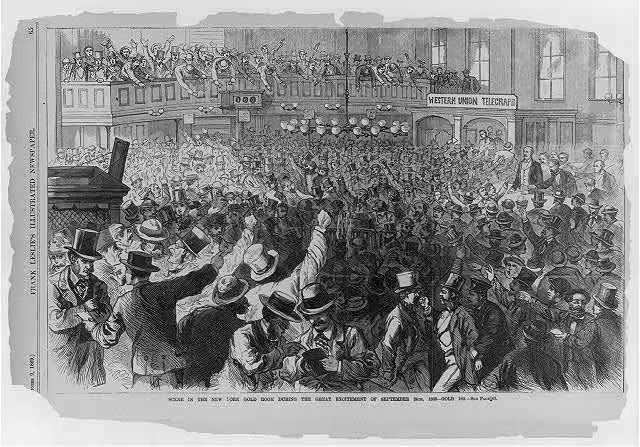
On 24 September 1869, a scheme to control the American gold market unravelled in a dramatic financial panic. After President Ulysses S. Grant authorised the Treasury to sell government gold, news of the intervention sent prices plunging. The day became known as Black Friday.
A Plan to Corner the Market
Behind the scheme were financiers Jay Gould and James “Jim” Fisk, both closely associated with the Erie Railroad. They sought to buy enough gold to dominate the available supply, drive prices upwards and profit from the resulting squeeze.
One obstacle stood in their way: the United States Treasury held substantial gold reserves. Government sales could increase the supply and undermine their attempt to control prices.
To gain influence in Washington, Gould and Fisk cultivated Abel Corbin, Grant’s brother-in-law. Through him, they gained opportunities to argue against Treasury gold sales. Their apparent access to the president also helped create the impression that government policy would favour their speculation.
Grant Intervenes
As gold prices climbed, Grant grew suspicious of the operation and Corbin’s involvement. On the evening of 23 September, he authorised Treasury Secretary George S. Boutwell to break the attempted corner by selling $4 million in gold.
The following morning, trading in New York’s Gold Room became increasingly frantic. Speculators continued pushing prices higher, but their expectations depended on the government keeping its reserves off the market.
When news of the Treasury sale reached traders, that expectation collapsed. Gold prices fell sharply within minutes as buyers turned into desperate sellers.
The Cost of the Panic
The damage spread beyond the gold market. Brokerage firms failed, share prices fell and investors faced heavy losses. Those who had borrowed to finance their purchases were particularly vulnerable: the value of their holdings collapsed while their debts remained.
Gould had begun quietly selling before the crash, protecting himself from much of the disaster. Other participants, including Corbin, were less fortunate. The scandal prompted a congressional investigation and damaged confidence in Grant’s administration.
A Lasting Warning
Black Friday became a notorious example of the dangers of market manipulation and political influence. The government’s intervention defeated the attempted gold corner, but the sudden collapse left many traders and investors paying the price.
Other Events on This Day
Credits: 1st photo: Frank Leslie’s Illustrated Newspaper / Library of Congress, Prints and Photographs Division, LC-USZ62-67999. No known restrictions on publication.; Sources: Federal Reserve Bank of New York — The Gold Panic of 1869; PBS, American Experience — Black Friday, September 24, 1869


