
Oct
6
6
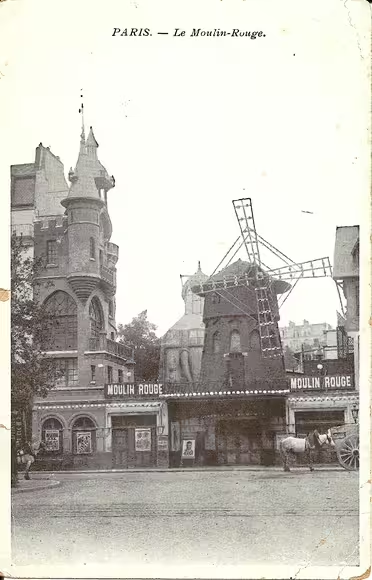
On 6 October 1889, the Moulin Rouge opened at the foot of Montmartre in Paris. Founded by Joseph Oller and Charles Zidler, the new entertainment venue would become closely associated with the energy of the Belle Époque, the spectacle of the French cancan and the art of Henri de Toulouse-Lautrec.
A New Attraction in Paris
The opening came during a remarkable year for the French capital. The 1889 World’s Fair had brought international attention to Paris, and the newly built Eiffel Tower had become its most talked-about landmark.
Against this backdrop, the Moulin Rouge offered another kind of attraction: an evening of music, dancing and spectacle. Its name, meaning “Red Mill”, and its distinctive windmill gave the venue an identity that was easy to recognise and remember.
The Cancan Finds a Famous Home
The cancan had developed in Parisian dance halls decades before the Moulin Rouge opened. Its roots lay in the quadrille and increasingly exuberant variations that challenged expectations of respectable dancing.
At the Moulin Rouge, the dance became a central attraction. High kicks, swirling skirts and acrobatic movements demanded strength, flexibility and precise timing, while giving audiences an impression of joyful disorder.
Performers such as La Goulue and Valentin le Désossé became closely linked with the venue’s early success. Their distinctive personalities helped turn individual dancers into celebrities and made the Moulin Rouge an important stage for the cancan’s growing reputation.
Toulouse-Lautrec and the Art of Nightlife
Among the venue’s regular visitors was Henri de Toulouse-Lautrec, who found inspiration in its performers and audiences. His images captured the personalities and atmosphere of Parisian nightlife.
In 1891, he created the celebrated poster Moulin Rouge: La Goulue, commissioned to advertise the venue. Its bold shapes and striking composition helped establish his reputation as a poster artist and preserved an enduring image of the dance hall.
An Enduring Cultural Symbol
The Moulin Rouge’s reputation grew through the combination of live performance and memorable visual imagery. Its dancers, posters and red windmill became familiar symbols of Parisian entertainment.
The opening of October 1889 began a story that would reach far beyond Montmartre, giving one Paris venue a lasting place in the history of dance, popular culture and art.
Other Events on This Day
- John Paul II Becomes the First Pope to Visit the White House
- Reginald Fessenden Is Born, the Canadian Pioneer Who Helped Give Radio a Voice
Credits: 1st photo: Unknown photographer / Historical postcard, via Wikimedia Commons. Public domain. Sources: ; Moulin Rouge — The Great Periods; Moulin Rouge — The History of the French Cancan; Musée Toulouse-Lautrec — Moulin Rouge: La Goulue


