
Oct
4
4
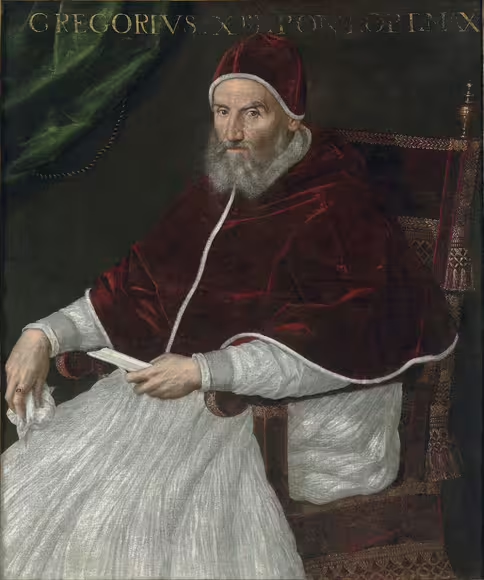
On 4 October 1582, people in the first countries to adopt the Gregorian calendar reached an unusual turning point. When Thursday ended, the next day was Friday, 15 October. Ten calendar dates were omitted as part of a reform intended to bring the calendar back into closer alignment with the seasons.
Why the Calendar Needed Correcting
The Julian calendar, introduced under Julius Caesar, used a leap year every four years. This produced an average year of 365.25 days, slightly longer than the seasonal year. The difference amounted to roughly eleven minutes annually, but over centuries it became significant.
By the sixteenth century, the spring equinox was occurring about ten days earlier than the date traditionally used by the Church. This mattered especially for calculating Easter, whose date depended on the relationship between the spring equinox and the lunar cycle.
Removing Ten Dates
Pope Gregory XIII announced the reform in the papal bull Inter gravissimas, issued on 24 February 1582. Its most visible measure was the omission of the dates from 5 to 14 October in the countries implementing the change that autumn.
Spain, Portugal, the Polish-Lithuanian Commonwealth and much of the Italian peninsula were among the first adopters. The sequence of weekdays continued normally: Thursday was followed by Friday. The adjustment changed the numbering of dates, without interrupting the passage of time.
A More Accurate Leap-Year Rule
The reform also reduced future drift. Years divisible by four would generally remain leap years, but century years would qualify only if divisible by 400.
Under this rule, 1900 was not a leap year, while 2000 was. This small adjustment brought the average calendar year much closer to the seasonal cycle.
A Gradual International Change
Adoption took centuries. France made the change later in 1582, while Britain and its colonies waited until 1752. Religious divisions and decisions by civil authorities shaped the pace of the transition.
The Gregorian calendar eventually became the standard for international civil use. Its introduction remains a striking example of how astronomical knowledge can reshape an everyday practice: the way people name and count their days.
Other Events on This Day
- Belgium Declares Independence and Begins Its Journey as a New European State
- The Orient Express Begins Its Celebrated Inaugural Journey from Paris towards Constantinople
Credits: 1st photo: Lavinia Fontana / Wikimedia Commons. Public domain. Sources: Inter gravissimas — Original proclamation; Royal Museums Greenwich — Calendars from Around the World; Time and Date — Julian to Gregorian Calendar; Gregorian calendar — Adoption


