
Oct
4
4
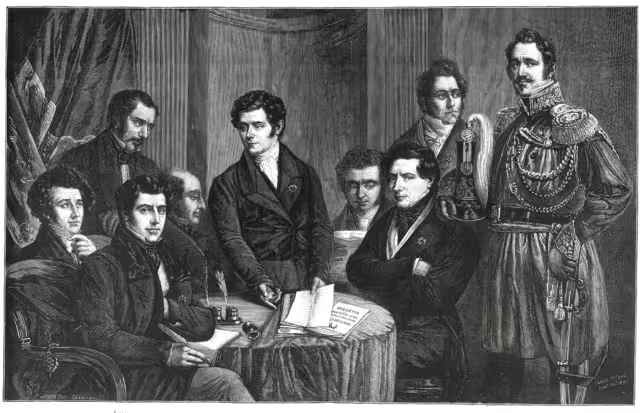
On 4 October 1830, a provisional government proclaimed Belgium’s independence from the United Kingdom of the Netherlands. The declaration followed revolutionary fighting in Brussels and marked a decisive step towards the creation of a separate Belgian state.
A Union Under Strain
In 1815, following the defeat of Napoleon, the northern and southern Netherlands had been united under King William I. The arrangement brought together territories with different religious traditions, political expectations and economic interests.
Opposition to the king grew in the southern provinces. Catholics objected to royal interference in religious affairs, while liberals sought greater political freedom. Despite their differences, these groups increasingly cooperated in demanding change.
From Revolution to Independence
Unrest developed into revolution in Brussels in 1830. Fighting in September forced royal troops out of the city, while volunteers from elsewhere supported the uprising.
The provisional government’s declaration on 4 October turned the revolt into an explicit claim to independent statehood. Yet proclaiming independence was only the beginning: Belgium still needed institutions, a constitution and acceptance from its neighbours.
Building a Constitutional Monarchy
A National Congress was elected in November 1830 to shape the new country. Although participation in the election was restricted to a small section of the male population, the constitution adopted on 7 February 1831 was considered progressive for its time.
Belgium became a constitutional monarchy. On 21 July 1831, Leopold of Saxe-Coburg took the constitutional oath as the first King of the Belgians. His accession gave the new state a monarch whose authority operated within the constitutional framework.
Securing a Place in Europe
Belgian independence also required a diplomatic settlement. Representatives of Europe’s major powers met in London, and Britain, France, Austria, Prussia and Russia concluded a treaty with Belgium in 1831.
The dispute with the Netherlands remained unresolved for several more years. The London settlement of 19 April 1839 secured definitive recognition of Belgian independence and established an agreed territorial settlement, including arrangements concerning Limburg and Luxembourg.
The declaration of October 1830 therefore began a process that combined revolution, constitution-making and international negotiation. It remains a foundational moment in the history of Belgium as an independent country.
Other Events on This Day
- The Calendar Change That Took Europe from Thursday the Fourth to Friday the Fifteenth
- The Orient Express Begins Its Celebrated Inaugural Journey from Paris towards Constantinople
Credits: 1st photo: Engraving: Joseph Smeeton and Auguste Tilly, after Charles Picqué. L’Illustration nationale, 1880 / Wikimedia Commons. Public domain. Sources: Belgium.be — Belgium’s independence; The Belgian Monarchy — History; Belgian Ministry of Foreign Affairs — Treaties recognising independence


