
Oct
3
3
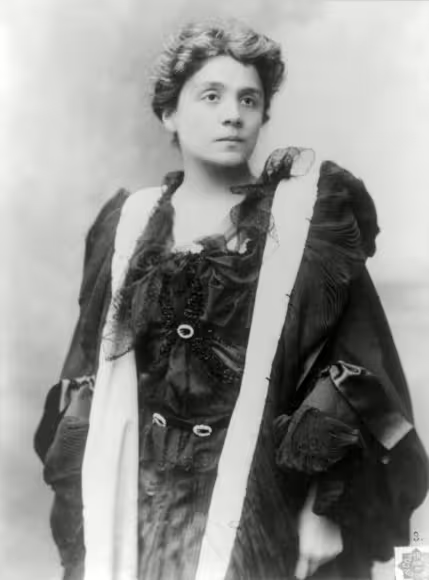
On 3 October 1858, Eleonora Duse was born in Vigevano, in present-day Italy. Celebrated for the emotional depth and naturalness of her performances, she became one of the most admired stage actresses of her era and an important figure in the development of modern acting.
A Childhood in the Theatre
Duse was born into a family of travelling actors and began performing as a small child. Theatre was both her education and her livelihood: she grew up moving between towns, learning roles and experiencing the demanding routine of life on the road.
Her rise to international recognition came through years of practical work. By adulthood, she had developed a distinctive stage presence that attracted audiences well beyond Italy, making her a celebrated name across Europe and the Americas.
Making Emotion Feel Real
Duse became especially admired for performances that seemed to emerge from a character’s inner life. Changes in expression, carefully judged movements and the emotional qualities of her voice could make a scene feel immediate and personal.
Her apparent naturalness was an artistic achievement, supported by sustained attention to her craft. She sought to make the audience believe in the person she portrayed, allowing vulnerability, hesitation and conflicting emotions to become part of the performance.
This approach helped expand expectations of what stage acting could communicate. A character’s quiet struggles could carry as much dramatic weight as a grand speech.
Bringing Modern Drama to Life
Duse became a celebrated interpreter of Henrik Ibsen, whose plays offered complex roles shaped by private desires and social expectations. She also performed works by Gabriele D’Annunzio and maintained a repertoire that connected popular theatre with newer dramatic writing.
After withdrawing from the stage in 1909, she returned in 1921 in Ibsen’s The Lady from the Sea. Her comeback introduced her art to audiences who had previously known her chiefly by reputation.
A Legacy Beyond the Stage
Duse died in Pittsburgh on 21 April 1924 while touring the United States. Her only film, Cenere (Ashes, 1916), preserves a rare moving record of her work.
Although most of her performances survive only through contemporary accounts, her influence remains part of theatre history. She helped demonstrate how emotional precision and close attention to a character’s inner life could hold an audience’s imagination.
Other Events on This Day
- Space Shuttle Atlantis Makes Its First Flight
- The Birth of Saint Casimir, the Jagiellonian Prince Remembered for Faith and Compassion
Credits: 1st photo: Photo: Aimé Dupont / Library of Congress, via Wikimedia Commons. Public domain. Sources: Museo Civico di Asolo — Eleonora Duse; Arts Centre Melbourne — DIVA exhibition; Fondazione Giorgio Cini — Ibsen and Eleonora Duse; Treccani — Eleonora Duse


