
Oct
21
21
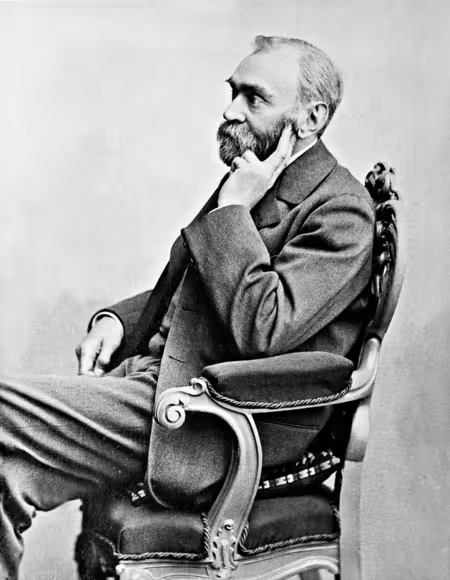
On October 21, 1833, Alfred Nobel was born in Stockholm, Sweden. A chemist, inventor and businessman, he became internationally known for developing dynamite. Yet his most enduring legacy would take a different form: prizes recognising achievements in science, literature and peace.
A Life of Invention
Nobel devoted much of his working life to technical experimentation. His research into explosives led to the development of dynamite, which he patented in 1867. The invention became an important commercial success and helped establish his international industrial business.
His interests extended well beyond a single invention. By the time of his death, he held 355 patents. He also had a lasting enthusiasm for literature and wrote poetry, revealing a reflective side to a man often remembered primarily for his laboratories and factories.
A Will with an International Purpose
On November 27, 1895, Nobel signed his final will in Paris. He directed that the largest part of his fortune should support annual prizes in physics, chemistry, physiology or medicine, literature and peace.
The plan connected scientific discovery with cultural achievement and efforts to reduce conflict. Rather than reserving recognition for people from his own country, Nobel intended the awards to look beyond national borders.
A Legacy That Began After His Death
Nobel died on December 10, 1896, in San Remo, Italy. Putting his wishes into practice required years of legal and organisational work. The Nobel Foundation was established in 1900, and the first prizes were awarded the following year.
His birthday recalls both an inventive individual and an unusual act of philanthropy. The fortune he built through industry became the foundation for recognising work whose importance could reach far beyond a laboratory, a book or a single nation.
Other Events on This Day
- Celia Cruz Is Born — The Cuban Singer Who Became the Queen of Salsa
- Kimi Räikkönen Wins in Brazil and Claims the Formula One World Title by a Single Point
Credits: 1st photo: Gösta Florman / The Royal Library, via Wikimedia Commons. Public domain. Cropped and converted to grayscale. Sources: NobelPrize.org — Alfred Nobel; Nobel Peace Prize — Alfred Nobel; Nobel Peace Prize — Alfred Nobel’s Will; NobelPrize.org — The Very First Nobel Prizes


