
Oct
14
14
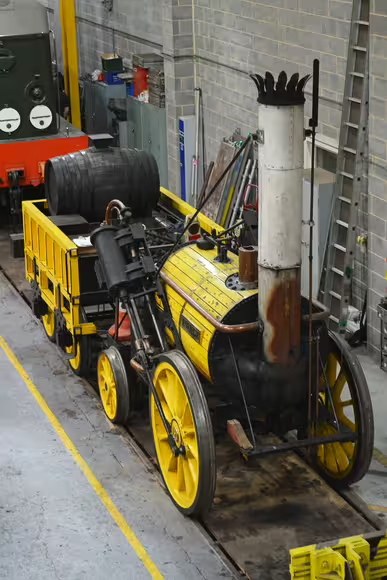
On October 14, 1829, Stephenson’s Rocket emerged as the winner of the Rainhill Trials in England. The competition had tested locomotives for the nearly completed Liverpool and Manchester Railway. As the only entrant to complete the full programme successfully, Rocket earned the £500 prize and demonstrated the practical promise of locomotive-powered trains.
A Competition with Far-Reaching Consequences
The railway’s directors needed to decide how their trains would be moved. Locomotives offered one possibility; stationary steam engines pulling trains by ropes offered another. Before committing to a system, the company invited inventors to demonstrate what their machines could achieve.
The trials began on October 6 on a level stretch of track at Rainhill, near Liverpool. Spectators gathered to watch a competition in which reliability, load-hauling ability, and sustained speed mattered as much as an impressive burst of acceleration.
The Locomotive That Completed the Challenge
Rocket successfully completed its measured tests on October 8. Its rivals received further opportunities to run, but mechanical failures and other difficulties prevented them from matching its achievement.
On October 14, Novelty suffered another breakdown and withdrew. With no other entrant completing the required programme, Rocket was declared the winner. Its success demonstrated that a locomotive could meet the railway’s demands through repeated, measured performance.
Robert Stephenson’s Influential Design
Rocket was designed by Robert Stephenson, son of railway engineer George Stephenson, and built by Robert Stephenson & Company in Newcastle upon Tyne. Although commonly associated with the Stephenson family name, it was Robert who led the locomotive’s design and construction.
Its multi-tube boiler increased the heating surface available to produce steam. A blastpipe directed exhaust steam toward the chimney, strengthening the draught through the fire. These features worked together to make the small engine an effective and dependable competitor.
A Victory Beyond the Prize Money
The result helped settle the Liverpool and Manchester Railway’s decision to use locomotives. The Stephensons received orders for additional engines, and the railway opened in 1830.
Rocket was not the first steam locomotive, and its design was soon improved. Its lasting importance lay in bringing successful engineering ideas together and proving their value under demanding conditions. The victory at Rainhill helped establish a pattern for locomotive development that would influence railways for generations.
Other Events on This Day
- Martin Luther King Jr. Is Named Nobel Peace Prize Laureate for His Nonviolent Struggle for Equality
- Roger Moore, the Actor Who Brought Wit and Charm to James Bond, Is Born
Credits: 1st photo: HawkeyeUK, via Wikimedia Commons. Licensed under CC BY-SA 2.0. Sources: ASME — The Rainhill Trials on the Liverpool and Manchester Railway; Science Museum Group — Rocket Locomoti


