
Oct
14
14
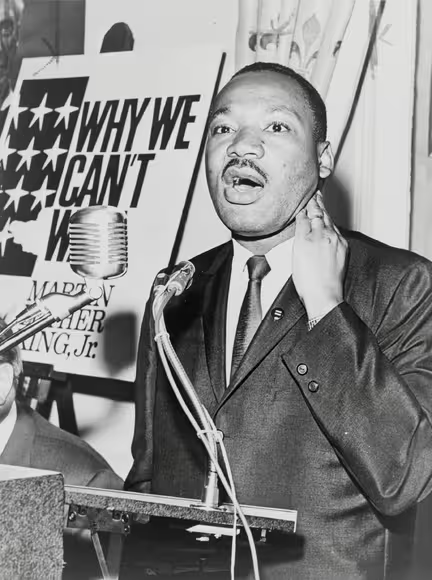
On October 14, 1964, Martin Luther King Jr. was announced as the recipient of the Nobel Peace Prize. The award recognised his commitment to advancing African American civil rights through nonviolent action. At thirty-five, he was the youngest person to have won the Peace Prize up to that time.
A Telephone Call with Historic News
King learned of the decision while resting in an Atlanta hospital. His wife, Coretta Scott King, telephoned to tell him the news. The announcement brought international recognition to a struggle sustained by countless organisers, volunteers and ordinary citizens.
For King, the honour belonged to the wider civil rights movement. He understood it as encouragement for those challenging segregation and discrimination, including people whose names rarely appeared in newspaper headlines.
The Power of Nonviolent Action
A Baptist minister, King drew on Christian teachings and the example of Mahatma Gandhi. He argued that injustice could be confronted through organised resistance without answering violence with violence.
His leadership during the Montgomery bus boycott, which began in 1955, helped establish him as a prominent voice for equality. Boycotts, marches and other peaceful protests became ways to challenge discriminatory practices and demand change.
This approach required courage and discipline. King faced repeated arrests and attacks, yet continued to advocate nonviolence as both a moral commitment and a practical method of social action.
From the Announcement to Oslo
The October announcement preceded the formal ceremony by almost two months. On December 10, 1964, King accepted the Nobel Peace Prize in Oslo, Norway.
In his acceptance address, he connected the campaign for racial justice with broader hopes for peace and freedom from poverty. He also shared the prize money among civil rights organisations, directing the financial reward towards the continuing work of the movement.
Recognition for an Unfinished Struggle
The award did not mark the end of racial inequality. It gave international prominence to the efforts of people seeking equal rights and affirmed the importance of their nonviolent methods.
October 14, 1964, therefore stands as a milestone in the history of civil rights: the day a movement rooted in local communities received one of the world’s most prominent expressions of recognition.
Other Events on This Day
- Roger Moore, the Actor Who Brought Wit and Charm to James Bond, Is Born
- Stephenson’s Rocket Wins the Rainhill Trials and Helps Shape the Railway Age
Credits: 1st photo: Walter Albertin / New York World-Telegram & Sun, June 8, 1964. Library of Congress, via Wikimedia Commons. Public domain. Cropped and straightened. Sources: Stanford University, The King Institute — Nobel Peace Prize; NobelPrize.org — The Nobel Peace Prize 1964; NobelPrize.org — Martin Luther King Jr.: Biography


