
Dec
31
31
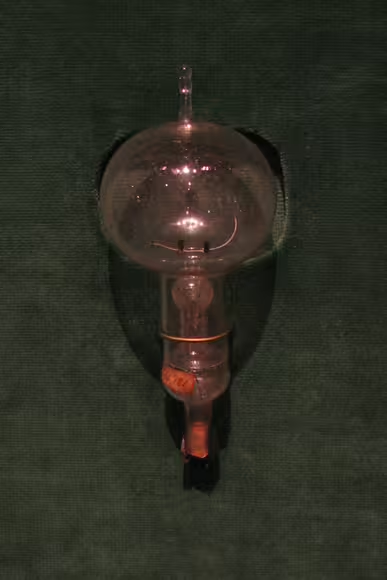
On December 31, 1879, visitors gathered at Menlo Park, New Jersey, to see Thomas Alva Edison’s incandescent electric lighting system in operation. Illuminated buildings and outdoor lamps offered a striking glimpse of how electricity might transform everyday life.
The New Year’s Eve demonstration became a celebrated milestone in the development of practical electric lighting.
A Laboratory Opens Its Doors
Edison’s team had prepared more than a display of individual bulbs. Workers wired the laboratory complex, nearby houses and other buildings, while lamps mounted on poles lit the route towards the railway station. A generator in the machine shop supplied the electricity.
Public curiosity was intense. Special trains brought visitors to Menlo Park, and crowds arrived despite stormy weather. Edison and his assistants explained the system and demonstrated its operation.
More Than the Invention of a Bulb
Edison did not invent the first electric light bulb. Earlier experimenters had already explored incandescent lighting. The challenge was to make lamps sufficiently durable and practical, and to supply them with electricity reliably.
During 1879, Edison and his collaborators made important progress with carbon filaments sealed inside evacuated glass bulbs. Their work involved repeated testing of materials and manufacturing methods.
A useful lighting system also required generators, wiring, switches and other equipment. The lamp was the most visible part of a much larger engineering project.
From Demonstration to Daily Use
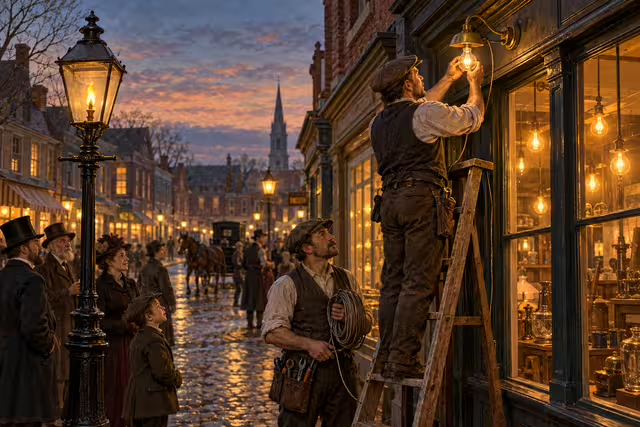
The success at Menlo Park showed that the system could work on an experimental scale. Making it dependable and economical for paying customers required further development.
Electric lighting also had to compete with established gas services. The change would take decades, requiring investment in generating stations, distribution networks and installations inside buildings.
A Bright Beginning for a New Era
In 1882, Edison’s work helped bring electric lighting to parts of Manhattan. Wider electrification followed gradually, changing homes, workplaces and streets.
The significance of that evening in 1879 lay in making a technological possibility visible. Visitors could walk through illuminated spaces and imagine electric light becoming part of ordinary life. Menlo Park had offered a public preview of a transformation still to come.
Other Events on This Day
- Carl Benz Successfully Runs the Engine That Helps Pave His Way to the Automobile
- Taipei 101 Opens as the World’s Tallest Skyscraper
Credits: 1st photo: Terren, 2008, via Wikimedia Commons, CC BY 2.0. Sources: Thomas A. Edison Papers, Rutgers University — Chronology: 1879; Thomas A. Edison Papers, Rutgers University — Demonstrating the New Light; National Park Service — The Electric Light System


