Aug
31
31
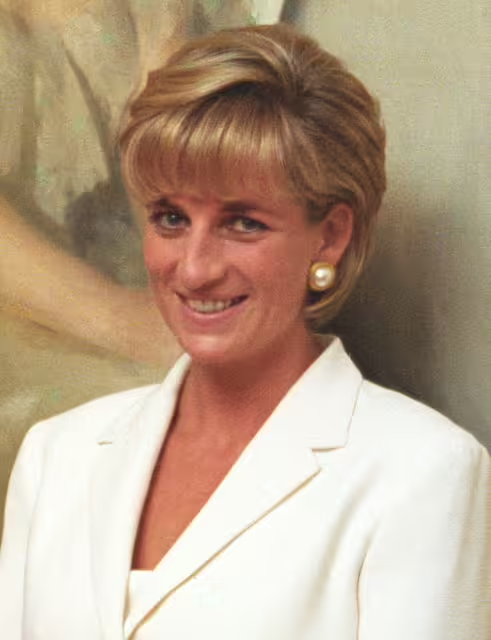
The Death of Diana, Princess of Wales, Shocks the World
On August 31, 1997, Diana, Princess of Wales, died following a car crash in Paris. Her partner Dodi Al-Fayed and the driver Henri Paul were also killed, while bodyguard Trevor Rees-Jones survived with serious injuries.
Diana was only 36 years old. Her sudden death triggered an extraordinary worldwide reaction and became one of the defining public events of the late 20th century.
A Late-Night Journey Through Paris
On the evening of August 30, Diana and Dodi Al-Fayed were staying at the Ritz Hotel in Paris.
Shortly after midnight, they left the hotel in a Mercedes-Benz accompanied by driver Henri Paul and bodyguard Trevor Rees-Jones.
The car was travelling through central Paris while photographers followed nearby.
Minutes later, it entered the road tunnel near the Place de l'Alma.
The Crash
Inside the tunnel, the Mercedes lost control and struck a concrete pillar.
Henri Paul and Dodi Al-Fayed died at the scene.
Trevor Rees-Jones survived but suffered severe injuries.
Diana was still alive and was taken to the Pitié-Salpêtrière Hospital, where doctors attempted emergency surgery.
She died in the early hours of August 31, 1997.
A Worldwide Reaction
News of Diana's death spread rapidly around the world.
For millions of people, the announcement was difficult to believe.
Diana had been one of the most photographed and recognizable women of her generation, and her public life had been followed internationally for more than fifteen years.
Her death produced an extraordinary wave of public grief.
Flowers Outside Kensington Palace
In Britain, thousands of people gathered outside royal residences to leave flowers, letters, photographs, and personal messages.
The area outside Kensington Palace became covered with an enormous sea of tributes.
Similar memorials appeared in cities around the world.
The scale and emotional intensity of the public response surprised even experienced observers of the British monarchy.
More Than a Royal Figure
Diana had become famous after marrying Charles, Prince of Wales, in 1981.
But much of her lasting popularity came from the humanitarian causes she supported.
She worked with organizations helping homeless people, children, cancer patients, and people affected by HIV and AIDS.
At a time when fear and misinformation about AIDS were still widespread, Diana publicly shook hands with patients without wearing gloves, helping challenge the false belief that HIV could be transmitted through ordinary physical contact.
Campaigning Against Landmines
During the final year of her life, Diana also became closely associated with the campaign against anti-personnel landmines.
In January 1997, images of her walking through a cleared minefield in Angola attracted international attention to the injuries suffered by civilians long after wars had ended.
Her involvement helped bring greater public awareness to a humanitarian issue that was often ignored outside conflict zones.
What the Investigations Found
The circumstances of the crash were examined extensively by French and British investigators.
The British investigation known as Operation Paget also examined numerous claims that Diana and Dodi Al-Fayed had been deliberately killed.
It found no evidence supporting claims of an organized assassination.
In 2008, a British inquest jury concluded that Diana and Dodi Al-Fayed had been unlawfully killed as a result of the grossly negligent driving of Henri Paul and the actions of pursuing paparazzi vehicles.
The fact that Diana and Dodi Al-Fayed were not wearing seat belts was also identified as a contributing factor.
A Debate About Paparazzi and Privacy
Diana's death intensified an international debate about the relationship between celebrities and the media.
She had lived much of her adult life under intense photographic attention.
Images of Diana were extremely valuable to newspapers and magazines, creating constant competition among photographers.
The circumstances of the final journey through Paris therefore raised difficult questions about privacy, public interest, and the lengths photographers should go to obtain a picture.
A Funeral Watched Around the World
Diana's funeral took place at Westminster Abbey on September 6, 1997.
Huge crowds gathered along the procession route in London, while hundreds of millions of people around the world watched the ceremony on television.
The event became one of the most widely viewed broadcasts of its era.
Diana was later buried at her family's estate at Althorp in Northamptonshire.
A Lasting Legacy
Diana's life and death changed the way many people viewed the British royal family, celebrity culture, humanitarian campaigning, and the media.
Her sons, Prince William and Prince Harry, were only 15 and 12 years old when she died.
In the decades that followed, many of the charitable causes associated with Diana continued to receive international attention.
Her influence can still be seen in campaigns concerning HIV awareness, homelessness, mental health, and the dangers of landmines.
A Moment the World Remembered
On August 31, 1997, the sudden death of Diana, Princess of Wales, became far more than a tragic accident involving a famous public figure.
It produced an extraordinary global expression of grief and opened lasting debates about fame, privacy, journalism, and the relationship between public figures and the people who follow their lives.
More than a quarter of a century later, Diana remains one of the most recognizable and discussed figures of modern royal history.
Other Events on This Day
- Ferdinand von Zeppelin Patents His Vision of the Airship
- Radio Prague Begins Broadcasting to the World
Credits: 1st photo: Sharon Farmer / The White House / Bill Clinton Presidential Library — Public Domain.