
Sep
29
29
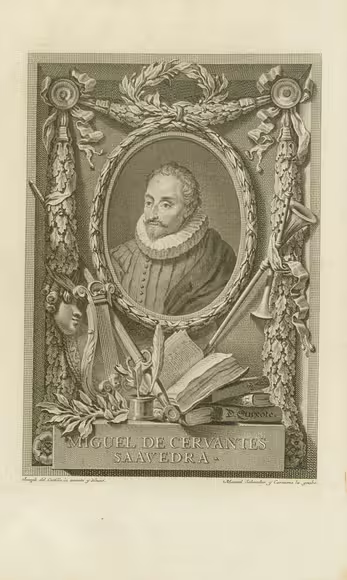
On 29 September, readers remember the traditional birthday of Miguel de Cervantes Saavedra, the Spanish novelist, poet, and playwright best known for Don Quixote. Born in Alcalá de Henares in 1547, Cervantes became one of the most influential figures in world literature.
His exact birth date remains uncertain. Records confirm that he was baptized on 9 October 1547. The earlier date of 29 September is traditionally associated with his birth because it is the feast of Saint Michael, whose name he bore.
A Life of Adventure and Hardship
Long before achieving literary fame, Cervantes experienced a life of travel, danger, and financial difficulty. As a soldier, he fought at the Battle of Lepanto in 1571, where wounds left him without the use of his left hand.
In 1575, corsairs captured him while he was returning to Spain. He spent five years in captivity in Algiers before being ransomed in 1580. Back in Spain, he pursued writing while also taking work supplying provisions and collecting taxes.
The World of Don Quixote
The first part of Don Quixote appeared in 1605, followed by the second in 1615. The novel follows a man so absorbed in tales of chivalry that he sets out to become a knight himself, accompanied by his squire, Sancho Panza.
Their adventures turn the distance between imagination and reality into a source of both comedy and sadness. In the famous windmill episode, an ordinary landscape becomes a battlefield of imagined giants. Yet the novel’s appeal extends beyond its comic misunderstandings: its central companions reveal affection, stubbornness, dignity, and a deeply human capacity for hope.
Beyond His Most Famous Novel
Cervantes also wrote poetry, plays, and shorter fiction. His works include the pastoral novel La Galatea, published in 1585, and Exemplary Novels, a collection published in 1613. Together, they reveal a writer interested in many forms of storytelling.
A Lasting Literary Presence
Cervantes died in Madrid on 22 April 1616. His characters, however, continued their journey through translations, illustrations, theatre, and readers’ imaginations. Remembering his birth means celebrating an author whose writing still invites us to consider how the stories we believe shape the world we see.
Other Events on This Day
Credits: 1st photo: Manuel Salvador Carmona, after José del Castillo / Wikimedia Commons. Public domain. Sources: Instituto Cervantes — Chronology of Cervantes’s Life; The Cervantes Project, Texas A&M University — Life and Portrait; The Cervantes Project, Texas A&M University — Chronology


