
Sep
23
23
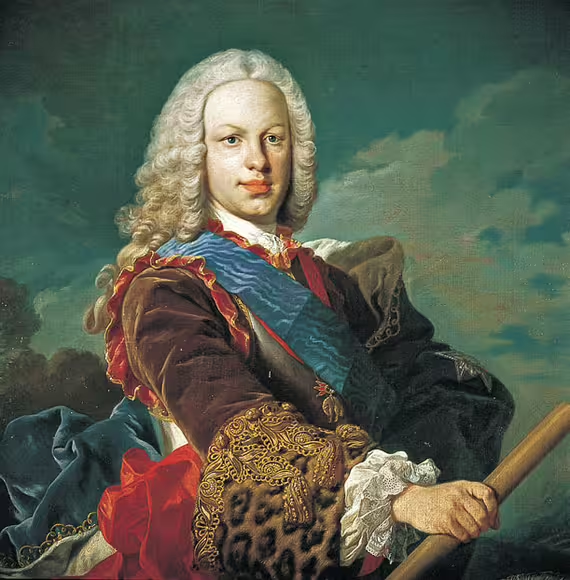
On 23 September 1713, Ferdinand VI of Spain was born in Madrid. A member of the Bourbon dynasty, he would rule from 1746 to 1759, pursuing a foreign policy that sought to give Spain a respite from Europe’s costly rivalries.
A Prince of the Bourbon Dynasty
Ferdinand was the son of Philip V and his first wife, Maria Luisa of Savoy. His mother died while he was still an infant, and his father subsequently married Elisabeth Farnese, whose influence became a powerful force at the Spanish court.
In 1729, Ferdinand married the Portuguese princess Barbara of Braganza. Their marriage developed into a close personal partnership, and Barbara remained an important influence throughout his life. The couple had no children.
A Crown and a Policy of Neutrality
Ferdinand became king on 9 July 1746, following his father’s death. His government sought to strengthen Spain while limiting its involvement in international conflict.
This approach is often described as armed neutrality: maintaining the capacity to defend Spanish interests while avoiding commitments that might draw the country into another major war. Spain remained outside the Seven Years’ War during Ferdinand’s lifetime.
Reform at Home
Ministers including José de Carvajal and the Marquis of Ensenada played leading roles in government. Their initiatives addressed public finances, commerce and naval strength.
One ambitious undertaking was the Catastro de Ensenada, a detailed survey of property, income and economic activity in Castile. It was intended to prepare the way for a new tax system. Although the proposed single tax was never implemented, the survey became a valuable historical record of eighteenth-century society.
The reign also had a darker side. In 1749, Ferdinand authorised the mass arrest of Spain’s Roma population, an operation remembered as the Great Gypsy Round-up. Thousands were detained and families were separated, exposing the coercive character of Bourbon government.
Loss and Succession
Barbara’s death in 1758 devastated Ferdinand, who withdrew from public affairs as his health deteriorated. He died at Villaviciosa de Odón on 10 August 1759, aged 45.
With no direct heir, the crown passed to his half-brother, Charles III. Ferdinand left a complex legacy of diplomatic restraint, administrative reform and severe repression at home.
Other Events on This Day
- A Storm Brings the First Europeans to Japan
- The Shipwreck That Helped Spark the Tierra del Fuego Gold Rush
Credits: 1st photo: Louis-Michel van Loo / Wikimedia Commons. Public domain.; Sources: Spanish State Archives (PARES), Royal Collections Gallery, Encyclopedia of the Early Modern World, and the biographical overview of Ferdinand VI.


