
Oct
31
31
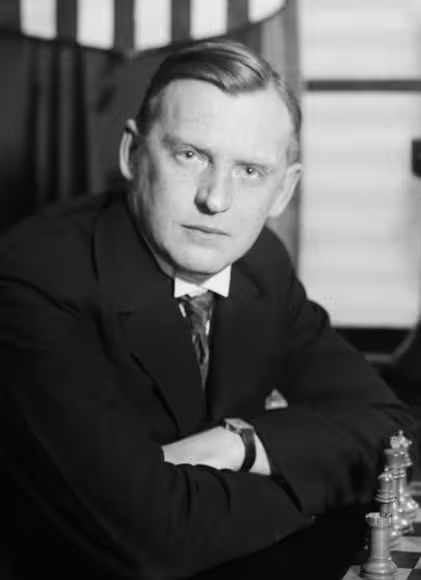
On October 31, 1892, Alexander Alekhine was born in Moscow. He would become the fourth World Chess Champion, known for imaginative attacks, complex combinations and detailed analysis. His contribution to chess extended beyond tournament victories through books that allowed readers to study his ideas.
A Creative Approach to the Chessboard
Introduced to chess by his family, Alekhine developed into one of the world's strongest players before the First World War. His games became associated with energetic play and the ability to create attacking opportunities in seemingly unpromising positions.
Behind the spectacular combinations lay careful preparation. Alekhine could build pressure through a sequence of threats, forcing opponents to solve one problem after another. He also gave simultaneous blindfold exhibitions, playing several games without looking at the boards.
Winning and Regaining the World Title
In 1927, Alekhine challenged the reigning champion, José Raúl Capablanca, in Buenos Aires. Their match lasted 34 games. Alekhine won six, lost three and drew twenty-five, securing the world championship.
He successfully defended the title against Efim Bogoljubov in 1929 and 1934. In 1935, however, he lost a closely contested championship match to Dutch player Max Euwe.
Alekhine regained the crown in their 1937 rematch. He remained world champion until his death in 1946, bringing to an end a career that had included two separate periods at the summit of competitive chess.
Sharing His Games with Readers
Alekhine was also an important chess author. His books included My Best Games of Chess 1908–1923, followed by a collection covering 1924–1937, as well as an account of the New York international tournament of 1924.
These works gave readers more than lists of moves: his annotations explored plans, alternatives and tactical possibilities. Alongside his championship achievements, they preserved the thinking behind his play and made his games available for study beyond the tournament hall.
Other Events on This Day
- Adolf von Baeyer Is Born, the Chemist Who Helped Unlock the Secrets of Indigo
- Satoshi Nakamoto Introduces Bitcoin in a Nine-Page White Paper
Credits: 1st photo: George Grantham Bain Collection / Library of Congress, via Wikimedia Commons. No known restrictions on publication. Cropped. Sources: FIDE Open Chess Museum — Alexander Alekhine; European Chess Union — ECU Magazine, November 2024; FIDE — World Champions Timeline; National Library of Ireland — My Best Games of Chess, 1908–1923


