
Oct
20
20
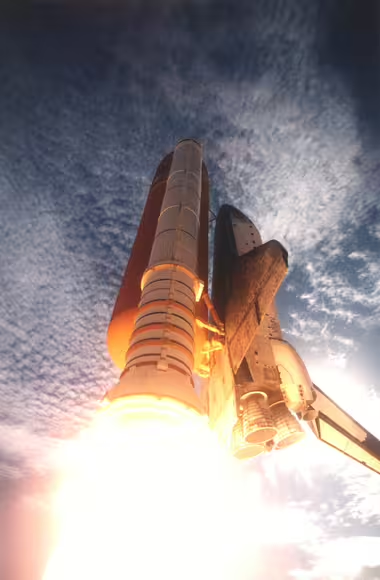
On October 20, 1995, Space Shuttle Columbia lifted off from Kennedy Space Center in Florida on mission STS-73. Its seven-person crew carried the United States Microgravity Laboratory-2, or USML-2, into orbit for nearly sixteen days of scientific research.
A Laboratory Working Around the Clock
Commanded by Kenneth Bowersox, the mission built on experiments conducted during the first United States Microgravity Laboratory flight in 1992. Inside a Spacelab module in Columbia’s payload bay, the astronauts divided into two teams to keep research running around the clock.
The programme covered fluid physics, materials science, biotechnology, combustion and commercial processing techniques. The orbital environment allowed researchers to examine processes that gravity strongly influences on Earth.
Studying Floating Drops
One particularly striking experiment used the Drop Physics Module-2. In its experimental chamber, sound waves positioned and manipulated floating liquid drops. Cameras recorded how the drops changed shape, oscillated and interacted.
These observations gave scientists a way to compare the behaviour of liquids with theoretical predictions. Researchers also investigated how two drops interacted and how additives affected that process.
The work had potential applications beyond fundamental physics. Scientists hoped that a better understanding of liquid behaviour could help research in industrial chemistry and medicine, including techniques for enclosing living cells within protective materials. These were research possibilities, rather than finished treatments produced by the flight.
A Successful Return with Scientific Data
Columbia landed back at Kennedy Space Center on November 5, 1995, after completing 256 orbits. The mission demonstrated the shuttle’s ability to support sustained laboratory work, with astronauts conducting experiments while specialists on Earth helped direct the research.
STS-73 offers a reminder that space exploration also involves patient observation: watching a drop move, recording an unexpected result and gathering evidence that can improve our understanding of familiar materials.
Other Events on This Day
- RMS Olympic Takes to the Water, Beginning the Story of a Great Atlantic Liner
- The Birth of Giovanni Rucellai, the Renaissance Poet Who Found Inspiration in Classical Drama and Bees
Credits: 1st photo: NASA/MSFC, October 20, 1995 (STS073-S-027), via Wikimedia Commons. Public domain. Sources: NASA — STS-73; NASA Jet Propulsion Laboratory — Shuttle Microgravity Work Focuses on Hormone Deficiencies


