
Oct
18
18
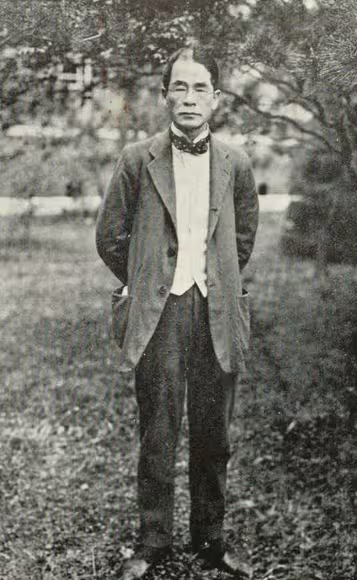
Daisetsu Teitarō Suzuki, widely known as D. T. Suzuki, was born in Kanazawa, Japan, on the traditionally recorded date of October 18, 1870. This date follows Japan’s calendar of the time and corresponds to November 11 in the Gregorian calendar. Through decades of writing, translation and teaching, he helped bring Buddhist thought to readers far beyond Japan.
From Kanazawa to the Wider World
Born Teitarō Suzuki, he developed an interest in philosophy and practised Zen at Engaku-ji, a temple in Kamakura. There he studied under the teachers Kōsen Imakita and, later, Sōen Shaku. He received the name Daisetz in 1894.
In 1897, Suzuki travelled to the United States, where he worked for the Open Court Publishing Company in Illinois. His editorial and translation work gave him years of experience communicating Buddhist ideas in English.
A Life of Scholarship and Teaching
After returning to Japan, Suzuki continued his academic career. In 1921, he became a professor at Ōtani University in Kyoto and helped establish the Eastern Buddhist Society and its journal.
His Essays in Zen Buddhism, whose first series appeared in 1927, became one of his best-known works. Another influential book, Zen and Japanese Culture, explored connections between Zen and Japanese cultural traditions. His interests also extended beyond Zen to other forms of Buddhism.
Sharing Ideas Across Languages
Suzuki continued travelling and lecturing well into later life. His audiences included students at universities in Europe and the United States, and he began lecturing at Columbia University in 1952.
He died on July 12, 1966, aged 95. His long career left an extensive body of translations, essays and books, making him an important figure in the international study and discussion of Buddhism.
Other Events on This Day
- Christina Koch and Jessica Meir Complete the First All-Woman Spacewalk
- The Birth of Zhu Xi, the Chinese Philosopher Who Shaped Generations of Learning
Credits: 1st photo: Unknown photographer, published 1953. National Diet Library, Japan, via Wikimedia Commons. Public domain. Sources: D. T. Suzuki Museum — Biography and Works; D. T. Suzuki Museum — Japanese Biography and Calendar Clarification; Matsugaoka Bunko — D. T. Suzuki Chronology


