
Nov
3
3
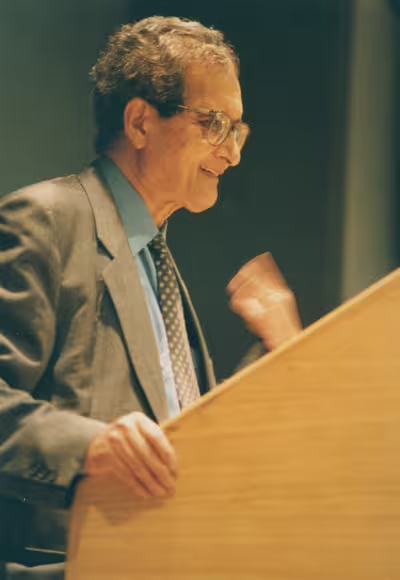
On November 3, 1933, Amartya Sen was born in Santiniketan, Bengal, in what was then British India. His research would connect economics with philosophy, examining how poverty is measured, why famines occur and what people need to lead fulfilling lives.
From Santiniketan to an International Academic Career
Sen studied at Presidency College in Calcutta, now Kolkata, before continuing at Trinity College, Cambridge. He received his doctorate in 1959 and held academic positions at institutions including Delhi University, the London School of Economics, Oxford and Harvard.
His work addressed questions that reach beyond the production of goods or the growth of national income. He investigated how individual interests can be considered in collective decisions and how economists can compare well-being across people with different circumstances.
Understanding Poverty and Famine
One important strand of Sen’s research examined the distinction between the availability of food and people’s ability to obtain it. His studies showed that famine can occur even without an overall decline in food supply, when particular groups lose the income or other means needed to secure enough to eat.
This approach drew attention to employment, prices and access to resources. It helped explain why people living in the same region could experience a food crisis very differently.
Sen also developed the capability approach, which considers the real opportunities people have to live the kinds of lives they value. From this perspective, income is important, but it does not by itself provide a complete picture of a person’s well-being.
Recognition in 1998
In 1998, Sen received the Sveriges Riksbank Prize in Economic Sciences in Memory of Alfred Nobel for his contributions to welfare economics.
The award recognised research linking theoretical questions about social choice with practical problems of poverty and inequality. His work broadened the ways economists study living standards by examining both material resources and the opportunities those resources make possible.
Other Events on This Day
- The Birth of Adolf Dassler, the Shoemaker Behind Adidas
- The Birth of Charles Bronson, Star of The Magnificent Seven and Once Upon a Time in the West
Credits: 1st photo: LSE Library, via Wikimedia Commons. No known copyright restrictions. Sources: NobelPrize.org — Amartya Sen: Facts; NobelPrize.org — Amartya Sen: Biographical; Royal Swedish Academy of Sciences — Amartya Sen’s Contributions to Welfare Economics; Harvard Gazette — Tracing Amartya Sen’s Journey


