
Nov
2
2
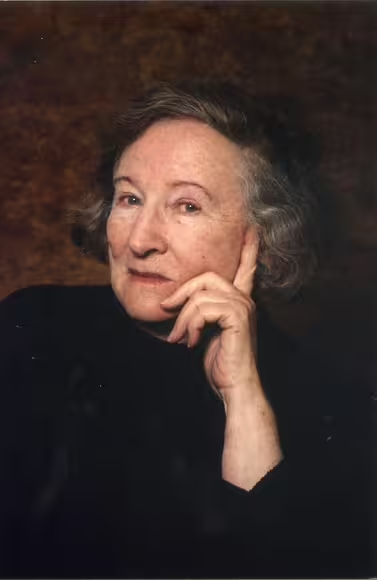
November 2, 1928 is commonly given as the birth date of Shulamith Shahar, the Latvian-born Israeli historian of medieval society. Some biographical sources instead record June 18 of the same year, so the precise day remains uncertain. Her scholarly work focused on the experiences of women, children and older people in medieval Europe.
Studying Medieval Society
Shahar studied at the Hebrew University of Jerusalem and completed her doctorate at the Sorbonne in 1965. She joined Tel Aviv University’s history department in 1967 and later served as its head.
Her research explored how age, gender and social position shaped people’s lives. It brought questions about upbringing, family relationships and the experience of growing older into the study of medieval society, expanding the subjects through which that period could be understood.
Women, Children and Older People
One of her best-known books, The Fourth Estate: A History of Women in the Middle Ages, examines women’s status and the attitudes surrounding them in western Europe between the twelfth and fifteenth centuries. The study considers the variety of women’s circumstances within medieval society.
In Childhood in the Middle Ages, published in 1990, Shahar investigated ideas about childhood, approaches to education and the treatment of children across different social groups. Drawing on a range of European sources, she examined how medieval people understood the stages of a child’s development.
Her later book, Growing Old in the Middle Ages, extended this interest to another stage of life, exploring the place of older people in medieval communities.
A Contribution to Social History
In 2003, Shahar received the Israel Prize for history. Her books contributed to research on medieval society and the history of everyday life.
Together, these studies offer complementary perspectives on the past: how people understood childhood, how women’s lives differed according to their circumstances, and how ageing affected an individual’s place in society.
Other Events on This Day
- The Birth of Ann Rutherford, Actress of Gone with the Wind and the Andy Hardy Films
- The Birth of Marie Antoinette, Austrian Archduchess and Future Queen of France
Credits: 1st photo: Tzahy, as credited on Wikimedia Commons. Permission credited to Shulamith Shahar; reuse permitted with attribution. ----Sources: Encyclopaedia Judaica — Shahar, Shulamit; Tel Aviv University — The Fourth Estate; Tel Aviv University — Childhood in the Middle Ages; Wikipedia — Shulamith Shahar; German Wikipedia — Shulamith Shahar: Note on Conflicting Birth Dates


