
May
22
22
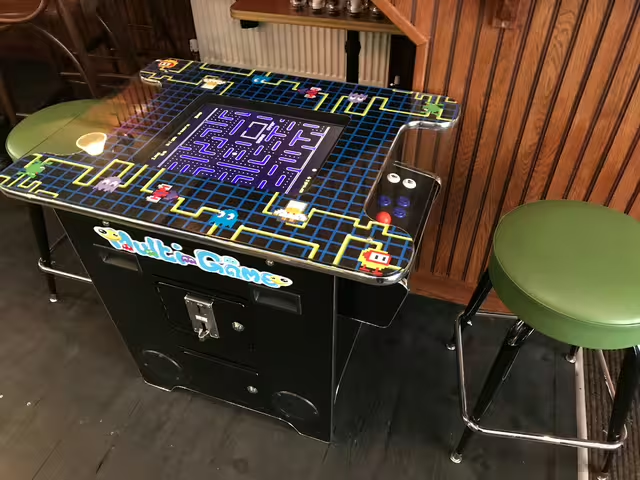
On May 22, 1980, players in Japan got their first opportunity to try Pac-Man during a public location test. Created at Namco under game designer Toru Iwatani, the maze game introduced a hungry yellow character whose appeal would soon extend far beyond the arcade. The date is now celebrated as Pac-Man’s birthday.
A Game Designed to Welcome New Players
At a time when shooting games were prominent in arcades, Iwatani wanted to attract a wider audience, including women and couples. Eating became the central idea behind a game built around approachable characters and easily understood rules.
The result was a distinctive combination of colourful enemies, playful sounds, and a simple protagonist. Pac-Man needed no elaborate introduction: his opening and closing mouth immediately communicated what the player was supposed to do.
Simple Rules, Demanding Play
Players guide Pac-Man through a maze, eating dots while avoiding four ghosts. Clearing the dots completes the level, but surviving requires quick decisions about routes, timing, and escape.
Larger power pellets temporarily reverse the balance, allowing Pac-Man to chase and eat his pursuers. This change turns danger into opportunity and gives each round a rhythm of pursuit, retreat, and sudden retaliation.
The controls are straightforward, yet the challenge rewards practice. Learning how to navigate the maze and anticipate approaching ghosts gives players a reason to return for another attempt.
From a Japanese Test to an International Hit
The May 22 test preceded the game’s wider Japanese release in July 1980. It reached the United States in October of the same year, where its popularity grew rapidly.
Pac-Man’s success also showed the power of a memorable game character. The yellow figure became recognisable outside gaming, appearing on merchandise and inspiring the hit song Pac-Man Fever and an animated television series.
A Lasting Symbol of Video Games
Sequels, adaptations, and new versions carried Pac-Man to later generations of players. His distinctive shape remained recognisable even as gaming technology changed dramatically.
The public test of May 22, 1980, was a modest beginning for such a far-reaching success. A maze, a handful of ghosts, and a character interested in eating helped demonstrate how a video game could become a shared cultural experience.
Credits: 1st photo: Matt Brown, via Wikimedia Commons. Licensed under CC BY 2.0. Sources: PAC-MAN Official Website — History; Bandai Namco — Untold Stories of the Creation of PAC-MAN, Part 1; Bandai Namco — PAC-MAN Celebrates His 40th Birthday


