
Jan
23
23
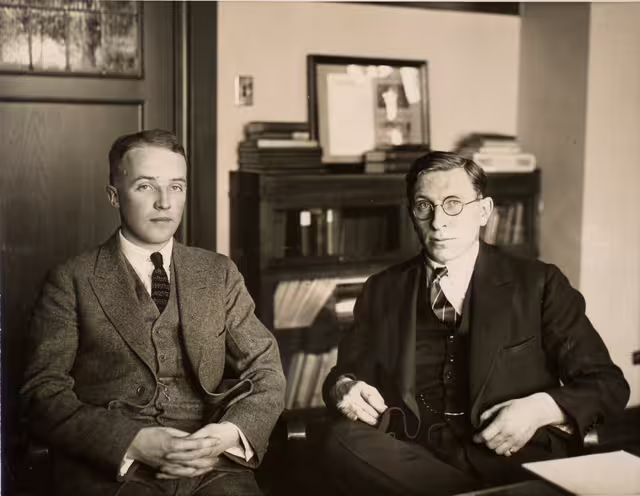
On January 23, 1922, fourteen-year-old Leonard Thompson received a purified insulin extract at Toronto General Hospital in Canada. The treatment brought a dramatic improvement in his condition and marked a turning point in medicine: a disease that had offered children little hope of survival could now be treated.
A Young Patient with Few Options
Thompson had been admitted to hospital in December 1921, severely weakened by diabetes. Before insulin became available, strict diets could sometimes prolong life, but they could not replace the hormone his body lacked. For patients with what is now called type 1 diabetes, the outlook was usually bleak.
On January 11, 1922, he received an initial pancreatic extract prepared by Frederick Banting and Charles Best. It produced only limited improvement and caused an abscess at the injection site. A cleaner, more effective preparation was urgently needed.
The Breakthrough of January 23
Biochemist James Collip developed an improved purification method. When Thompson received this refined extract on January 23, the results were markedly different: his blood sugar fell substantially, and the treatment demonstrated clear therapeutic value.
The distinction between the two January dates matters. January 11 marked the first injection in Thompson’s treatment; January 23 demonstrated the success of the purified preparation. With continued insulin therapy, he lived for another thirteen years.
A Discovery Built on Teamwork
The Toronto achievement depended on several complementary contributions. Frederick Banting and Charles Best carried out experimental work, John Macleod provided laboratory resources and scientific guidance, and James Collip helped turn the extract into a preparation suitable for successful clinical treatment.
In 1923, Banting and Macleod received the Nobel Prize in Physiology or Medicine for the discovery of insulin. Banting shared his prize money with Best, while Macleod shared his with Collip.
A New Future for Diabetes Care
The successful treatment in Toronto was followed by efforts to improve insulin production and make it available to more patients. A promising laboratory result became a medicine with worldwide significance.
Insulin was not a cure for diabetes, and treatment required continuing care. Yet it transformed the possibilities for people whose bodies could not produce enough of it. For Leonard Thompson and countless patients after him, it offered something previously in desperately short supply: a future.
Credits: 1st photo: Unknown photographer, circa 1924–1925. University of Toronto Libraries, Banting Collection, P10103, via Wikimedia Commons. Public domain in Canada and the United States. Sources: University of Toronto — Leonard Thompson; University of Toronto — From Embarrassment to Triumph; NobelPrize.org — The Nobel Prize in Physiology or Medicine 1923; NobelPrize.org — The Discovery of Insulin


